I’ve been weighing the pros and cons of installing a pickup in one of my acoustic guitars for quite some time. That decision led me down quite a rabbit hole that involved analyzing a number of different pickups and microphones. One major problem I was concerned about was the ¼-inch input jack that is standard with virtually every pickup system on the market. I hate those!
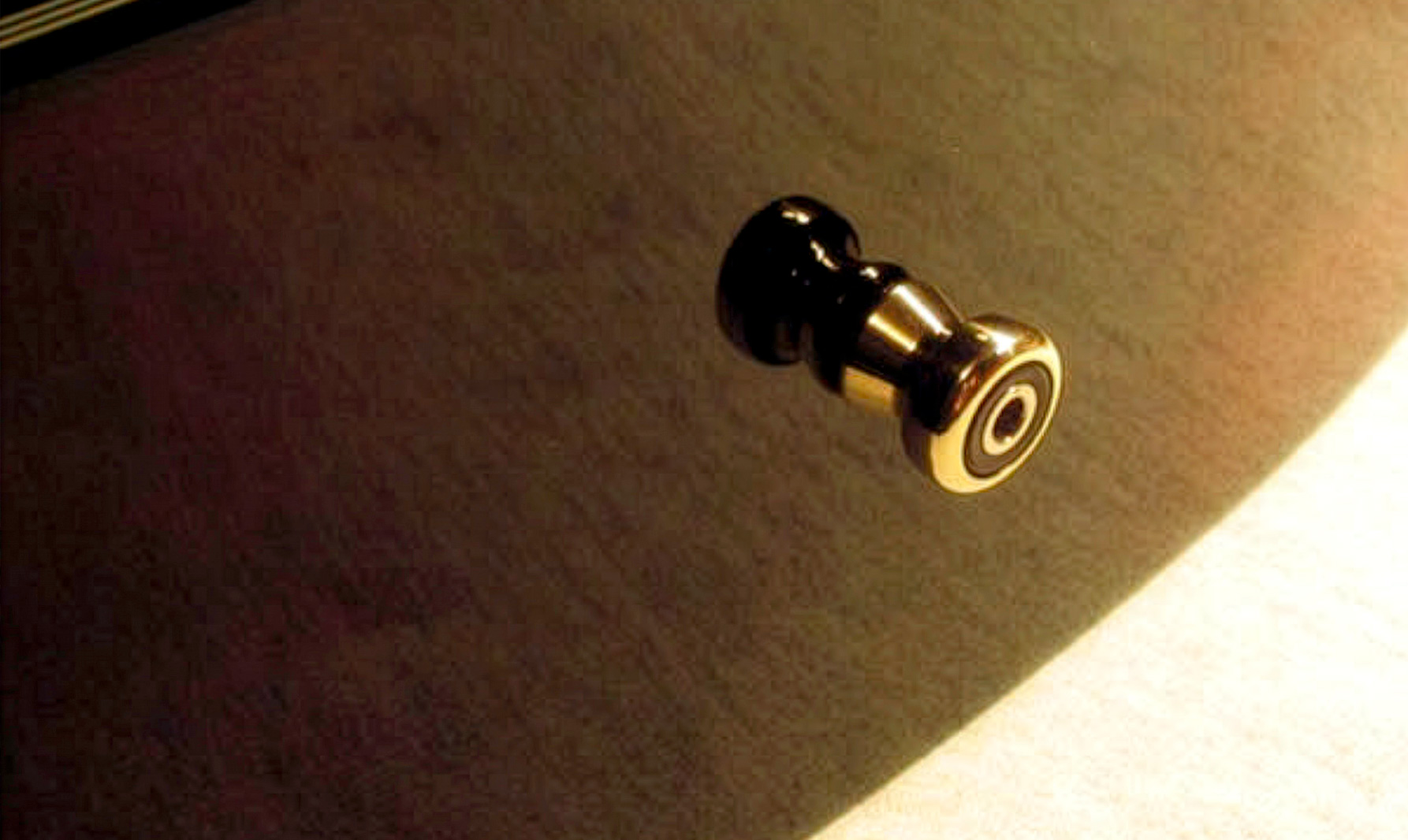
The solution: the Vintage Jack from Keith Gipson and Tapastring.
I’ve seen several instruments meet their demise due to straps coming off the ¼-inch input jacks that replace traditional endpins when a pickup is installed. The shaft on a ¼-inch input jack is extremely short, and that often allows the strap to slip off and—BAM—the instrument hits the floor.
Plugging in the guitar isn’t something I plan to do often. I genuinely prefer using a microphone, but there are certain scenarios where simply being heard is more important than having the best tone. While researching pickups, I noticed that K&K currently offers a setup with a modified input that utilizes a Vintage Jack. After some thought—and a couple of phone calls to Keith Gipson, owner and manufacturer of the Vintage Jack and Tapastring products—I decided to purchase a K&K Pure Mini with an Ivory Micarta Vintage Jack.
The input housing of Gipson’s product is the same shape as a traditional acoustic instrument endpin, and it conceals a 3.5 mm input jack very well. The typical decorative dot in a traditional endpin is in the exact spot where the user plugs in their instrument cable. I genuinely doubt that most players would realize a guitar or mandolin has a pickup installed if a Vintage Jack is used.
Gipson, a highly trained gunsmith and machinist, spent nearly 30 years as an instructor at Trinidad State College in Colorado. When I asked him about his transition from firearms to instruments, he said, “Guns and high-quality musical instruments are pretty much the same—there’s just less federal paperwork with instruments.”
Gipson created the first Vintage Jack after being approached by someone who wanted to equip a pre-war Martin D-45 with a pickup system without modifying the guitar. After some guidance from Pickup the World, and a little experimentation, Gipson found a solution and brought the Vintage Jack to market. He currently offers endpins in ebony, Brazilian rosewood, cocobolo, snakewood, desert ironwood, and ivory micarta, among other materials.
Tapastring is a one-man shop, and Gipson is happy to help customers pair his products with any pickup systems they may want to use. The endpins are compatible with mono and stereo setups, and are wired to provide battery switching for active pickup configurations as well.
A downside to using a Vintage Jack is that you’ll need a modified instrument cable or an adapter. Luckily, the Vintage Jack comes with a 3.5 mm male plug-to-female ¼-inch adapter that allows the user to plug in a standard instrument cable and carry on as usual. I ordered an extra adapter so I’d have a backup in case the original ever failed.
There was zero wiring required when it arrived; the entire system is nearly plug-and-play. The endpin hole needed to be reamed out slightly so the Vintage Jack would sit flush, but it was an easy installation.
Gipson also told me that the Vintage Jack is designed to be rebuildable if and when it wears out. The last one he rebuilt for a customer cost about $25, including shipping.
The K&K Pure Mini with a Vintage Jack is absolute dynamite! If you’re like me and a bit apprehensive about installing a pickup, be sure to check out what Tapastring has to offer. For more information, you can visit them online.
Disclaimer: Yes, I realize there are devices designed to keep a guitar strap secured to a standard ¼-inch input jack. I didn’t want to go that route. I usually play my instrument unplugged.