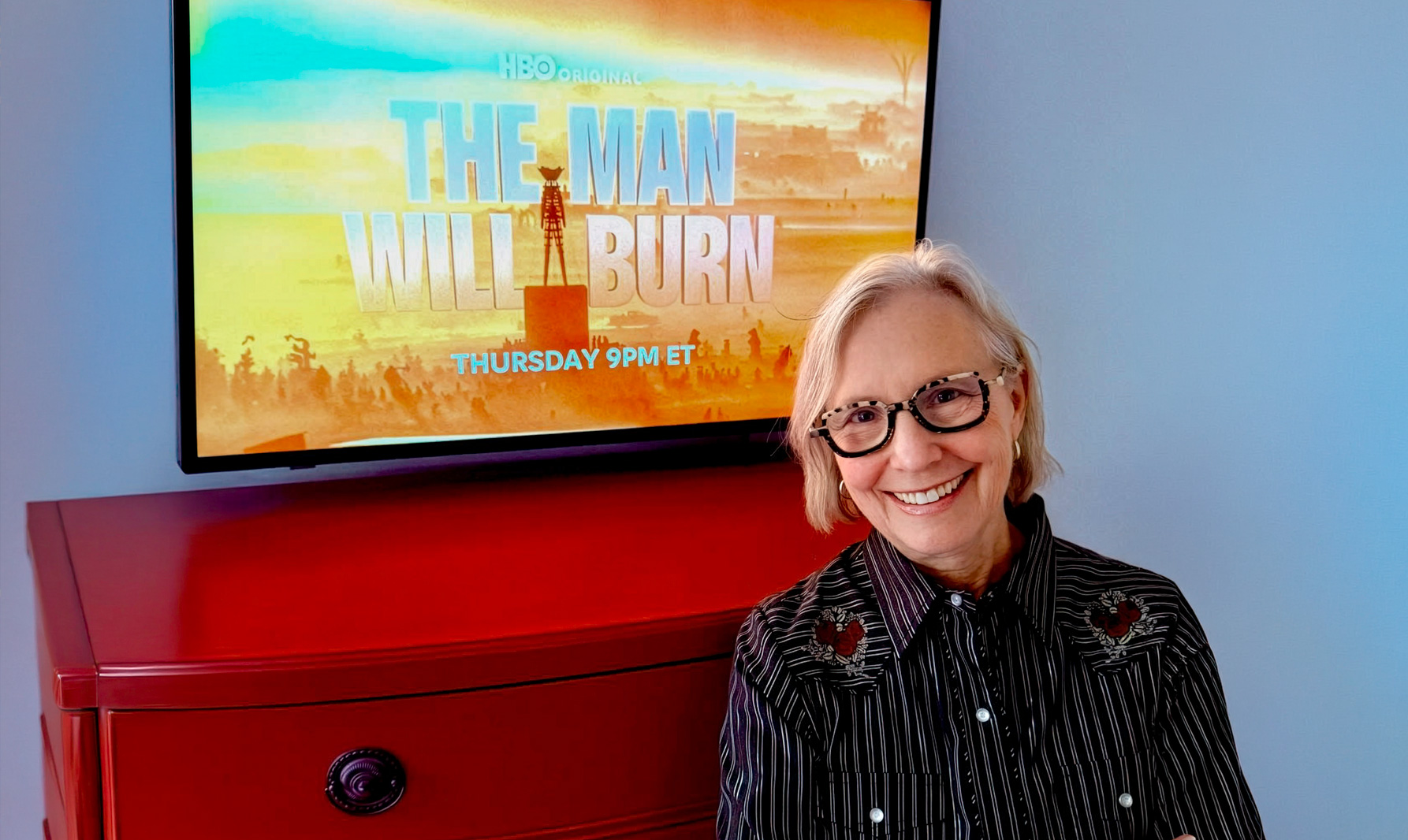
Louisa Branscomb is thrilled to have her song, Steel Rails, as part of an HBO documentary series, The Man Will Burn, this Thursday at 9:00 p.m., (ET/PT). It is the third episode out of four.
The docufilm covers Burning Man, an annual weeklong event and temporary metropolis focused on art, community, and self-reliance held in Nevada’s Black Rock Desert. The yearly gathering transforms a desert dry lake bed into a pop-up city of over 70,000 residents. Because of the harsh, unpredictable environment, attendees must pack their own food, water, and shelter. The event culminates with the burning of a large wooden effigy.
Here’s the description for this week’s episode on IMDB:
Burning Man is back in full force with the musicians, singers, and artists that create and run the spectacular art installations. A growing unease resurges among the creatives who fear that the advent of social media influencers and the influx of tech money threaten the original philosophy of the Burning Man community spirit.
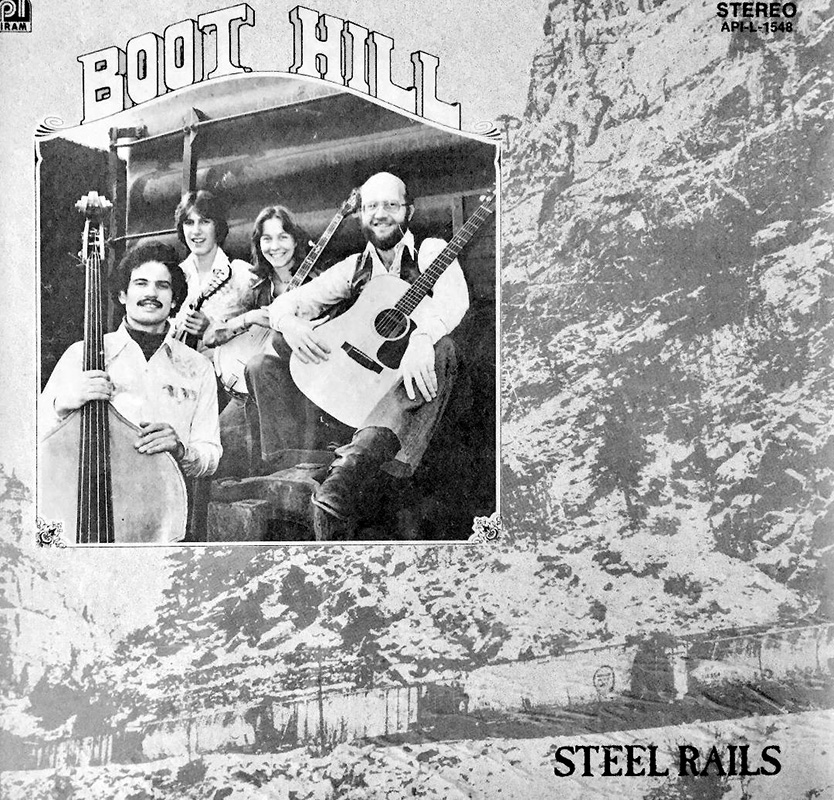
Written in 1971, published in 1972, and first released by Louisa in 1977 with her band, Boot Hill, Steel Rails has been recorded by musical icons such as Alison Krauss, John Denver, and Mel Tillis.
Louisa explained how her song became part of the series.
“Like so many of the stories that have to do with Steel Rails, I don’t feel like I had anything to do with it. It’s a mystery to me how my song ended up on a stage at an unusual event that I have never attended. How does a company get a contract to do a movie and spend five years filming and my song is one they selected to use in one for the four episodes? How did we get here? Now, that’s a small miracle or a wonder, at least!
I got a call last summer and didn’t recognize the number. I thought it was spam and didn’t even listen to the message. They called again so I looked up the area code. It said LA and I thought, I don’t know anyone in Louisana. When they called again, I picked up and it was the person whose company is doing the soundtrack for the documentary. He was calling from Los Angeles, not Louisana! He basically described the production and was calling to get a license to use the song.
He sent me a clip of the footage. It’s just a glimpse into the music. There’s just a chorus and a verse of a guy that I don’t know on stage singing Steel Rails. They just loved how it captured the spirit of the event. It’s kind of intriguing.
It feels different to me than anything else I’ve done. There was lots of paperwork. I’ve learned a lot about [what’s involved] when a song appears in a movie, and it was a learning curve for me. I uncovered some things about my song. Universal has the rights to Steel Rails now. I signed away my publishing when I was 21. I can’t get Steel Rails back until I’m 82.
At the outset, I got some money (with more royalties to come) that Universal primarily negotiated with HBO, but it’s been really good to look back on the path of the song. It’s given me so much more faith in the power of songs. If you do the work, write the song, and get it out there, who knows where it’s going to go? You never know who’s going to hear it.
That’s what songwriting is about: reaching and touching people. It carries its own energy. Songs are born again and again. Every time you perform it, it’s kind of reincarnated.”
There’s another miracle of coincidence in this that connects directly to Louisa’s past and to bluegrass. In the show, there is a gentleman named Ray from Boone, NC, who is a retired combat veteran. He’s African American, one of the few among thousands that go to the festival. He’s curious and feels he needs a “jolt” in his life. Ray connects with a white man also from Boone and jokes, “I never thought I’d ever be listening to bluegrass music and going to a festival full of white people.”
In the third episode of The Man Will Burn, Ray has just arrived and shows up at the Rootpile stage. The very first song he hears, likely the first bluegrass song in his life, is Steel Rails.
Louisa shared…
“You can’t make this stuff up. I worked with combat veterans as a psychologist for decades, and using songwriting as a transforming tool. The fact that this gentleman is a combat veteran means a lot to me. And he’s from Boone, just down the road from Asheville. Most of all, he ends up hearing his first bluegrass song at Burning Man…..???!!!! This means the world to me. Who knew you had to go to a hippie festival in the Nevada desert to to hear your first bluegrass song that was written by a girl down the road in North Carolina?
I plan to go to Boone, find Ray, and see what he thought about Steel Rails, Burning Man, and the gentleman that was kind enough to sing my song. You can make up a song, but you can’t make up life. It’s a marvel all on its own.
I know the documentary is getting high ratings, especially on its cinematography and sound track, and showing all the different Burner subcultures – the artists, tech geniuses, hippies, rowdies, and of course the miscellaneous! But what matters to me is about songs. The flight path of Steel Rails over the last 55 years.”
Louisa is grateful to the bluegrass community for the popularity of her song.
“I give Alison Krauss a giant share of the credit. It was so beautiful what she and her band did, and it gave Steel Rails wings. The unstoppable trajectory of a song, that’s what you leave behind. It gives me comfort that a song can travel like that and reach people.
I thank [the late] Bil Vorndick. He engineered that session. Jerry Douglas helped produce it. The DJs who played it. SPBGMA who elected it Song of the Year.
Steel Rails took a village. You rally around each other to get the song out. We have beliefs and values and have a sense of community and advocacy for each other. That has always been very important to me. It’s really about gratitude.
I go back over it to remind myself what the important elements of the song are. They don’t have to be complicated. They don’t have to spell out a message. It’s bare bones and a little soul, that’s all you need for a good song. It’s only 2.5 minutes long. I joke that it has like 293 words and it probably doesn’t have that many.”
Louisa is far from done in the music world. She has been busy in the studio producing her 15th album of originals, with Wanda Vick co-producing, for release later this year.
I’m really hoping that some of these songs will mean something to listeners. This [part in a documentary] has given me a boost of energy to renew my faith in songs and to get my new projects out there.”
Her 36th annual Fall Songwriter Retreat will be held November 5-8 in Asheville with guest faculty Byron Hill and Jeanette & Johnny Williams. For info, contact Louisa by email at [email protected] or visit her online.