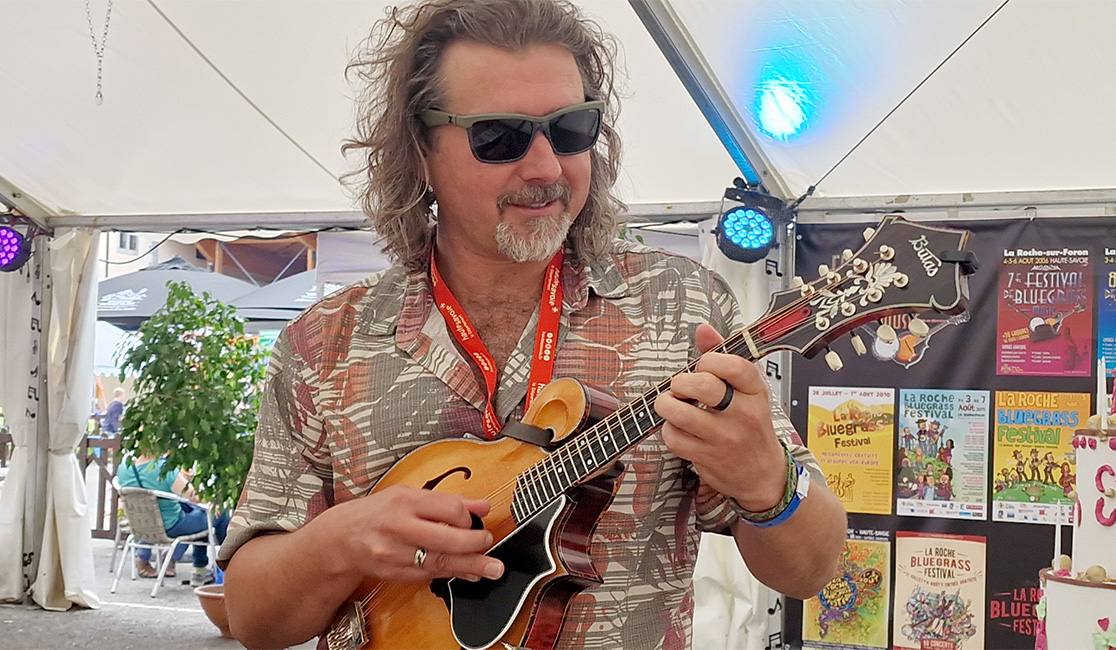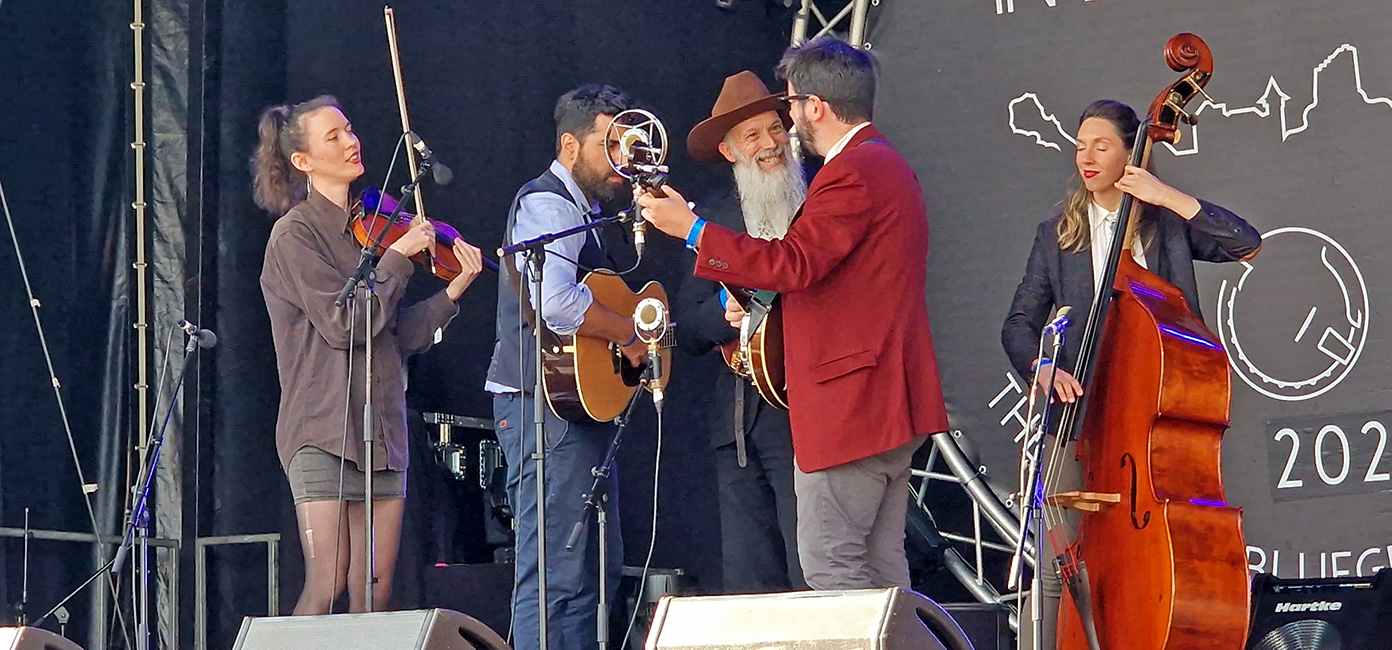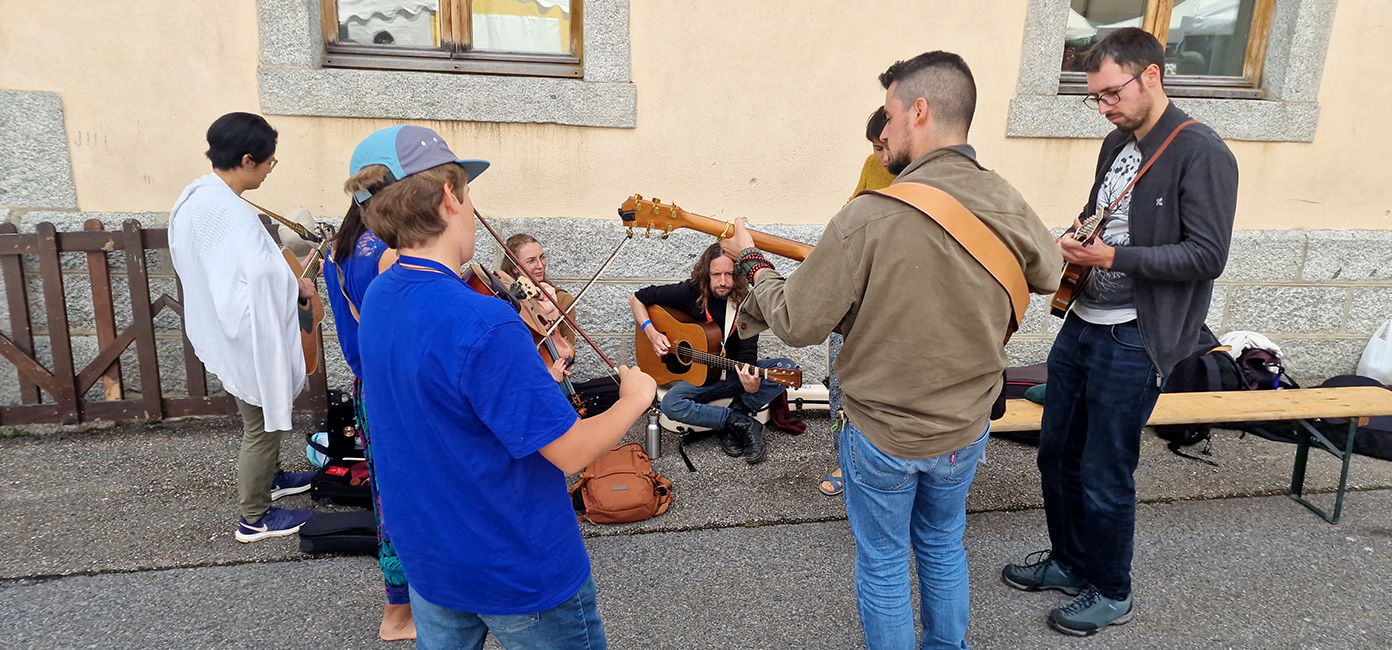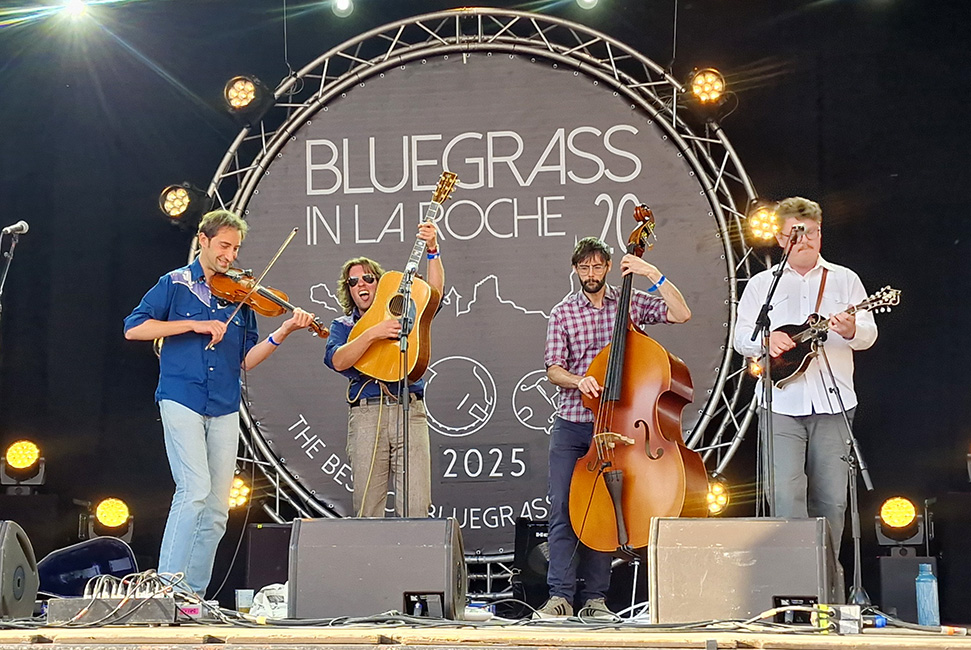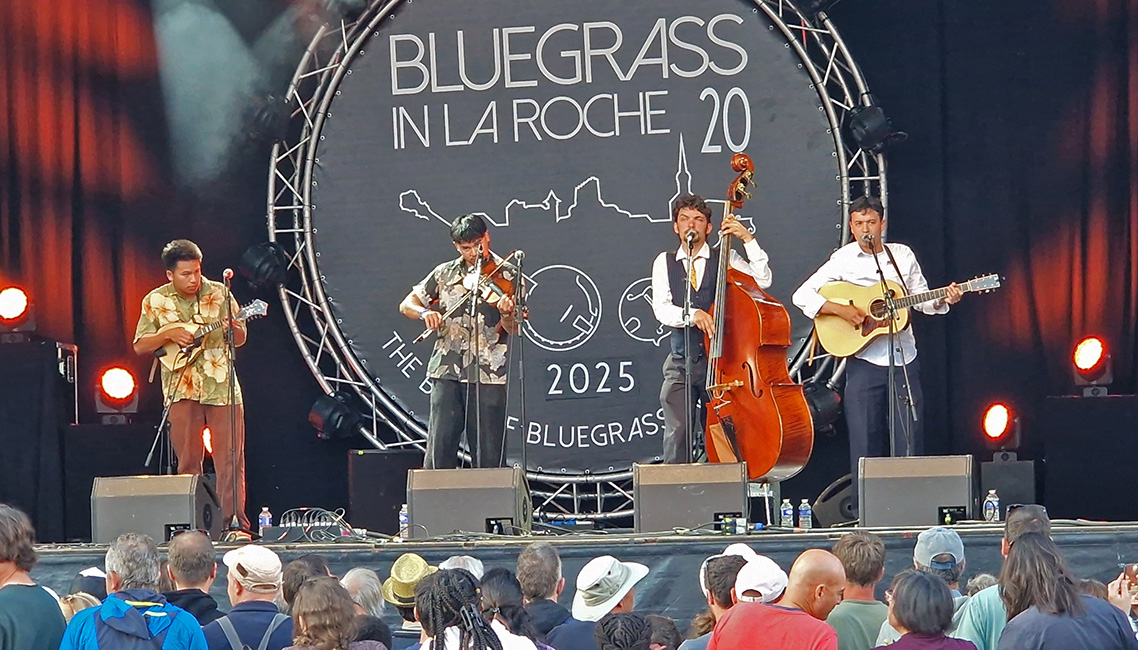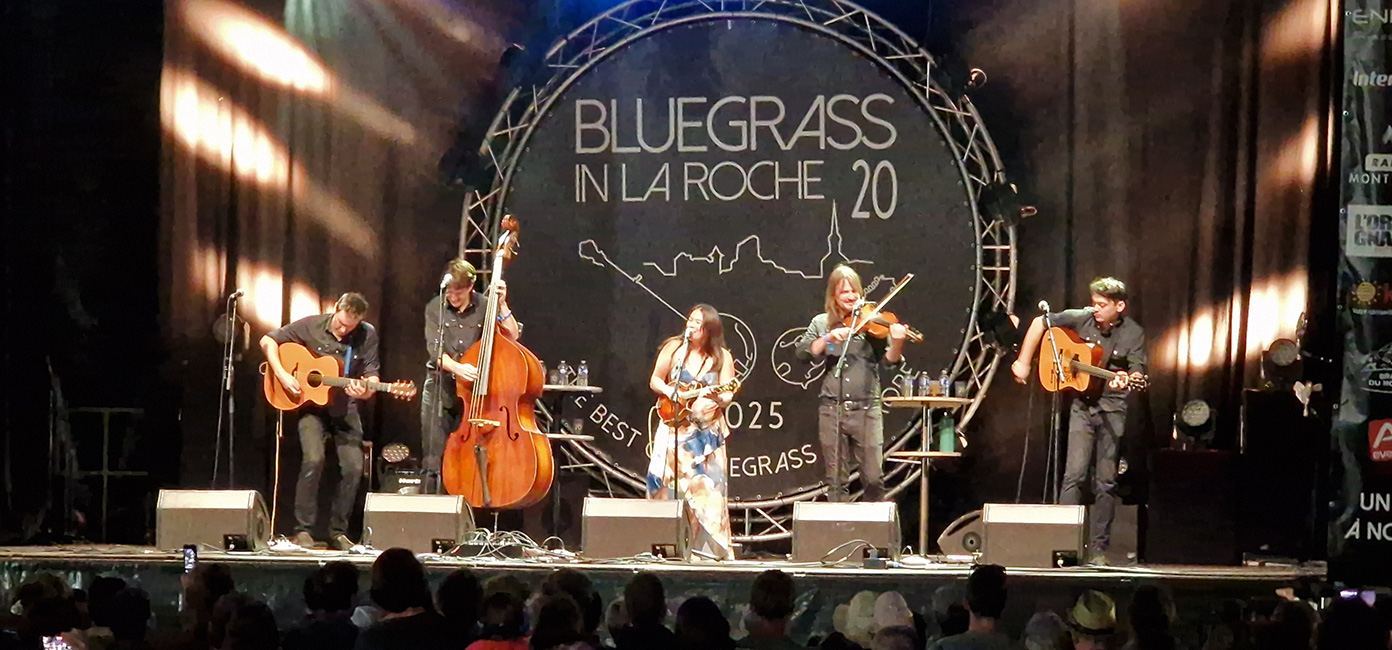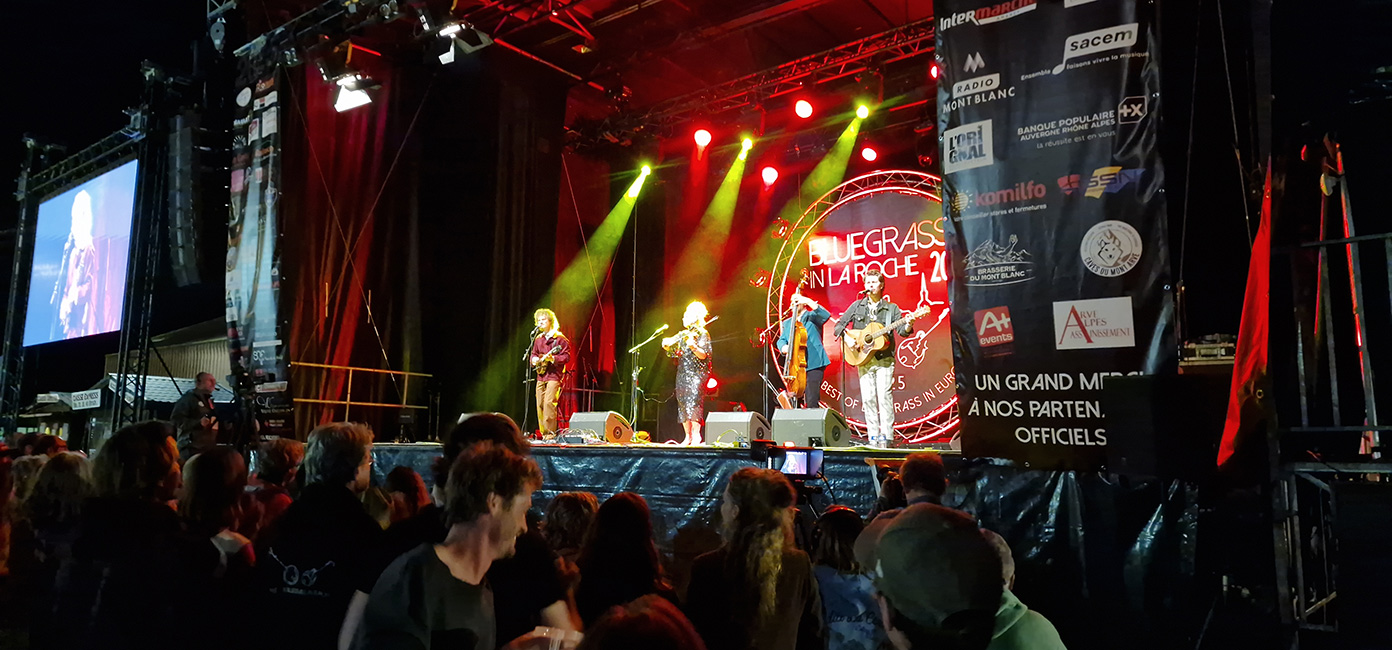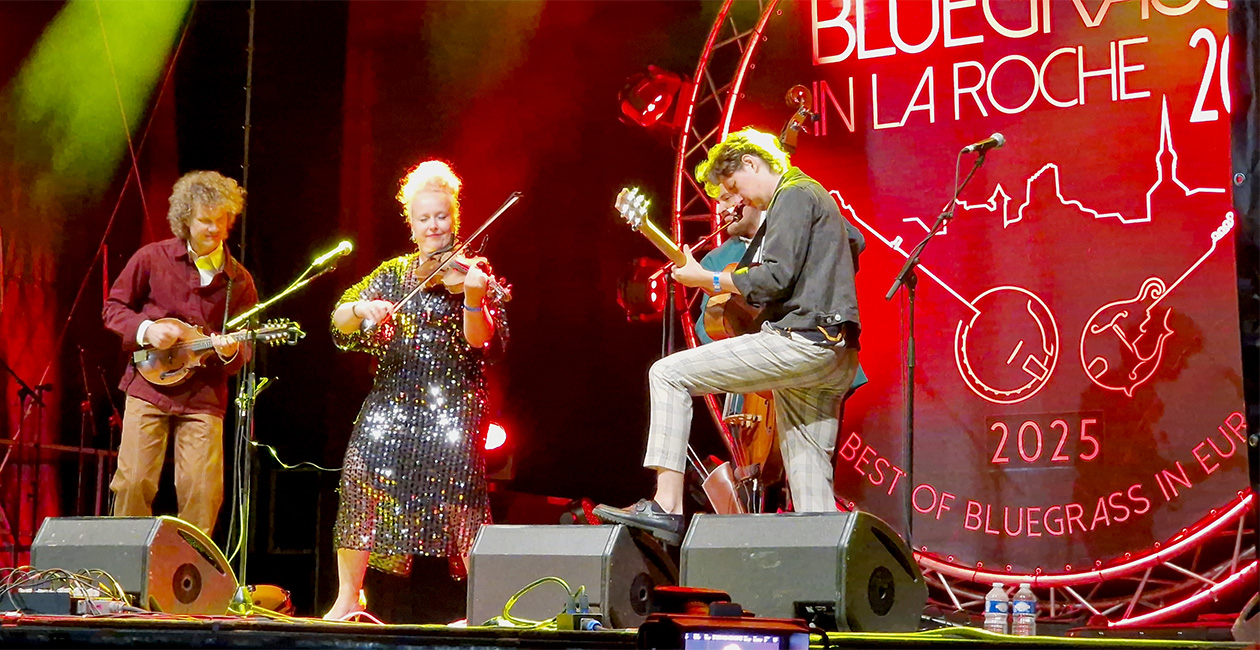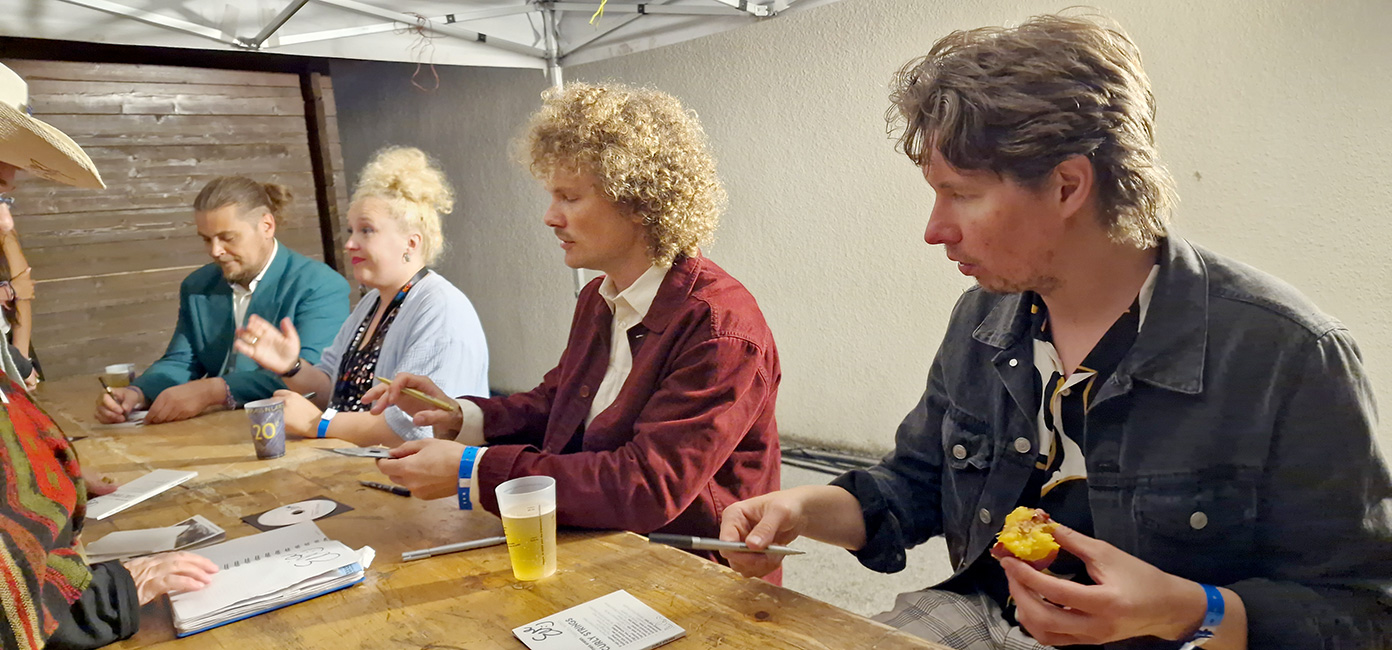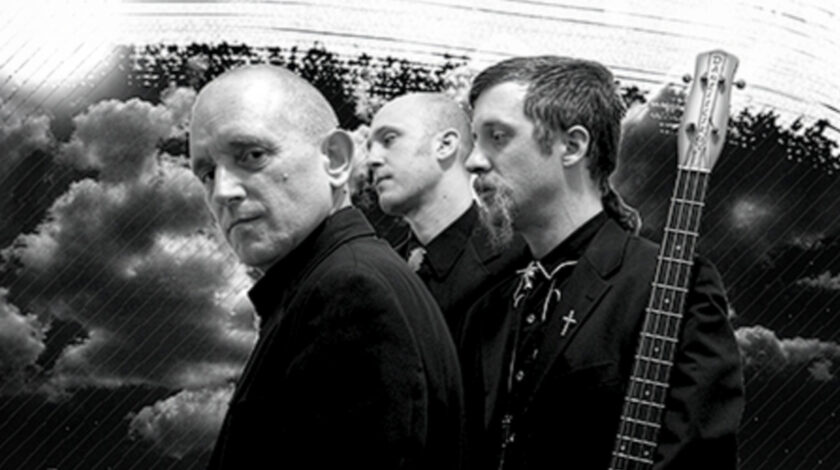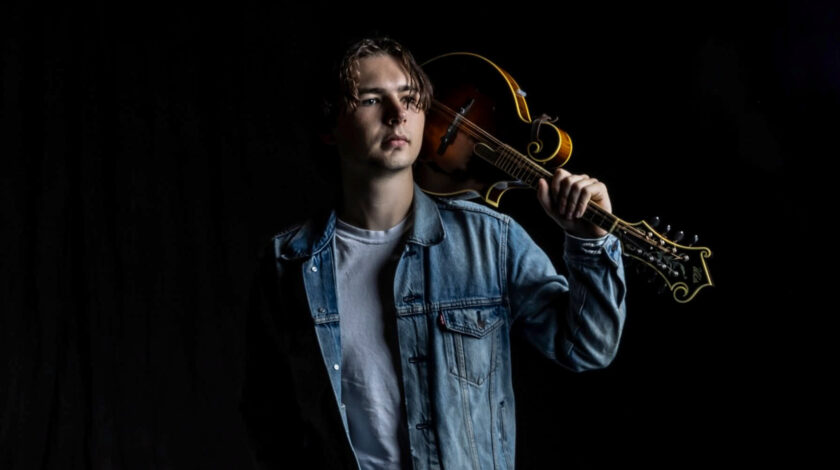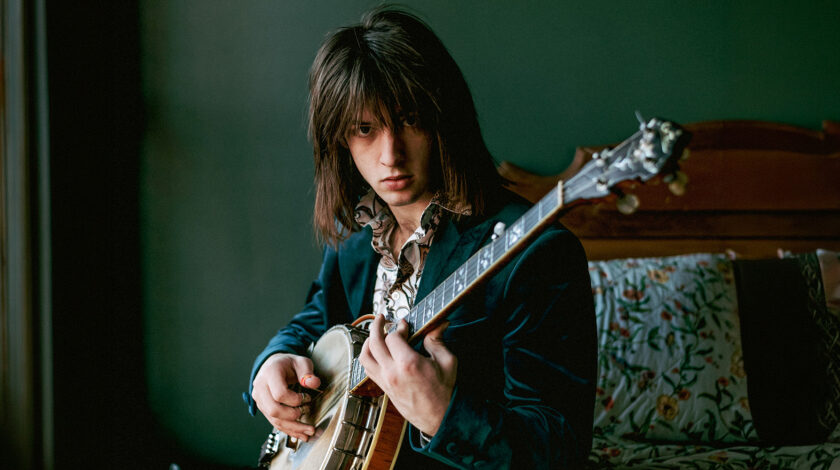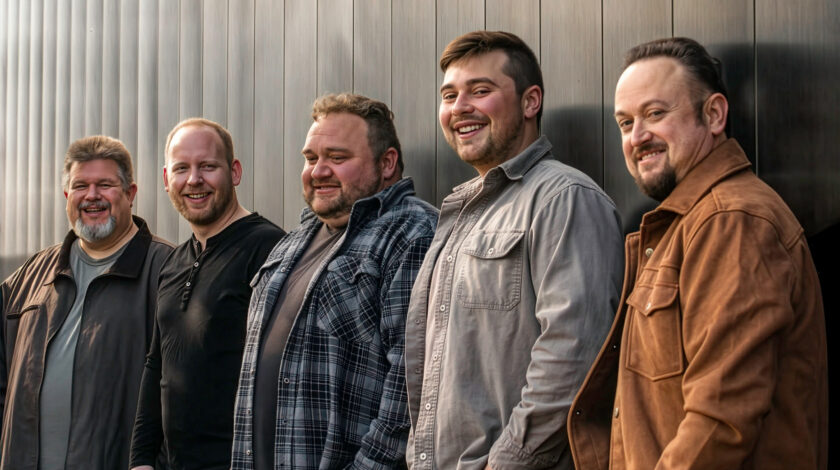

The Often Herd at Bluegrass in La Roche 2025 – photo © Angelika Hernmarck
This report on day four at France’s Bluegrass in La Roche festival is a contribution from Swiss bluegrass writer and promoter Angelika Hernmarck. She will provide a daily update this week as the music rolls on.
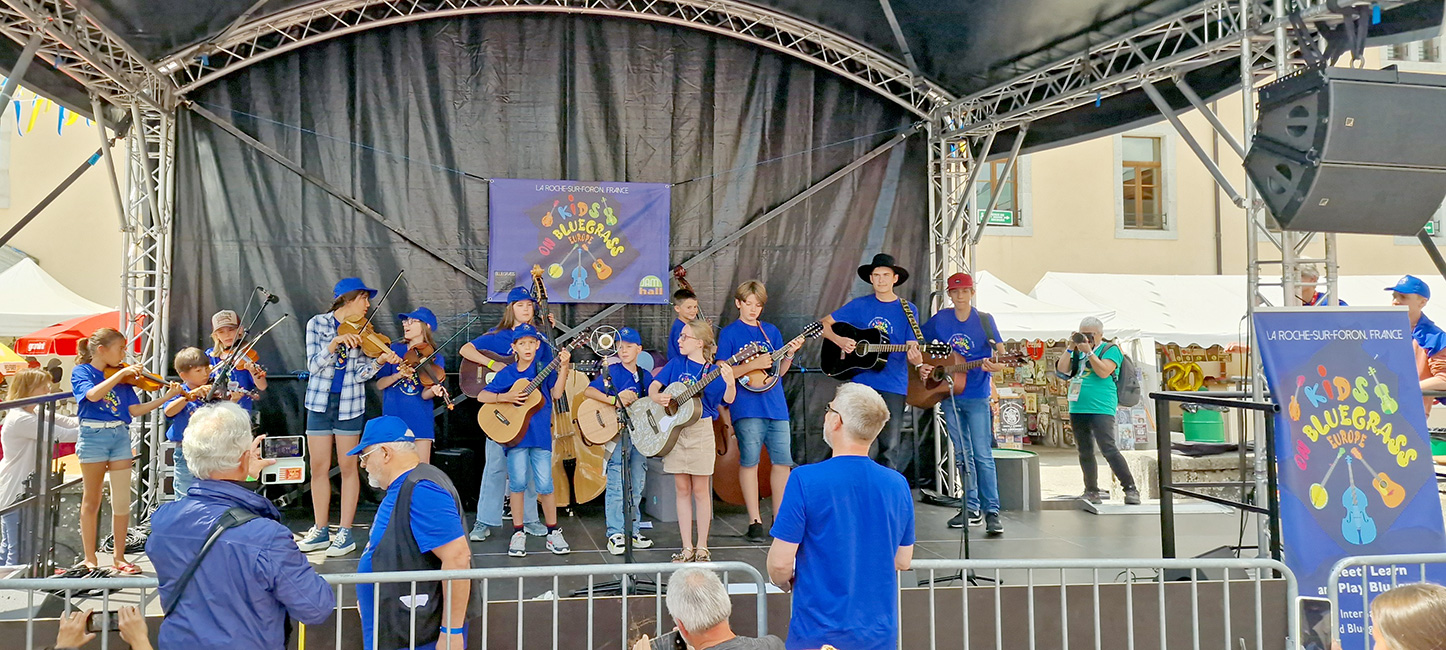
Sunday is already underway here in La Roche-sur-Foron as I sit down to write about Saturday—an intense and joyful day that opened with something truly special: Kids on Bluegrass Europe took the midday stage and gave us one of the most emotionally moving performances of the weekend.
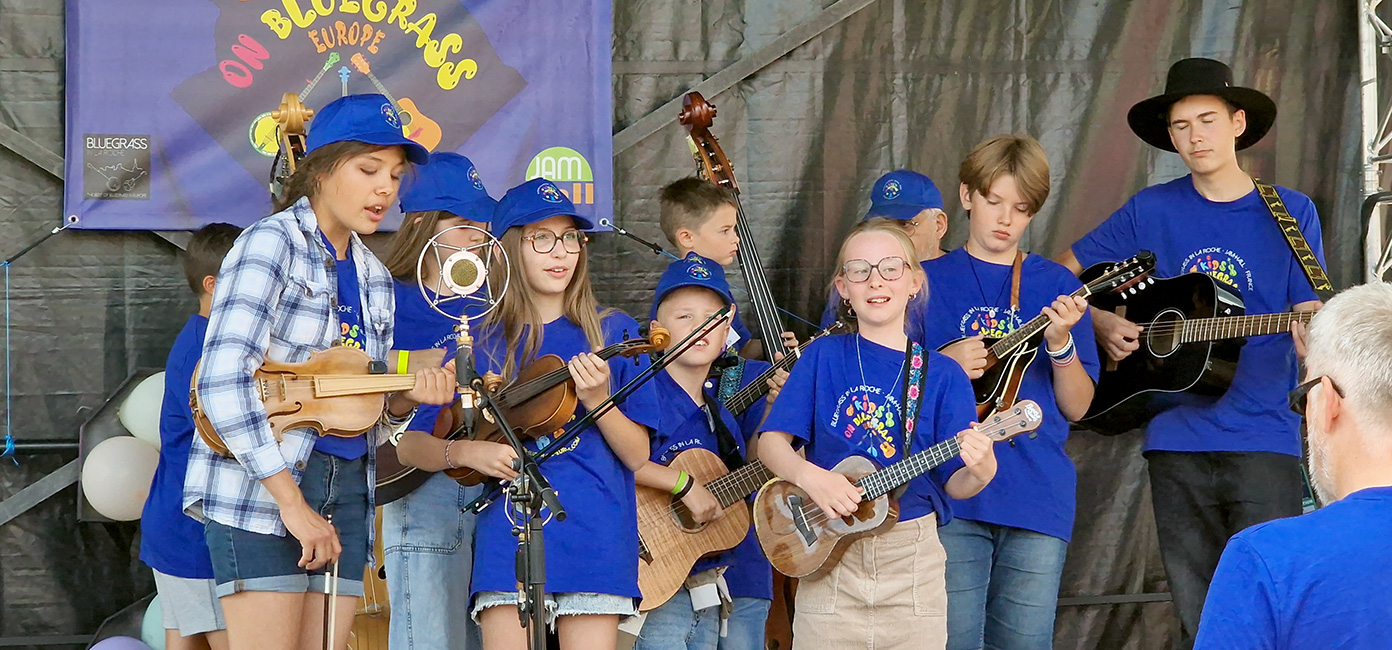
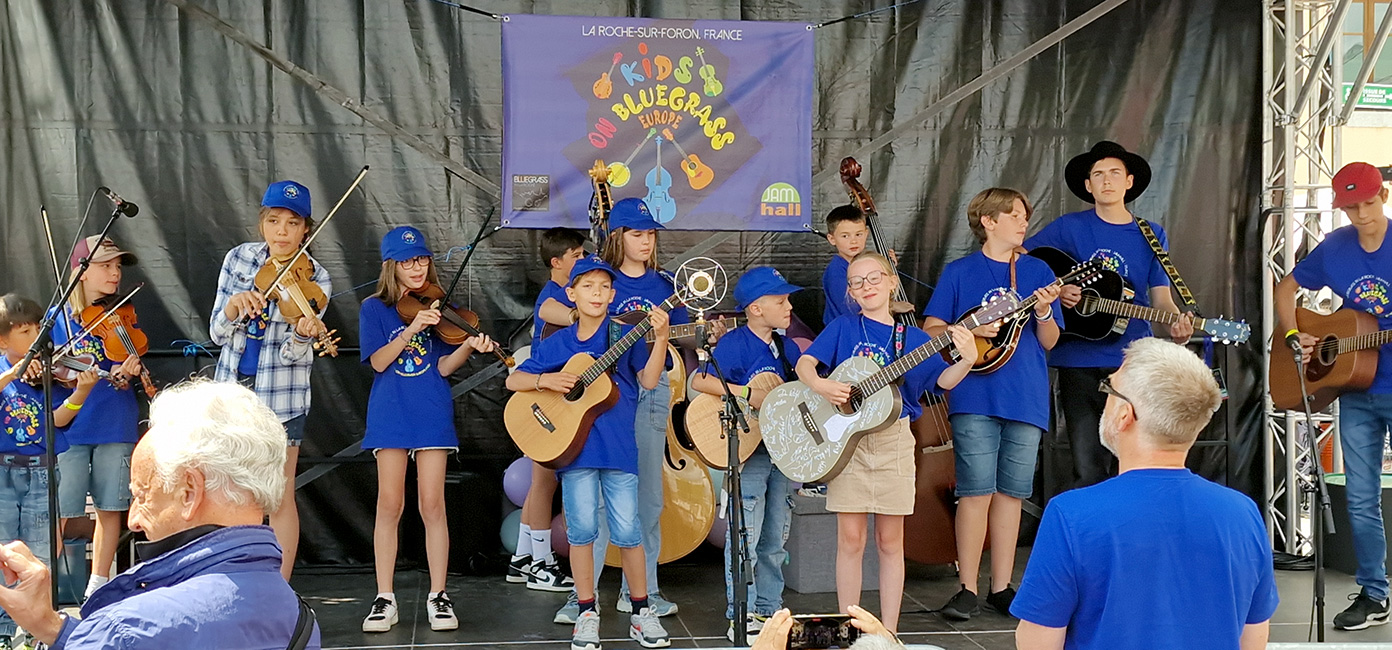
Twelve young musicians from across Europe and the US stood proudly before the crowd. Each introduced themselves by name and where they came from, creating an instant connection with the audience, who responded with warm applause and beaming smiles. They played three songs: Long Journey Home—a stirring, full-group opener; followed by the gentle waltz My Texas Girl; and closing with a high-energy version of Hop High Ladies.
The youngest participant especially caught my eye: dwarfed by a full-sized upright bass, he stood on a small stool just to reach the strings—but his rhythm was impeccable, steady and musical. Alongside him, the second bassist anchored the groove, while fiddles, guitars, a mandolin, and a ukulele rounded out the ensemble. Many of the kids took turns on solo breaks, some sang lead verses, and they all joined in joyful harmony.
A big crowd gathered—many of them proud parents—and more than a few were visibly moved. Some wiped away tears. It was one of those unforgettable moments when music, mentorship, and community come together.
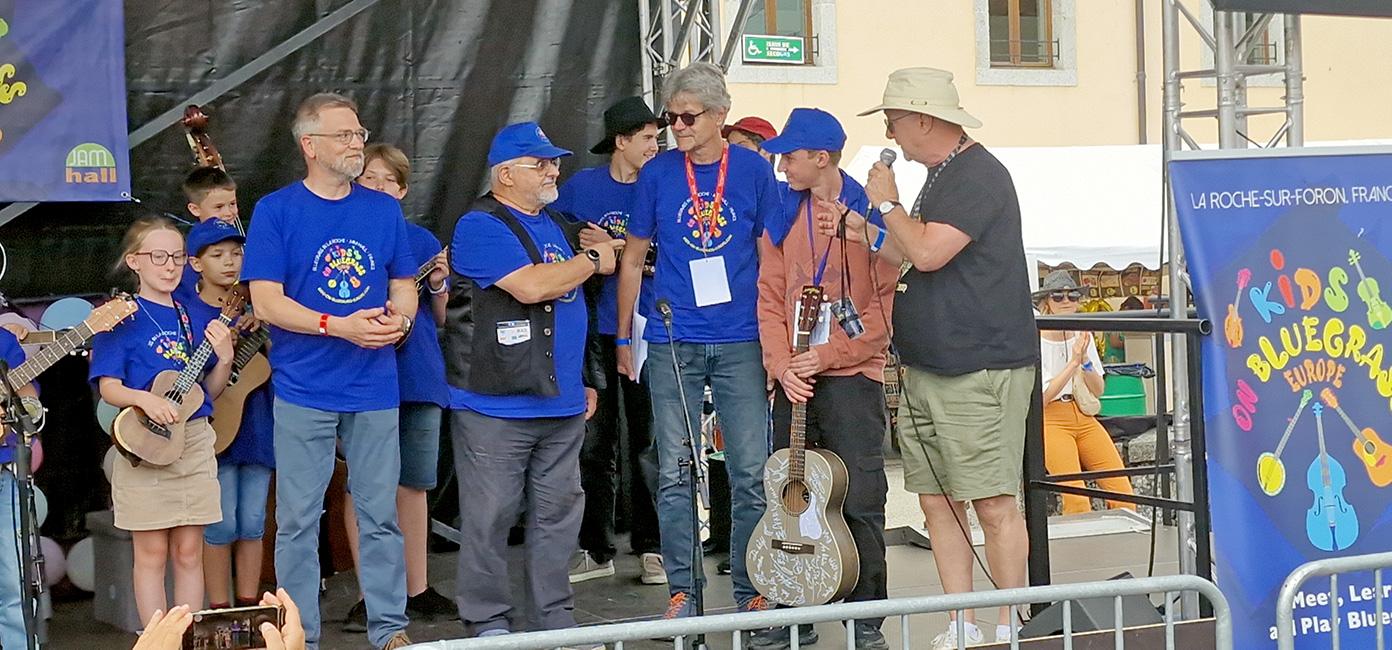
Ti’Pierre, co-founder of Jam Hall and of Kids on Bluegrass Europe, MCed the set with warmth and quiet pride. From the front of the stage, Alex Neff directed the ensemble with clarity and care, guiding the kids with visible enthusiasm. Over the past three mornings (Thursday through Saturday), the group had rehearsed from 9:30 a.m. under the guidance of Ti’Pierre, Alex, Philippe Boutet, and Thomas Marinello—working on arrangements, stage presence, and confidence.
Among the audience was a very special guest: Darby Brandli, founder of the original Kids on Bluegrass in California. Her presence underlined the international scope and spirit of this program, which now gives young musicians across Europe the same chance to connect, collaborate, and grow.
And yes—full disclosure: this year’s Kids on Bluegrass Europe program was fully sponsored by me. This is thanks to a late friend of mine, Coco, who entrusted me with a large collection of bluegrass instruments. I gave some of them to Ti’Pierre—and he made the best of it. Coco would have loved this. It’s a personal joy and privilege for me to support this project and to witness firsthand how deeply it resonates with the participants, their families, and our community.
Few festival moments feel as authentic as this: young hands picking, voices blending, a field full of cheers and proud hearts. Bluegrass has a future—and we just heard it.
Saturday on the Day Stage
After the kids, the Uzer Trio from France took over. Veterans Jean-Marc Delon and Bernard Minari were joined by Marie Scheid, a powerful singer and upright bassist. Together they offered a set that flowed smoothly from traditional bluegrass to genre-crossing tunes with a French touch.
Della Mae made a much-appreciated daytime appearance here too, as did Rapidgrass. One highlight was the solo performance by Russian mandolinist Olga Egorova, whose original compositions mixed classical precision with folk and bluegrass soul. In a lovely surprise, the four guys from Rapidgrass joined her for the final numbers—wrapping up a beautiful set with style and synergy.
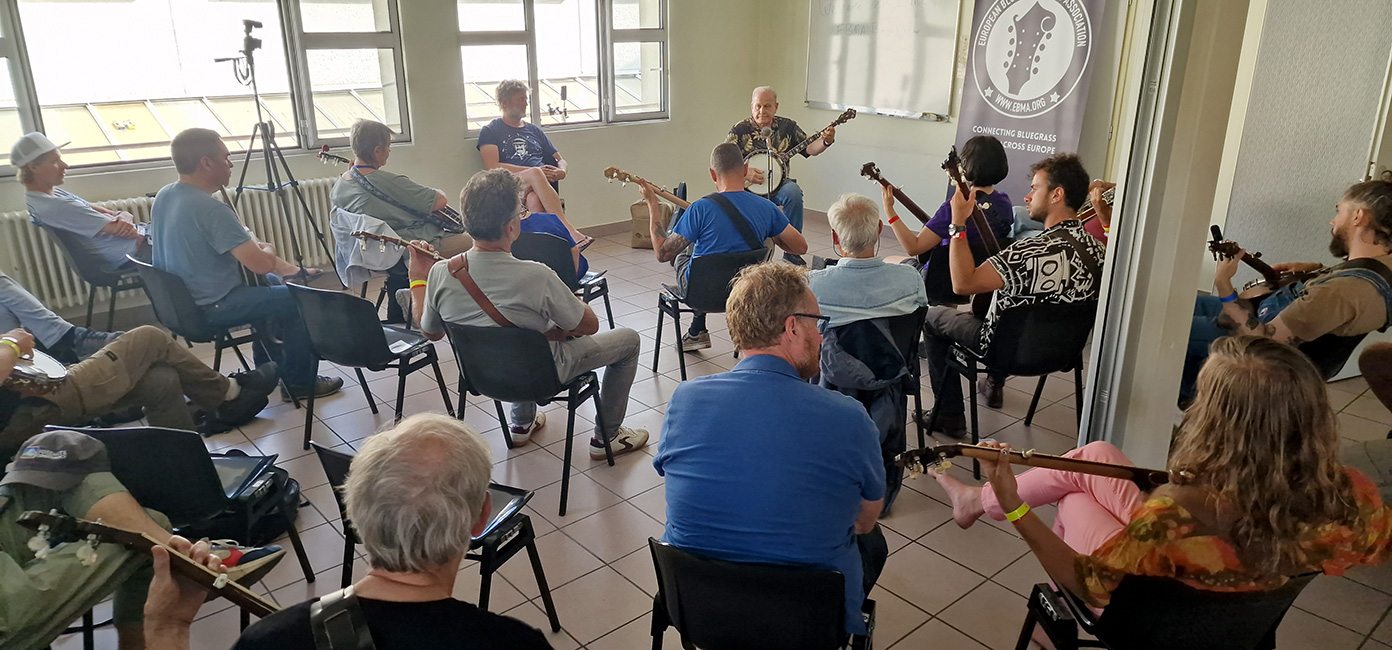
Pete Wernick’s Banjo Masterclass hosted by EBMA
Between afternoon and evening programs, Pete Wernick offered a 60-minute banjo masterclass that drew over 20 eager students of all levels. I’ll admit—as a fiddler, much of the technical detail escapes me—but from the focus and energy in the room, I could tell it was a very rich and inspiring session.
Corrections & Clarifications
A quick correction from me: I mistakenly mixed up the daughters of Festival Director Christopher Howard-Williams. Maria is part of the Artist Reception team, while Louise works in the Social Media team and does a stellar job there. Sorry for the mix-up, ladies!
Another correction: the full name of our guests from Argentina is Estación 39. I had missed the “39” earlier on. They opened Saturday evening on the main stage. Matt (guitar), Nuala (fiddle), Juma (banjo), Dani Boy (mandolin), and Iri (bass) delivered a joyful, vibrant set that brought Argentine spirit carried by bluegrass to European soil.
Organization & Sound: Seamless Behind the Scenes
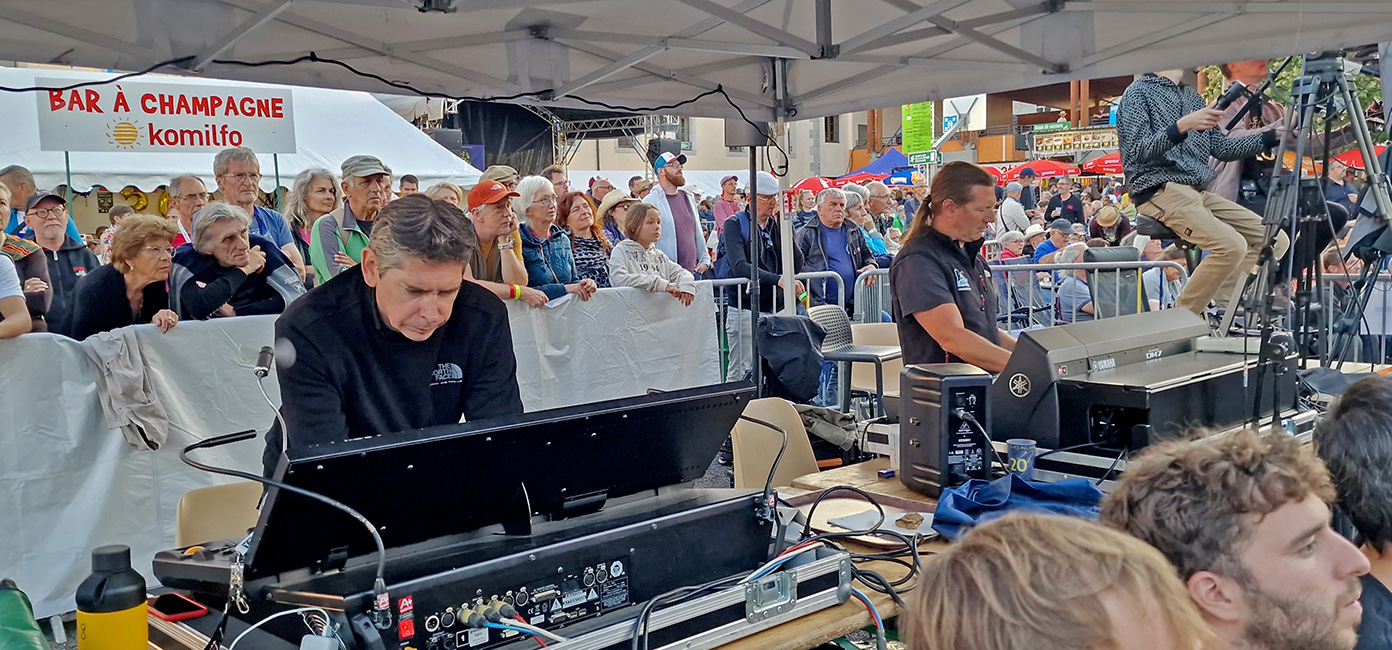
The technical team, led by Claude Rossat—himself a banjo player and in charge of sound and lights since the very beginning—did an outstanding job. On both the main stage and the daytime stage, every nuance was perfectly audible. I especially love the big stage after dark, when the artists step into the spotlight—literally—and the music gets the visual setting it deserves.
The team worked hand in hand with precision. The schedule was impressively tight—only ever delayed by a well-deserved encore. Microphones were set up in seconds, a flying soundcheck, and the next band was ready to go.
A special new feature this year was the video screen setup: even from the very back of the festival site, you could watch fingerwork, facial expressions, and all those little details that usually get lost in the distance. Additional screens near the food stands and in the VIP tent made sure nobody missed a moment. It’s a big plus—even though the experience from the front row remains in a league of its own.
Saturday Night Highlights
I had been looking forward to hearing The Often Herd from Northern England, and they did not disappoint. Rupert Hughes (guitar), Evan Davies (mandolin), Niles Krieger (fiddle), and Sam Quintana (bass) combined string band energy with a uniquely British folk sensibility. The audience loved them—and rightly so.
Next came Crying Uncle Bluegrass Band from California. After impressing everyone here in 2022, they returned with even greater confidence. Teo Quale (mandolin), Miles Quale (fiddle), Andrew Osborne (bass), and Ian Ly (guitar) played with virtuosic precision, fearless creativity, and a deep respect for tradition. I let myself sink into their sound and just enjoy. Honestly, I couldn’t tell you what exact songs they played, there sure were some perfectly covered Dawg tunes—but I’ll definitely be looking for a CD.
From California too, AJ Lee and Blue Summit took the stage with modern flair rooted deeply in tradition. AJ Lee (mandolin), Sully Tuttle (guitar), Jan Purat (fiddle), Scott Gates (guitar—yes, the one with painted nails!), and Sean Newman (bass) showed exactly why they’re award winners and in high demand back home. Born from late-night jams, their joyful playfulness is infectious. The La Roche crowd soaked it all in.
Closing the Night: Curly Strings from Estonia
The final act of the night—and one of my favorites—was Curly Strings from Estonia. They are a shining example of how European bands can blend their own traditions with bluegrass to create something truly original. Most of their songs are sung in Estonian, with brief translations in between. They had a mainstream folk hit back home in 2013, and in 2022 they were the first recipients of the IBMA International Band Performance Grant. Now we know why.
With Eeva Talsi (fiddle), Taavet Niller (bass), Peeter Hirtentreu (guitar), and Villu Talsi (mandolin), they delivered a powerful and emotional set—tight harmonies, heartfelt songwriting, and energy that kept me there until the very end.
Today is the last day, and I’m about to dive into the crowd again. Let’s see what stories tomorrow will bring.
Until then—keep on pickin’!