When it comes to melodic style banjo, both Bill Keith and Bobby Thompson are two of the most influential and leading proponents of the style. There is however a third person who’s melodic approach to the five string came into development prior to the aforementioned gentlemen.
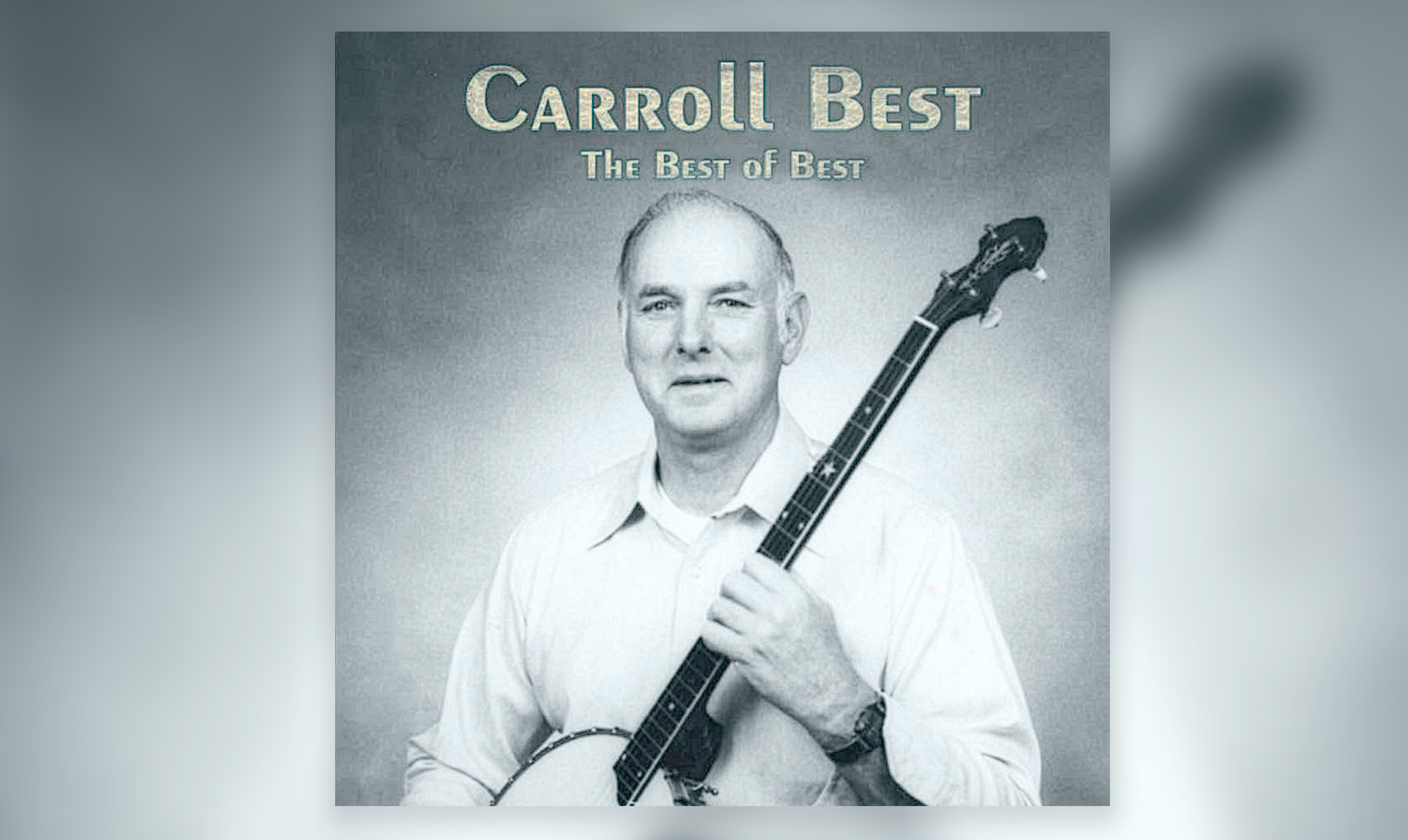
That player is Carroll Best. A native of Haywood County, North Carolina, Best gravitated to the banjo at the age of five, eventually developing a style that allowed him to play fiddle tunes note for note. Although he served a short stint professionally as a member of the Morris Brothers, Carroll opted to keep a day job in order to be with his family. The few recordings that did exist of his playing were released on small labels that didn’t reach wide listenership.
In the 1990s, Best began to receive even greater recognition for his playing largely as a result of his participation in the first annual Tennessee Banjo Institute. It was here that many discovered his playing and thus discussions have endured about his place within the history of melodic banjo.
Thanks to Patuxent Music, The Best of Best is now available, a collection of 23 tracks that brings strong evidence of the role Carroll Best played in the development of this style.
The recordings range over a period of several decades, settings, and personnel, thus the audio quality tends to fluctuate from track to track. This does not take away from what Carroll brings to each of these tunes, however. Several selections such as Banjo Boogie, Dear Ol Dixie, Home Sweet Home, and Farewell Blues all come from field recordings made in 1956 by scholar Joseph Sargent Hall. Accompanied by Billy and French Kirkpatrick on fiddle and guitar respectively, along with S.T. Swanger playing rhythm guitar on the latter piece, these provide some of the earliest examples we have of this unique approach to the five string.
Other instrumentals such as Tom and Jerry, Bill Bailey Won’t You Please Come Home, and Topeka Polka are all remastered tracks from Best’s 1982 album, Pure Mountain Melodys, on Skyline Records. Featuring the Carroll Best String Band, this is a really stout configuration, which at the time consisted of Best along with Zack Allen on clawhammer banjo, Mack Snoderly on fiddle, Danny Johnson on guitar, and Calvin Parham on bass.
Bluegrass in the Backwoods and Twinkle Little Star both capture Carroll in his later years. The former was recorded live during his debut appearance at the 1991 Tennessee Banjo Institute and features accompaniment from guitarist Danny Johnson. It’s a truly haunting rendition. The latter, recorded a few months prior to Carroll’s tragic death in 1995, pairs him with musical legends Kenny Baker on fiddle, Josh Graves on bass, along with Mike Rivers on guitar. Best and Baker both deliver excellent performances on this particular tune.
The Best of Best is an excellent representation of who Carroll Best was as a banjo player and why he shouldn’t be overlooked by enthusiasts of this instrument. Ted Olson’s essay Carroll Best: “one of the greatest banjoists who ever lived” serves as the liner notes for this project, bringing even greater depth to Carroll’s life and music. This is an album that needs to be in the collection of every aspiring banjoist, particularly those looking to deepen their knowledge of the melodic style.