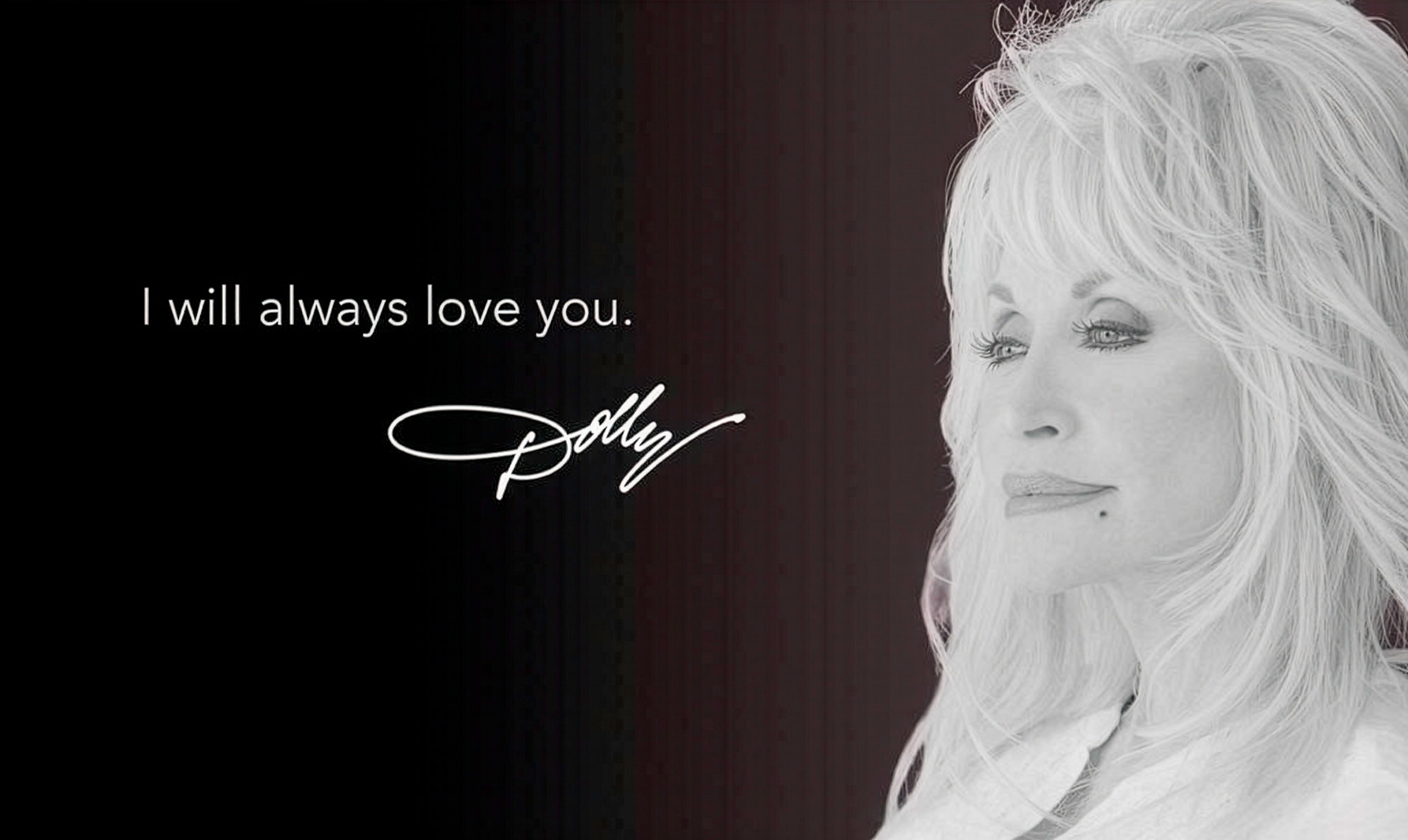
What Dolly Parton taught me about dreams, staying true to yourself, and making the most of what you’ve got.
When Dolly Parton was a little girl growing up in the mountains of East Tennessee, she made herself a microphone. She put a tin can on top of a tobacco stick, wedged the stick into a crack in the front porch and sang.
The porch was her stage. The chickens pecking in the yard were her audience. And in her imagination, the little girl in a hand-me-down dress was wearing rhinestones and singing for thousands of people.
Dolly later said:
“That little tobacco stick and tin can have carried me far.”
It certainly did.
I’ve thought about that image a lot since Dolly died this week at 80. Because before the records, the movies, Dollywood, the awards, the rhinestones, and the millions of books sent to children, there was a little girl on a porch with a tin can.
There was a dream.
I suppose that’s true of just about anything any of us has ever accomplished. It starts with being able to imagine something that is not yet true.
I’ve been fortunate enough to see more than a few of my own dreams come true. And I believe there are more ahead.
But a dream is only the beginning.
Dolly once described her own journey this way:
“I imagined it, I dreamed it, I worked for it, and God was good enough to let me have it.”
And late in her life, after decades of living that journey, she offered this advice:
“Find out who you are and do it on purpose. And do it with purpose.”
By then, she had spent a lifetime proving what she meant.
Find out who you are.
We talk a lot these days, especially in the music business, about finding your brand. Dolly Parton had one of the most recognizable brands in the world. But I’m not sure she ever went looking for one.
She found Dolly. And then she trusted her.
Early in her career, Chet Atkins gave her some well-intentioned advice. If she wanted people to take her seriously as a singer and songwriter, she might want to tone down the hair, makeup, and clothes.
Dolly wasn’t going to do it.
“I can’t separate the two. This is who I am.”
She never tried to become some more sophisticated version of the country girl who came down from the mountains. Even her famously over-the-top appearance, she explained, was simply “a country girl’s idea of glamour.”
And somehow this woman in the wigs, rhinestones, and impossible heels could also say:
“I look totally artificial, but I am totally real.”
She knew the difference.
Maybe there’s something in that for the rest of us. We spend an awful lot of time figuring out how we want people to see us. What’s our image? Our lane? Our brand?
Maybe authenticity isn’t something we need to find. Maybe it’s something we need to stop overlooking.
I never met Dolly. I didn’t know her personally, as so many people in this business did. I can’t tell you what she was like behind closed doors.
But I know who she was to me. A couple of years ago, I got a rare glimpse.
I was invited to a secret, invitation-only taping at Knoxville’s historic Bijou Theatre for Smoky Mountain DNA — Family, Faith & Fables, a project Dolly made with members of her family.
Our phones were turned off and locked away when we entered the theater. No photos. No videos. I was fortunate to be seated up in the second row, maybe ten feet from Dolly Parton. For me, it was a dream come true.
She was older then and sometimes a little unsteady in those famous high heels. Someone would give her a hand on and off the stage. Techs tuned and brought out her instruments—guitar, banjo, electric guitar.
And then she’d play them. All of them.
And she’d sing for all she was worth.
Because it was a taping, there were stops and starts, retakes and stretches of downtime while cameras and production were reset.
Dolly didn’t disappear backstage. She sat on a stool center stage and filled the time talking with us, cracking jokes and kidding around with her sisters, nieces, and cousins.
There wasn’t another Dolly who appeared when the cameras stopped. She was funny, warm, and down to earth. She seemed more interested in the people around her than she was in herself.
She was everything I’d imagined she would be—and more.
I don’t have a single picture from that night. I’m glad I don’t. I just watched. I listened. I was there, present and in the moment.
I never met Dolly. But from ten feet away, I got to see something I’d believed about her for a long time.
When she said, “I look totally artificial, but I am totally real,” I believed her. I still do.
Trust what you’ve got.
But I saw something else that night, too. The work. At an age when Dolly Parton had absolutely nothing left to prove, she was still showing up to play, sing, do another take, and then another. Doing it with, and for her family.
That’s important. Because knowing who you are is one thing. Trusting what you’ve got—and doing the work to make something of it—is another.
Dolly did that again and again.
Porter Wagoner gave her the opportunity that helped make her famous. Eventually, she knew it was time to leave that safe home and build something of her own.
Porter didn’t want her to go. So she wrote him a song: I Will Always Love You.
Then Elvis Presley wanted to record it. For a young songwriter, it was the kind of opportunity you don’t say no to.
Except Dolly did.
Colonel Tom Parker wanted half the publishing in exchange for the Elvis cut. Dolly desperately wanted Elvis to sing her song, and later said she cried all night over the decision. But she kept her publishing.
Eighteen years later, Whitney Houston recorded I Will Always Love You. Her version became a worldwide phenomenon and reportedly earned Dolly around $10 million.
Leave the safe thing. Write the song. Keep the song.
None of those decisions came with any guarantee of how the story would turn out.
That’s the thing about trusting yourself. Usually you have to do it before you have the proof that you were right.
That’s what resonates with me most about Dolly. She listened to people. She learned from people. But when conventional wisdom ran up against something she knew deeply about herself, she was willing to trust what she knew.
And she backed that trust with work.
She wrote thousands of songs. Learned the business. Protected her copyrights. Took risks. And when people underestimated her because of how she looked, she didn’t change herself to convince them. She made sure the work was good enough to convince them.
As she once put it:
“You’ve got to sing a better song.”
Even decades later, when the Rock & Roll Hall of Fame nominated her, Dolly initially tried to withdraw. She didn’t think she’d earned it. She wasn’t a rock artist. They inducted her anyway.
So Dolly went out and made a rock album. There’s something wonderfully consistent about that. Don’t pretend you’ve earned something. Do the work and earn it.
Dolly never denied that she had talent. But she never seemed to believe the talent began with her, either. She called it a God-given gift. Her responsibility was what she did with it.
“I’m going to make the most of what I’ve got.”
Do it with purpose.
And this may be where Dolly’s story gets bigger than a lesson about dreams, authenticity or success. Because she didn’t just make the most of what she’d been given for herself.
Her father was one of the smartest people she knew, but he couldn’t read or write. So Dolly started the Imagination Library. What began with mailing books to children in her home county eventually put hundreds of millions of books into children’s hands around the world.
When wildfires devastated the mountain communities that had given her so many of her stories, she created the My People Fund and helped families who had lost their homes.
When COVID arrived, she gave $1 million to Vanderbilt for research that helped support development of the Moderna vaccine.
Those things may seem a long way from a little girl singing to chickens on a porch. Maybe they’re not.
Dolly started with what she had. A voice. A way with words and melody. A family full of stories. A place she came from. And a dream of doing something with all of it.
She trusted those things. She worked at them. She protected them.
And when they gave her more, she gave more.
Late in her life, Dolly offered a definition of success that seems especially meaningful now:
“I guess that’s when you’re successful, if you appreciate what you’ve got and be able to help somebody else with it.”
That’s with purpose.
What have you got?
Most of us aren’t going to be Dolly Parton. But that’s not really the point.
Dolly didn’t start with millions of dollars, a theme park or a worldwide platform. She started with what she had. And a dream of what might be possible. Maybe that’s why that little girl on the porch stays with me. Dreams can come true.
I’ve seen enough of my own come true to know that. And I’m not finished dreaming yet.
But Dolly’s life reminds me that the dream is only where it starts.
Know who you are. Trust what’s authentically yours, even when conventional wisdom tells you to change it.
Work hard enough to make the most of what you’ve been given. And when it gives you something in return, find a way to use some of that to help somebody else.
Dolly said it better:
“Find out who you are and do it on purpose. And do it with purpose.”
A tin can. A tobacco stick. A porch and chickens pecking in the yard.
She spent the next eighty years showing us just how far a dream, staying true to who you are, and a whole lot of hard work can take you.