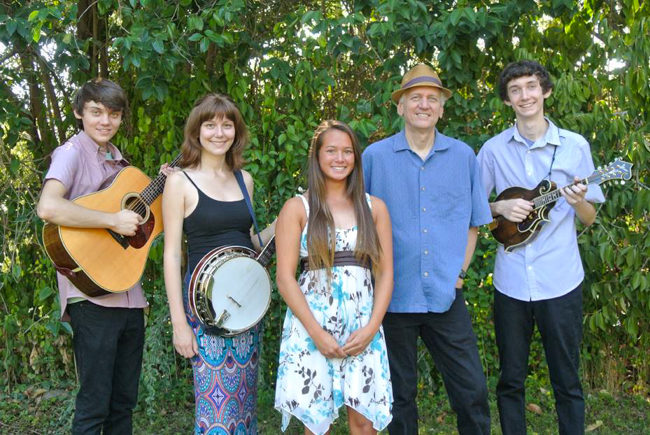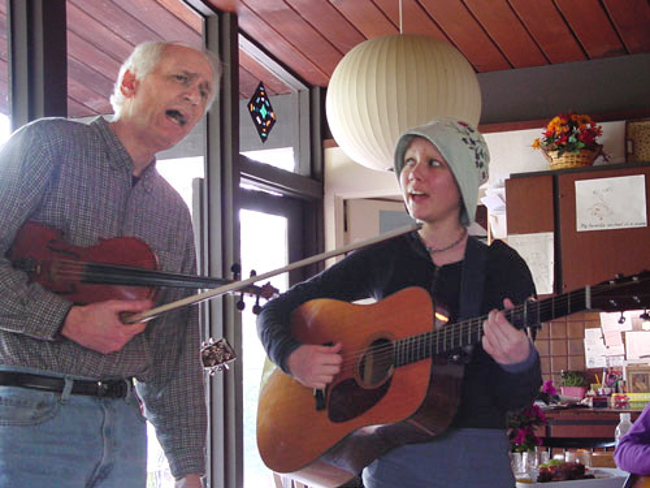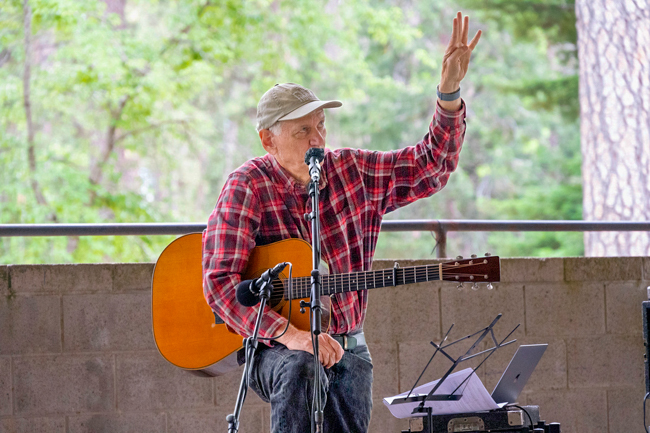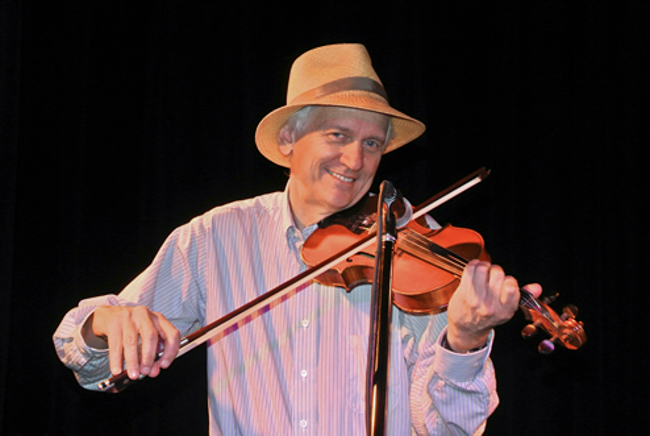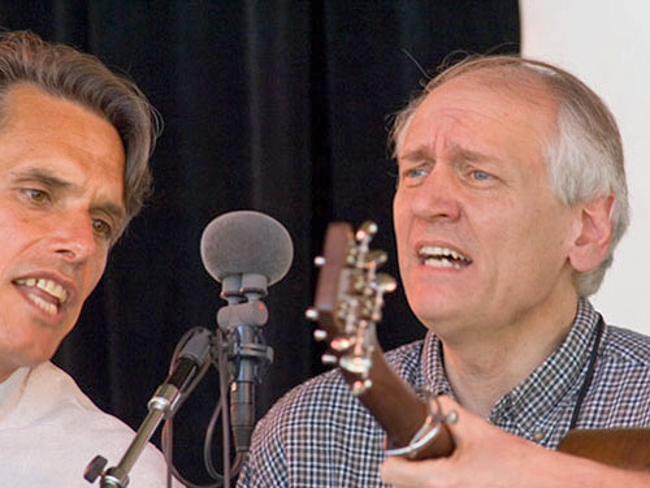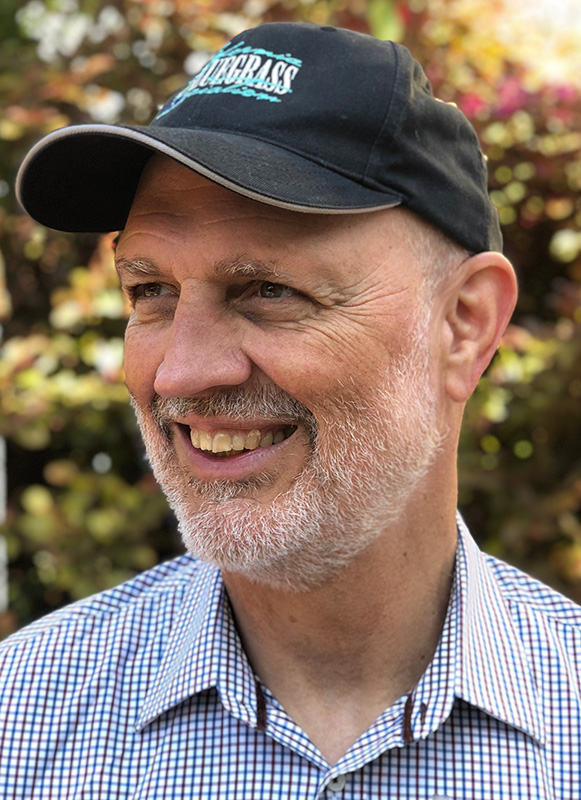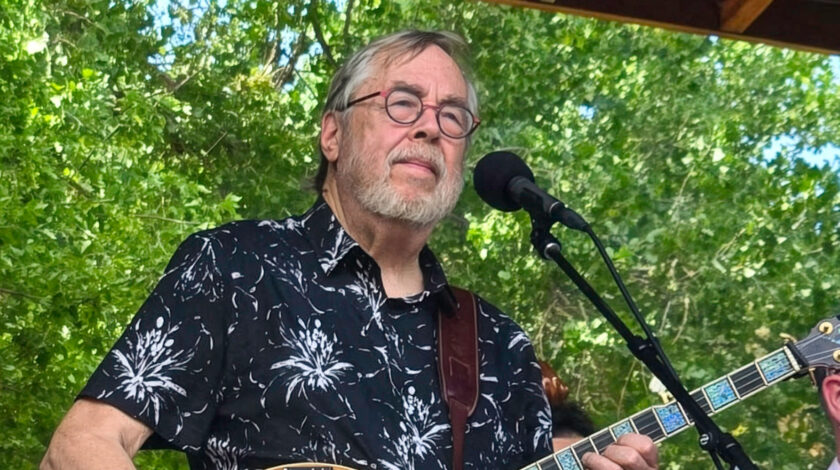

Jack Tuttle has been a huge part of the California bluegrass scene for as long as most of us can remember, and has deservedly garnered more attention as his now-famous students have matured and moved on to arguably greener pastures. He’s a player’s player and a great teacher of most anything with strings. I’m honored and happy to help extend his legacy to the remaining folks who don’t know his background and full story with this profile.
Howdy Jack. How is your summer music schedule shaping up?
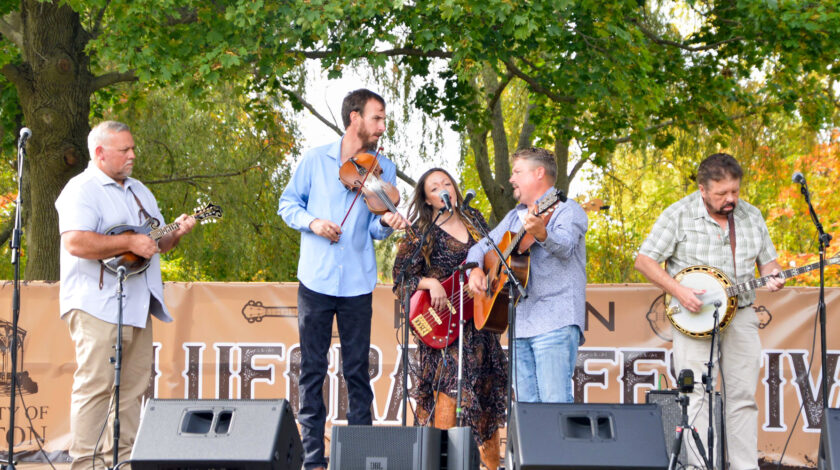
So far, so good! After a week at Grass Valley, I headed up to Weiser, ID, for the National Fiddle Championship. For me, that’s a chance to jam with old friends I made there back in the 1980s. I’m headed now to Illinois and the Frankfort Bluegrass Festival, followed by a quick trip to Nashville. Then, RockyGrass at the end of July, which both AJ Lee and Blue Summit (with Sully) and Molly are playing.
What events out of California do you frequent and love, and what about them is different than in-state festivals?
My go-tos are Wintergrass, RockyGrass, IBMA (now in Chattanooga), sometimes Winfield, and other random festivals depending on whether Molly or Sully are there. For me, the big factor is the jam scene. Since I’m not in bands these days, I have to get my fix in jam sessions. Also, Nashville could be on the list for just jamming around town, no event needed there! But I may add in SPBGMA’s January gathering in Nashville, since I’ve heard good things about that event. The biggest difference outside of California is how few picking friends I may know, and weather variability!
Do you often follow your kids around on their tours?
I follow them quite a bit. I’m on my way to Nashville to see AJ Lee and Blue Summit at the Ryman. My first time there was in 1963 when my parents took me and my sisters to the Grand Ole Opry, a road trip from Illinois! But honestly, there are just too many shows now, so I have to pick and choose. My friends often ask if I’m going to the next big show, but I can’t make them all! For instance, when Molly did her shows with Ringo Starr, I wasn’t there. There are just too many amazing shows now.
What is your musical background?
My dad was a farmer, and he played guitar and banjo, and was into bluegrass and old country (it was new then!). So I learned a bit of guitar and banjo from about age six. Later, my sister Jill started playing bass, and I took up the mandolin. That’s when we really got the bug and started going to bluegrass festivals, mostly in the Midwest, starting when I was around 17 years old.
What instruments do you play regularly and teach?
I teach guitar, banjo, fiddle, and mandolin. I spend most of my practice time these days on the fiddle, but all of them have had their moments for me.
What was your first instrument, and do you still have it?
Well, I started on my dad’s instruments, and the first was a Gretsch acoustic guitar, which recently hung for a few years in the Country Music Hall of Fame in a display about Molly. Also, my dad had a Gibson RB-100 banjo, which I played until I accidentally knocked it over and sheared off the headstock. Unfortunately, my dad replaced that for several years with a poorly made Alvarez banjo. I guess there were some thin years on the farm! The first instrument of my own was a Gibson electric Les Paul Jr., which I used as a kid in a rock band called The Strangers. Probably not a good thing to admit, since I know nothing about playing rock guitar! But that guitar is now something of a collector’s item, and I still have it.
You are generally thought of as a hardcore bluegrass guy, but you play swing and other styles. Can you talk about your non-bluegrass/old-time interests and idols?
My thing has been teaching kids and adults to jam, and feel comfortable in the world of bluegrass jamming. I taught 40 students a week in jam classes up until the pandemic. I did that for decades, in addition to giving private lessons, which were oriented toward getting students prepared for jamming. And since the world of bluegrass jamming is the world of hardcore bluegrass, that’s where my reputation lies. Less known is that I also ran a western swing jam class for several years and had some really good students in that.
I’m pretty varied in my non-bluegrass interests. Certainly, the Django/Grappelli Hot Club had a huge impact, as well as the major western swing bands. Instrumentally, the two biggest idols for me in swing were Johnny Gimble and Tiny Moore. I’ve found myself playing through the years with singer-songwriters, and have dabbled in that a bit myself. Nowadays, I find myself listening to more songwriter-oriented music, especially if it’s spun off of bluegrass, which is interesting since Molly and AJ now occupy so much of that space.
Tell us about some of the bands that you have played in.
My first bluegrass band was with my father, sister, and two guys from the same small town in Illinois. We called ourselves the Tuttle Family Band—just an amateur thing for fun. When I moved to California, I played mandolin and fiddle in the Gryphon Quintet, which was a mix of bluegrass, singer-songwriter, and very complex jazz vocals. We didn’t fuse the styles together; we just jumped styles from one song to the next. After that, I joined the Fog City Ramblers, replacing fiddler Paul Shelasky, who had gotten the Disneyland gig in LA. Overlapping that was a string swing group called Rhythm & Romance, with Paul Mehling (now leader of the Hot Club of San Francisco) on lead guitar. My last band, of course, was The Tuttles with AJ Lee. In the beginning with them, I’d split between playing fiddle and bass. We’d get a fill-in bass player for the fiddle part of the show. But as the music started getting more stylistically varied and arranged, I mostly just stuck to the bass.
You have been a huge mentor/teacher to many. Did you have similar mentors and influences growing up?
I didn’t really have mentors too much. I’m mostly self-taught, although I’ve spent so much time playing with really good musicians, and ended up learning a lot from them by osmosis and conversation. Many of the folks I played with in the early 1980s in Palo Alto had Stanford music degrees, and I went from knowing literally nothing about music to being fairly knowledgeable. In the Gryphon Quintet days, my ears were failing me in my ability to understand more complex jazz ideas, so I took a series of lessons from Dave Balakrishnan, the Turtle Island String Quartet founder, and most of what I know from a theory standpoint about jazz soloing is from those lessons.
How long have you been an instructor?
I started in 1979. You’ll have to do the math, I don’t work with large numbers anymore!
How many students do you have?
I’m trying to taper off my teaching. I’m down to about 20 students per week, and mostly not taking on new students. My group classes ended with the pandemic. My instructional book business, which covers fiddle, mandolin, banjo, and guitar, has been very successful, so I’ve decided to focus more on that part of the business, which allows me to travel more. Also, in the works is a new guitar book featuring the playing of Molly!
What things do you think make a great instructor?
I guess it’s a whole list of qualities. Knowing the subject matter, of course. Understanding how the process of learning works. Understanding how each individual learns best. Creating an environment that helps provide the passion. And probably a lot of other things if I put my mind to it!
What things do you notice in students when they are making big improvements?
That they have a passion for the music, and the desire to learn and improve. For developing the highest-level technical skills, it appears that youth is very important, along with the time availability to practice the necessary hours. But there are lots of factors: learning to hear the detail in music, addressing technical limitations, and taking them head-on with a plan to improve. But all of it takes the passion as a starting point.
What is a great motivator when people feel stuck in a rut?
Starting a music project, attending a festival, making friends with like-minded musicians, playing with a band, finding a new band or music that inspires. A good teacher can lead a student into some of this, but with kids, having supportive parents is probably the more important factor. And to some extent, creating a solid practice plan that directly addresses limitations.
How do you approach teaching someone who came from a classical background, and what advantages/disadvantages do they have versus those who are more self-taught?
That’s only common for my fiddle students, and I do like teaching a violin player turned fiddle player, especially if they have developed good technical skills already. I don’t think there are any disadvantages. There may be a huge mismatch between technical ability and improv skills, but it’s easier to teach improvisation if the technique is there already. A common fallacy is that reading music harms playing by ear, but it’s not the reading that’s the problem; it’s the lack of time spent playing melodies by ear and/or improvising. If someone spent their entire childhood learning to play from music notation, they’re likely a beginner at playing by ear, so that can be daunting for them.
On your website Student HOF page, you mention that your son Sullivan “is able to play at the highest tempos with ease.” Can you describe what it takes to achieve that?
Well, that could be said about all three of my kids. I’m pretty sure for that kind of extreme speed, starting young is a major factor: Molly started at age eight, Sully at seven, and Michael at six. Beyond that, for high speed with a flatpick, I’d say training with pick exercises is a good starting point. When Sully was about 12, we re-worked his right-hand technique, incorporating more movement from the elbow, and as part of that, he spent about 20 minutes each day working on speed by playing only open strings and especially focusing on inside picking patterns. I’m an advocate of no right-hand contact with the top of the guitar, so that’s how my kids do it, but of course, many great players do anchor to the top.
When my students work on speed, I often have them use a two-pronged approach. The normal slow and steady with a metronome increasing tempo over time. Then also, I have them play at a tempo faster than they can play cleanly, while working on cleaning up the notes. So it’s actually similar to slowly increasing tempo, only for this, it’s slowly increasing the cleaness.
You have some great bluegrass books. How would you advise someone who wants to venture into jazz or swing? Any good books or resources?
I’ve seen some pretty good books focused on guitar, especially the Django style, but somehow haven’t noticed many for mandolin and fiddle. I’d love to try my hand at something like that if I can find the time. I have developed a concept of how to teach that, and have prepared written material for it, but I’ve yet to compile it into a book.
I’ve studied some of Dix Bruce’s swing mandolin materials and was lucky to have attended his guitar and mandolin workshop at Gryphon.
I forgot about Dix’s stuff. I do have them – Dix was a pretty good friend, and I still miss him.
How can students connect with you?
Well, since I’m not looking to take on new students, maybe best would be just checking out my website. They can find lots of bluegrass information, tips, and, of course, all of my instructional books.
Do you have a day job?
I’ve never had a job outside of music and teaching, beyond working for my dad on the farm in Illinois growing up.
Are there any great new tunes or artists that you have recently discovered?
As someone who loves improvising, the tune is just the structural canvas for ideas, so the tune itself is not the main thing. I think more about the tunes I don’t like, because in a way, that’s a reflection of my own shortcomings. It’s fun to take those tunes and develop ideas to the point where they’re fun to play, and then I like them!
As for new artists, they’re almost too easy to find now with online socials – kind of takes the fun out of it! So I have no hidden gems to offer. And I’m biased for sure, but between Molly’s and AJ’s bands, and also my old fiddle student, Brittany Haas, now in the Punch Brothers, I feel like they hold up to anything out there, so I’ll go with them!
Can you give me an example of a tune that you didn’t like but developed it to where you now enjoy playing it?
Yeah – for years I never liked Turkey in the Straw. That’s one of the first tunes I remember deciding it’s on me to make it more interesting. So I just kept playing around with variations on the melody until some months later, it became a fun song for me to play, and at some point, I taught it in an advanced class with guitar and mandolin solos.
Turkey in the Straw Audio MP3 and Guitar/mandolin Tab PDF.
Can you share some magical moments while playing on stage with your kids?
A few that come to mind: Playing on A Prairie Home Companion with Molly. The Tuttles with AJ Lee playing at the Strawberry Festival back in the Camp Mather days. Also playing the CBA’s Father’s Day Festival and showcasing at IBMA in Nashville. And we did a fun tour of the UK as just The Tuttles.
Does the family still get to pick some when the kids are all home for the holidays?
Lately, we have been playing a bit. Molly had a show in town last Christmas, so she turned that into a “family and friends” show, which included me, Sully, AJ Lee, and also my son Michael, who is a great mandolin player but works in the AI computer field now. Lately, we’ve been jamming some at family gatherings, and now Molly’s boyfriend is Ketch Secor from Old Crow Medicine Show, so he’s there too!
Molly Tuttle – Grass Valley featuring Jack Tuttle, filmed at Hartland Studios in Nashville