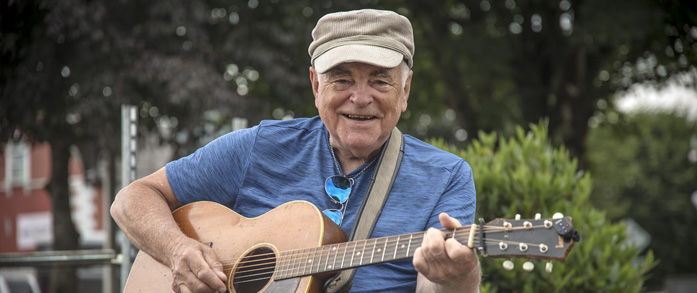
Last week we published a story about Larry Sparks and his most recent single, an evocative song about the US Civil War Battle of Gettysburg, titled The Fields of Gettysburg. That led to an email exchange with co-writer Niall Toner, which ended with a request that he write a bit about how he, an Irish folk singer from Dublin, found bluegrass music and became known as a songwriter.
Here is that piece, which we’re sure you’ll enjoy.
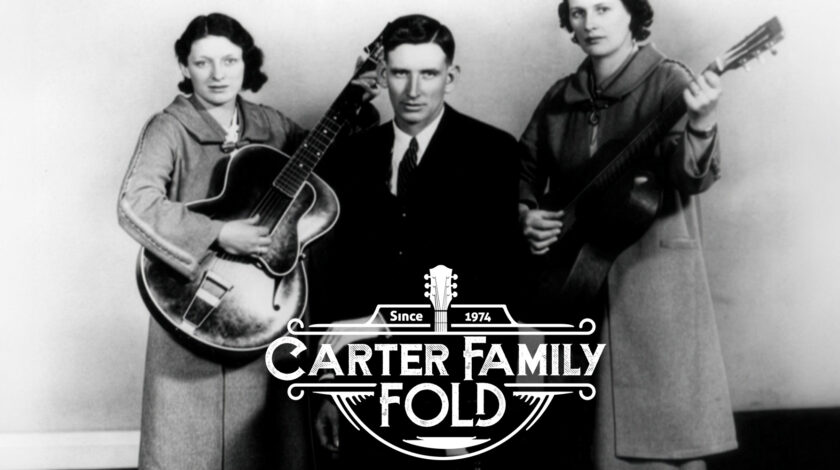
In common with so many of the people I admire in bluegrass music, my interest began in my early teens with an introduction by a school pal to the music of Jimmie Rodgers, The Carter Family, Flatt & Scruggs, and Bill Monroe. At that time, the early ’60s, most of our contemporaries in Dublin, Ireland’s capital city, were preoccupied with the music of Elvis Presley, Eddie Cochran, Billy Furey, and latterly The Beatles and Rolling Stones, so we few were seen as being somewhat ‘square’ to be listening to what was considered to be old-fashioned music.
None the less, that was the music I stuck with, and it eventually led to finding a job at RTE Radio One, the National Radio station, presenting shows over an almost 30 year period, under various titles, including Roots Freeway, Country Heartland, and Sunday Best. That same music inspired me to begin performing, learning mandolin and guitar, and forming and fronting many string bands including The Lee Valley String Band, The Sackville String Band, Hank Halfhead & The Rambling Turkeys, and various line-ups of The Niall Toner Band. More recently, I have been performing and writing in partnership with Andrea Booth, and we have released a number of singles, Never Too Old For Love, and Money, as well as a number of performance videos available on YouTube.
Around 1990/’92 I began writing my own songs and tunes, and I made an effort to begin trying to replace the standard Carter/Monroe songs in my repertoire, with the result that after some time my band’s entire set list had morphed from all covers to all originals, and presented me with the opportunity to begin pitching my songs to other artists. Also around this time, I began to expand my writing activities by going for month-long trips to Nashville, and other parts of Tennessee, and to North Carolina, and writing with as many co-writers as I could contact. I should also like to thank all the folks who shared their talents with me at this time, as it formed a large part of my learning curve …..
Bluegrass Success : My first success in the field of bluegrass was with The Nashville Bluegrass Band. They made an appearance at the annual Bluegrass Festival in Omagh in County Tyrone, and my band were on the same bill. I approached the now late Roland White, their mandolin player, and gave him a copy of a song I had written with Don Poythress and Terri Lynn Weaver the prevIous year in Nashville, called There’s a Better Way. NBB recorded it the following year, and it’s featured on their Twenty Years Blues album, which was nominated for a Grammy.
My next cut came from a similar experience, proving that the personal touch remains vital! This time it was a chance meeting with Greg Cahill of Chicago band Special Consensus, when I pitched him a song called Josie’s Reel, which I had written in Ireland with Keith Sewell while he was in Ireland on holiday. Special Consensus, in spite of many line-up changes in recent years, still include Josie’s Reel in their live set. They say a good song is a good song, and as if to prove it, Josie’s Reel has also been recorded by a great band called the Downtown Mountain Boys, who put their own personal stamp on the song.
Italy’s leading bluegrass band, who are featured regularly at MerleFest, IBMA, and SPBGMA, have recorded another Sewell/Toner song called Fiddle and Bow, an autobiographical tale based on Keith’s experience of learning fiddle from his grandfather in Texas when in his early teens.
I am especially thrilled about the fact that Larry Sparks has recorded and released The Fields of Gettysburg, for a number of reasons. A coupel of years ago I visited the bluegrass festival at Bill Monroe’s home place near Rosine, Kentucky, and Larry was one of the featured artists there. I got to meet him backstage, and shake hands, and he also let me try out that iconic Martin guitar of his! He won’t remember me from that occasion, but the more recent contact came through Gary Ferguson, who has had several cuts on Larry’s previous albums.
When Gary told me about living on the site of the Gettysburg Battlefield, I was extremely touched by the horrific events of those days, and so I researched the details and was inspired to write a lyric about how the survivors on both sides must have felt after the battle was over. Credit too should be given to Johnny Gleeson for wonderful Dobro work on the demo, and to Gary for his contribution.
I should add that there’s plenty more songs where this came from, and if anyone wants to get in touch, my email is as follows: [email protected].