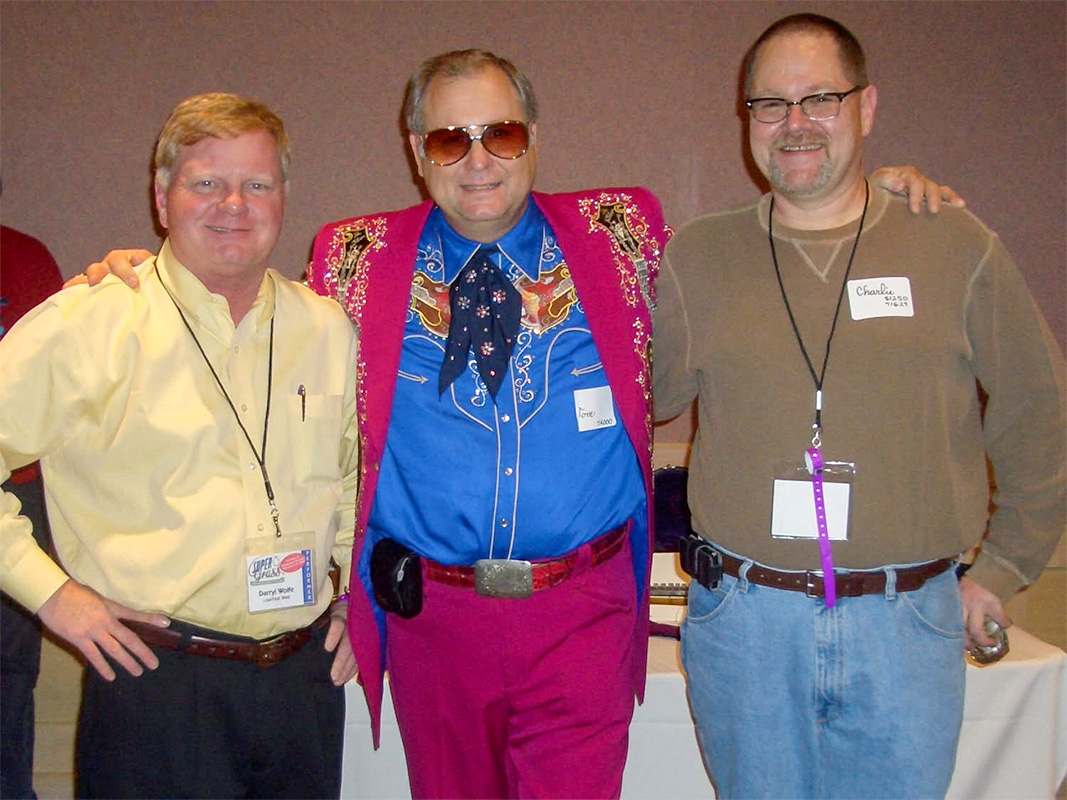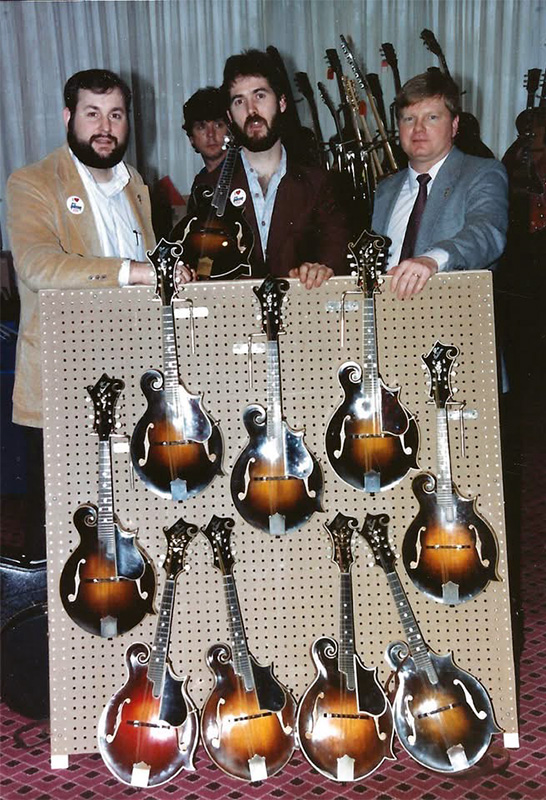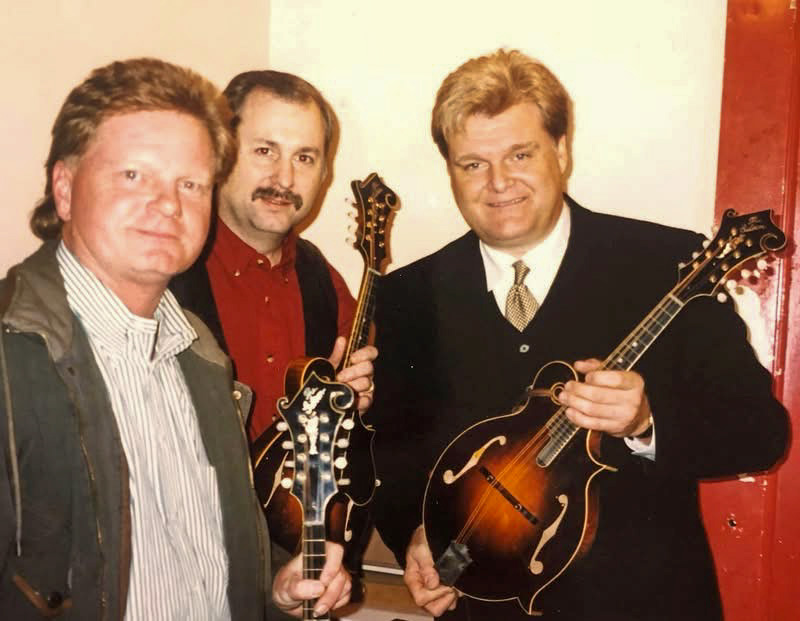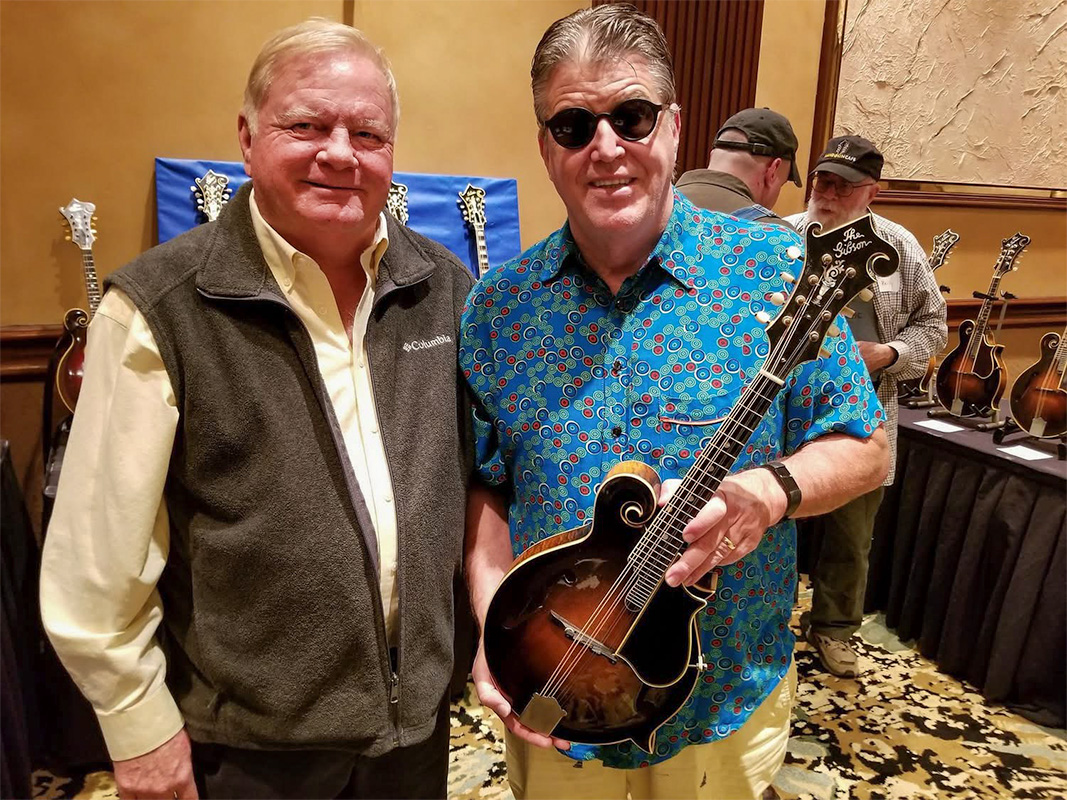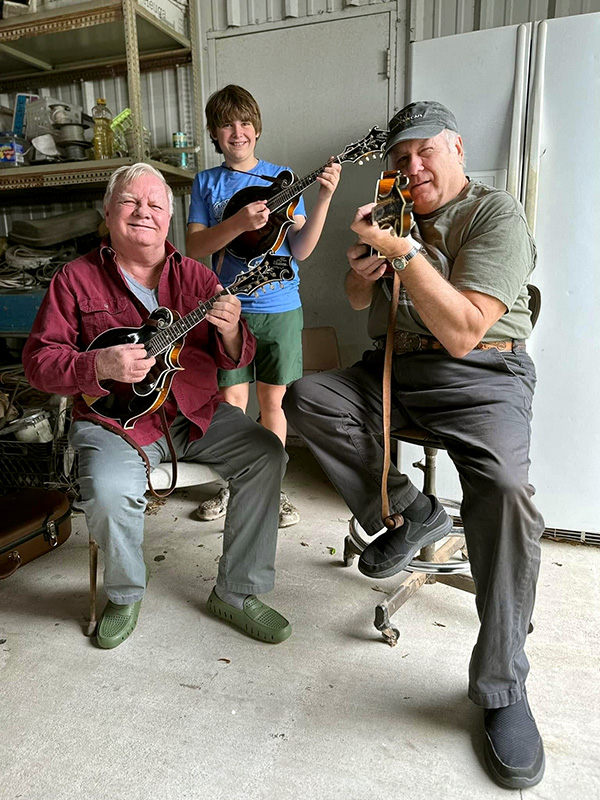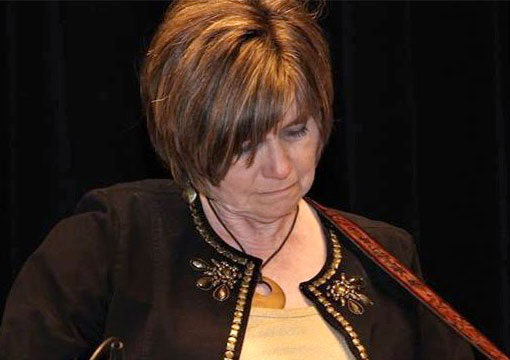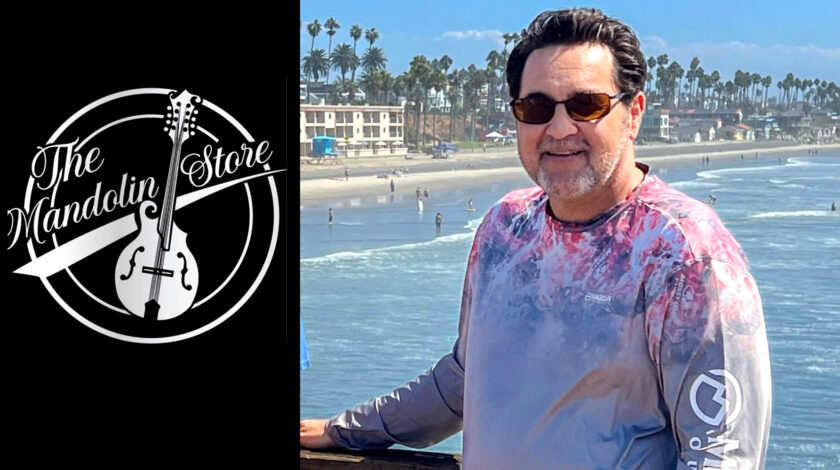

Mandolin aficionado Darryl Wolfe, 73, passed away on May 25, 2026, following a period of failing health.
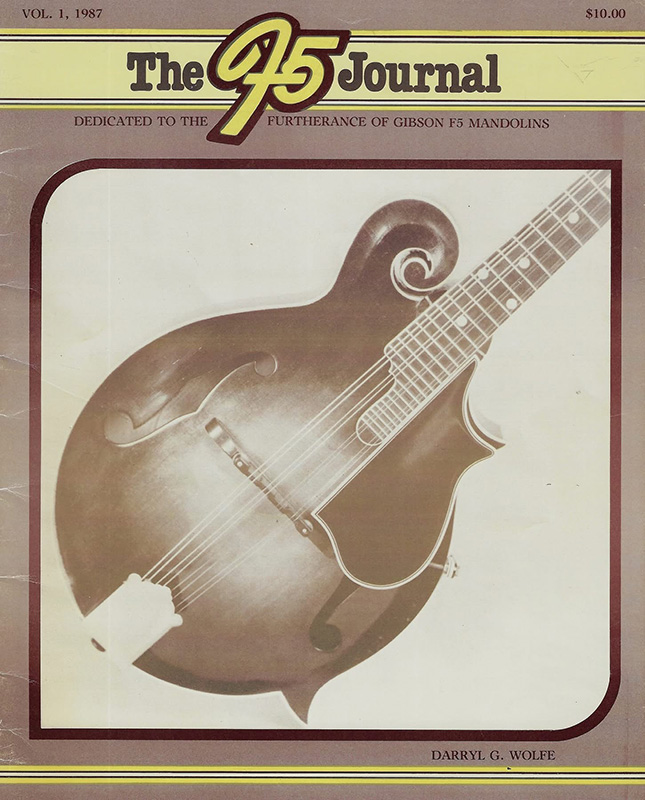
A founding member of the Knoxville Grass, Darryl was also a respected luthier, bluegrass music historian, and author/editor of The F5 Journal, documenting an extensive catalog of vintage Gibson mandolins. His knowledge of mandolins and his instrument work became a valued resource for collectors, musicians, and historians who shared his passion for these extraordinary instruments.
Darryl was widely known for crafting replacement pieces for vintage instruments that replicated original parts, and were carefully aged to match the instrument’s character and history. Like father, like son: his dad, Bob Wolfe, who passed away last year, was a luthier of resophonic guitars and a gifted musician as well.
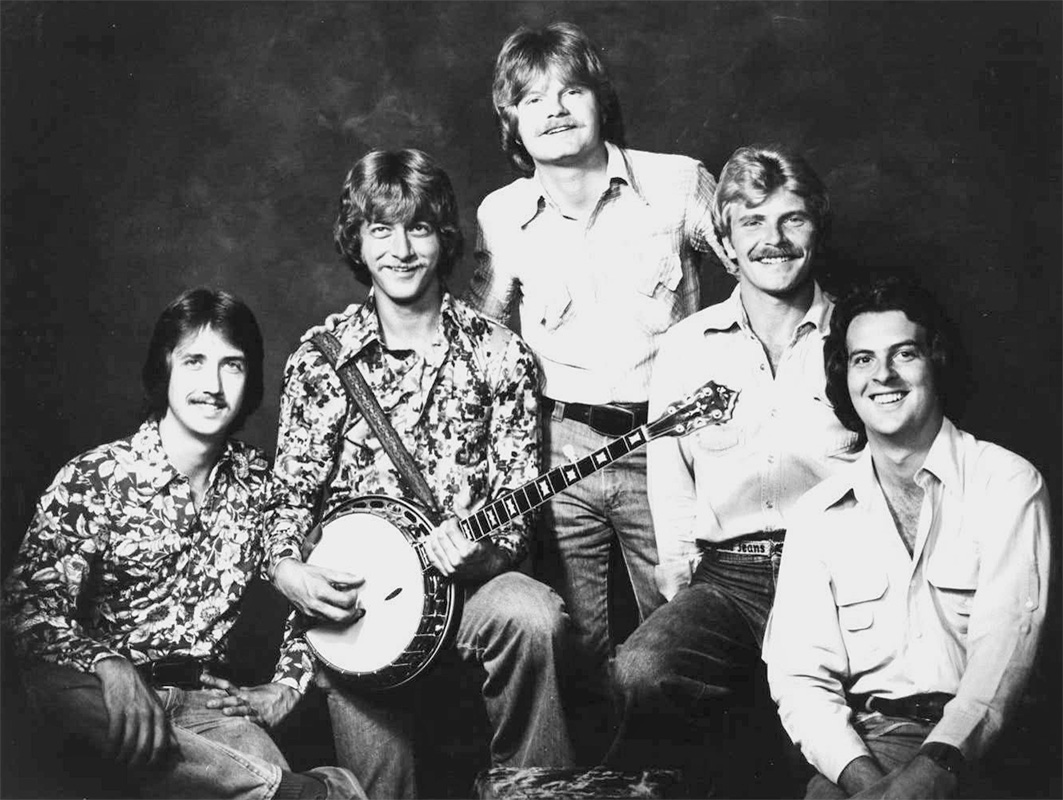
Knoxville Grass formed in 1976 and recorded multiple projects, beginning with a self-titled album in 1977 on Atteiram Records and Darby’s Castle in 1978 on Thunderhead Records. Darryl was featured on mandolin. A former bandmate, Paul Brewster, lauded his talents.
“Darryl was a good friend, a great guy, and a great player. He was an excellent member of the Knoxville Grass. He was precise in what he did. He picked a lot of great songs for us to do when we played.”
In his F5 Journal, Darryl shared his philosophy and his passion for vintage mandolins that really hits home with his passing.
“It has been said that an endeavor is a justifiable project only when it can be made to serve a purpose that reaches beyond that of perpetuating itself. At this time, most of these instruments have outlived their original owners, and most will survive their present owners. We, as owners, are merely renting a one-on-one slice of time with regard to the life of these instruments. Wouldn’t it be great if the instruments themselves could talk?”
As a connoisseur of vintage mandolins, Darryl was well respected in the bluegrass community. Many elite pickers and collectors expressed their sympathies and appreciation for his work:
Joe Previtera shared a little of Darryl’s history.
“In 1966, at the age of fourteen, Darryl Wolfe unknowingly began his research into the Gibson F-5 mandolin. Fed by his father’s mutual interest in playing bluegrass music, and trips to the various music festivals, Darryl quickly developed a thirst for more facts about the revered Gibson Master Model mandolins.
For over twenty-five years, Darryl collected and assembled the information presented by developing a log book on the numerous mandolins he came across, library research, photographing instruments, studying previously published data, and sharing information with other interested people. In the end, this study will provide more facts about the known Gibson F-5 Master Model mandolins, and aid in the preservation of these fine American made instruments.
He has owned many Gibson mandolins over the years, including four Lloyd Loar signed F-5s. He also provided high quality reproduction parts for vintage instruments in addition to sales and repair of vintage instruments, performing, and teaching mandolin.”
Tony Williamson of Mandolin Central relayed Darryl’s impact on the mandolin community.
“It is a shock. We were the same age. I was playing with the Bluegrass Alliance and he was with the Knoxville Grass when we first met. We shared a mutual love of the mandolin and especially the music of Bill Monroe. In that period of time (the late ’60s and early ’70s), we were really fascinated with the idea of the F-5 mandolin.
Everybody wanted old ones and they were really scarce. The name Lloyd Loar only surfaced when Bill Monore would hand us his mandolin. It didn’t have Gibson in the peg head. The only name on it was on a paper label inside that said, ‘Lloyd Loar’.
It began a search among bluegrass players for a Lloyd Loar F-5. The dream came true when you actually owned one and then you wanted to meet other people who had them. I kept a little log book of ones I had seen. What made Darryl stand out is he approached it with almost a librarian consciousness, where he organized his notes with serial numbers and names [of owners across the country] and took photos. In the ’70s, he was joined in this venture by Tom Isenhour. I didn’t realize at the time how valuable that work was. Darryl pushed forward and finally published his first issue in 1987. I have a copy. It’s sort of a who’s who of bluegrass mandolin players as well as a few classical players.
There were lots of things that Darryl did in his life that are worthy of acknowledging a lot more than just his work with the F-5. That work that he collected his whole life is going to be a resource from now on. On my blog during the 100 year anniversary of Lloyd Loar, I referred to Darryl’s scholarship almost on a daily basis and I still do. When somebody walks into my shop with a Lloyd Loar mandolin, the first thing I’m going to do is double check their serial number against Darryl’s work. It has helped us identify some fakes. His work has helped document some instruments that were stolen and helped to get them recovered. Throughout the country, music stores that sell mandolins refer to his work. That legacy alone is significant. I just can’t stress how important his work was and what a far-sighted venture that he entered into so many years ago.
Darryl’s contribution to the legacy of Lloyd Loar and the Gibson F-5 mandolin could not be overstated. The body of work he collected and published will be of invaluable service for all time to come.”
North Carolina collector, historian, musician, and longtime associate of Darryl, Tom Isenhour reflected…
“It’s so hard to see another great friend of mine in bluegrass music leave this world so soon. Darryl Wolfe was more than just a bluegrass friend, we found so much in common with each other. When he lived in North Carolina, we passed by each other in the same bluegrass circles in the late ’60s and ’70s. By the late ’70s, I was hearing Darryl’s excellent mandolin picking on some Knoxville Grass albums. Those guys were so smooth.
If you are into bluegrass music through the music of Bill Monroe and you pick a mandolin, you get that ‘I want a mandolin like Monroe’ bug. Darryl had that bug bad in the ’70s and I got it bad in early ’80s. When I got my first Gibson mandolin ‘just like Monroe’s’ in 1982, I found myself learning all I could about these mystic and rare Gibson mandolins of the 1920s.
In a May 1970 Bluegrass Unlimited magazine article, Benny Cain listed only 28 known serial numbers of these hard to find mandolins. That caught my attention and I started adding to that list. I contacted Darryl in Knoxville about that same year to tell him I had more serial numbers to add to Benny’s list. Darryl said he did, too. We met and exchanged serial numbers and mandolin photos as our friendship grew.
The ’80s found me knocking on owners’ doors of these rare mandolins, taking photos/serial numbers and passing them along to Darryl. By 1987, Darryl had enough serial numbers to do a publication. With the help of Joe Previtera, Gene Vaccaro, and myself, the first issue of The F5 Journal was published and sold for $10.
That little 18-page paper booklet would be the beginning of the preservation and furtherance of pre-war Gibson F-5 mandolins. Soon there would be gatherings of like-minded mandolin owners at places called LoarFest.
From East Coast to West Coast, Darryl, myself, and many others would follow that Monroe mandolin mystic. Sure we got called ‘mandogeeks’ and ‘Loar worshippers,’ but it was a quest. It’s more than just owning one, it’s knowing and learning more about its history that was unfolding through Darryl’s keen eye for details. Prayers to the family as Darryl begins his new life. R.I.P, my friend.”
David Harvey, recently retired luthier with Gibson, shared his sentiment.
“Darryl’s depth of information and his efforts especially in publishing The F5 Journal is to this day a great resource for the mandolin community. His passion was not just the F-5 mandolin, but went back to when he started playing. I knew of his work with The F5 Journal way before I got to know him, mostly talking with him over the phone about all things mandolin and his willingness to share information and incredibly rare parts with me for restorations. I knew I could always call on Darryl and he would share any and all of that.
And of course, his work with Loar Fest, Banjothon, and Martin Guitar Fest cannot be under estimated. When you have a firecracker like that in the community that gives so much of his time, I cannot begin to imagine what the mandolin community would be without Darryl’s influence, depth of knowledge, and his willingness to share everything he had and knew. He was just a sweetheart of a guy. I’m already missing him. I ran into something I was looking for and first thought, ‘Oh, I’ll call Darryl.’
God bless Darryl Wolfe. Prayers for Darryl’s family and friends during this time of loss, please. Rest In Peace, my dear friend.”
Mando master, David “Dawg” Grisman, stated…
“I’m saddened by this news. I met Darryl about 50 years ago at the beginning of his F5 Journal quest and we stayed in touch since then. He was a wonderful guy and a real boom to the mandolin community for decades. I will miss him.”
Scott Tichenor of the Mandolincafe.com weighed in.
“Darryl, as most know, was a member here for decades and was the spark that made the Loar Picture of the Day threads light up, among many other things. He posted over 6,000 times. Darryl was very generous with his time and information across the Cafe for years, and will be sorely missed by his friends and family and the bluegrass community at large. Darryl had a lot of friends here and across the planet in the mandolin world. It’s a good time to stop and remember the legacy he left, including The F5 Journal and more. It’s a sad day.”
Ken Waltham of Canada stressed…
“The man who meant the most to me in the world of pre-war F-5s, who influenced me the most, who advised me, and actually would call me for advice on his dealings and purchases, has now passed away. Over the last six or seven years, I video chatted with Darryl three or four times a week. We talked extensively about mandolins, Lloyd Loars in particular, but pre-war F5s of every type. We also shared many many personal views, reflections, experiences, and those things that we both valued and looked forward to. I got to know him really well over that time.
As a younger man, I purchased The F5 Journal and poured over every single entry incessantly. I went to the first Loar Fest gatherings at IBMA, met all the Loar owners in a personal sense, and memorized everything about all the entries in that journal. Then, in 1995, when I purchased my first signed F-5, a side bound July 9 number 73993, Darryl called me and told me that I had made the best deal in the last 20 years.
His interest and devotion to those models never changed over the years. Mine didn’t either, and we always had a lot to talk about: tonality, the actual migration of our likes and preferences from earlier years, and all those details that made them so special.
Darryl had confided in me in many different areas of his life, and in many ways, that’s what I will miss most. He sent several recordings of him and his friend, Byron, playing Monroe tunes. I have to state that they were flat out amazing.”
CJ Lewandowski, mandolinist with The Po’ Ramblin’ Boys, added.
“I was bit by the Loar bug early on as a kid, and I remember receiving my first list of The F5 Journal someone had made a copy of for me. From that point on, I set out to study these instruments and document them for the next generation with Darryl Wolfe’s manual to guide me along the way.
I’ve played about one-half of the documented Loar signed F-5s through the years, and even jumped up a couple of them from closets and under beds. It was like meeting a celebrity when I met Darryl Wolfe for the first time, and he immediately took me under his wing. Confirmation to a young man that made me feel a part of the club, my opinion mattered, and I possessed knowledge that was respected. Darryl gave me that. He helped me attain my first Pre-War F-5 and would call me regularly to discuss the newest find of the latest sale.
It’s a brotherhood that Darryl cultivated into a huge community. My journey would not be what it has been without the influence and friendship of Darryl Wolfe. I am reminded of him when I look at the vintage Gibson memorabilia he entrusted me with, and when I see his face on those old Knoxville Grass recordings. His legacy and dedication to the vintage instrument world will never be lost.”
In Darryl’s own words from The F5 Journal’s home page…
“The intent of this journal is to document information about Gibson F5 mandolins and related Lloyd Loar instruments. The F5 Journal is the culmination of my experience with F5 mandolins which dates back to 1966.
Many people have written articles and published serial number lists related to Lloyd Loar and Gibson instruments. To my knowledge, Benny Cain was the first person to publish a list of F5 serial numbers. His articles appeared in Bluegrass Unlimited during the late sixties and early seventies. During this same period of time, Louis Good and Scott Hambly collaborated on Lloyd Loar research. Scott and Louis gathered much information and kept a list of mandolins, which was passed on to me. Roger Siminoff published by far the most comprehensive list of Gibson serial numbers in his articles for Pickin‘ magazine in 1975, 1976 and 1977.
The first three ‘real’ mandolins that I held in my hands were Bill Monroe’s ’23 F5 and Tut Taylor’s ’23 F5 and A5. These historic instruments were enough to spark my lifelong interest in this field.
For many years I kept a logbook on F5 mandolins. Each mandolin had its own page on which I documented pertinent details and kept track of the instruments’ various owners. The list of serial numbers contained herein is a condensed version of an electronic database that I now use to document this information. The information contained in The F5 Journal is the culmination of these years of effort, plus the efforts of all of those mentioned above.”
Services will be held privately at a later date. In lieu of flowers, memorial donations may be made to The Williams Syndrome Foundation.
This writer would like to offer sincere thanks to Tom Isenhour for his invaluable input into the compiling of Darryl Wolfe’s legacy in bluegrass music.
R.I.P., Darryl Wolfe.