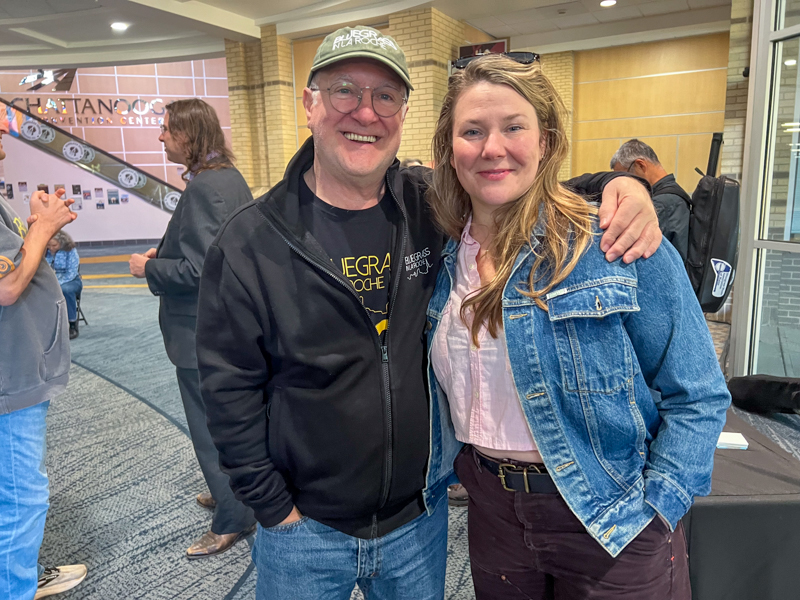
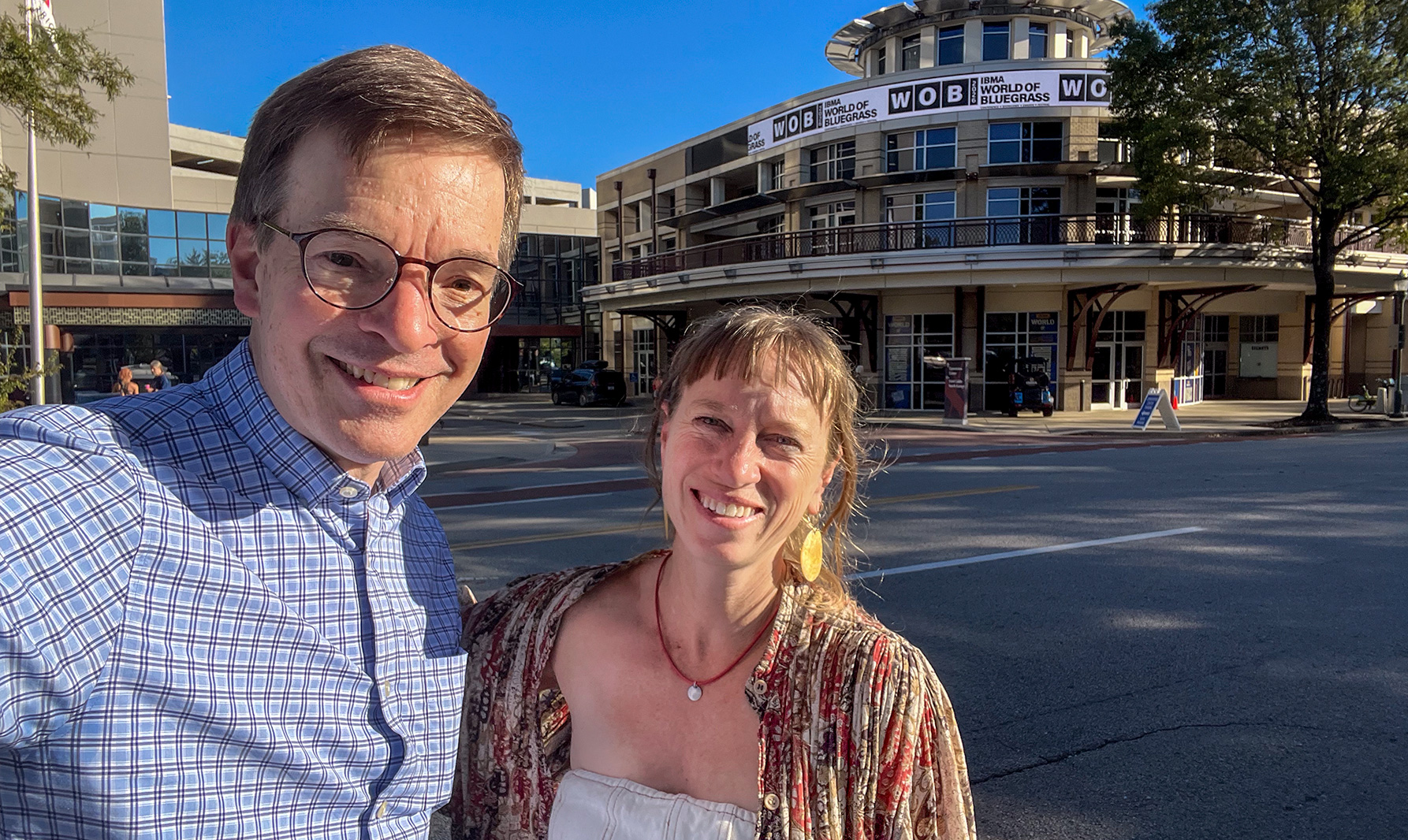
Tim Burns and Anya Hinkle of The Bluegrass Scene in Japan at World of Bluegrass ’26
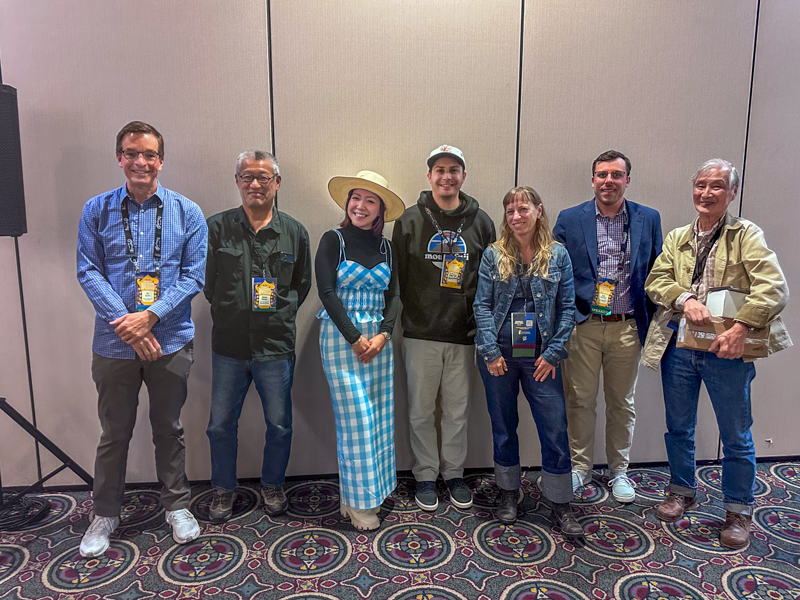
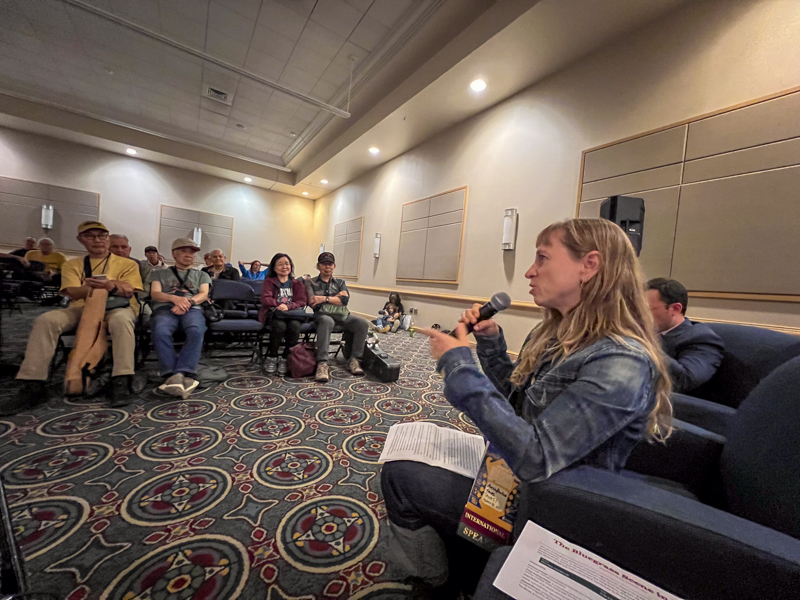
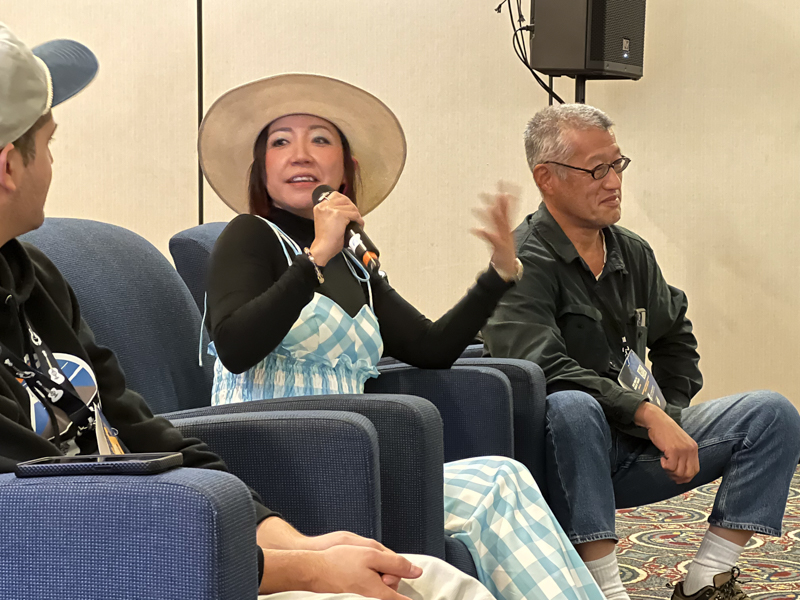
This comprehensive report on the World of Bluegrass seminar, The Bluegrass Scene in Japan, is a contribution from Anya Hinkle and Tim Burns, who organized the seminar and panel discussion on the topic. They were joined by Zach Dressel from the Earl Scruggs Center, Leona Tokutake, who performs as Fiddling Leona, Chad Andrew Harris of Bluegrass Journeymen, and Hideaki Mizuno of the Bluegrass Association of Maine. Special guest Toshio Watanabe of B.O.M. Services, Ltd. was also on hand.
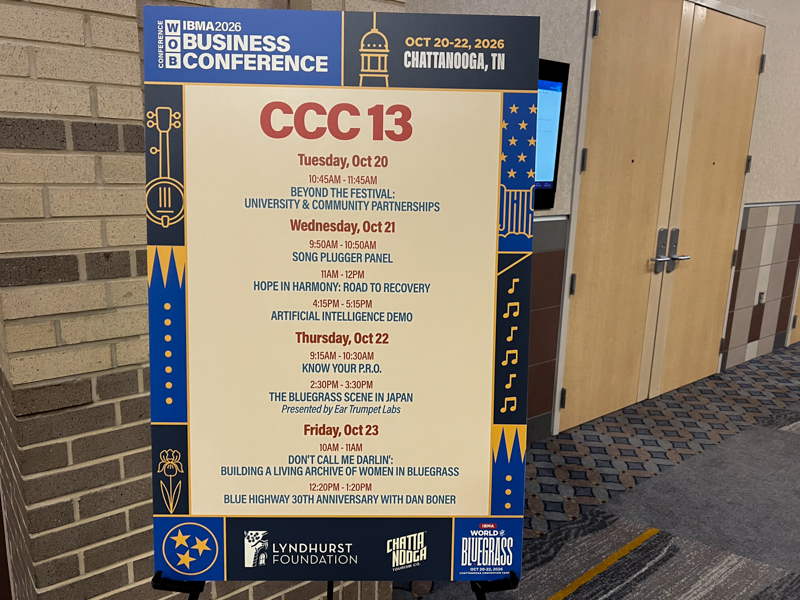
With the growing momentum around bluegrass in Japan, from touring American artists to new cross-cultural friendships, it felt like the right moment to bring that conversation to IBMA. So this year Anya Hinkle and Tim Burns put together a panel called “The Bluegrass Scene in Japan,” exploring its past, present, and future.
We wanted the panel to provide both historical perspective and a window into the bluegrass scene in Japan today—introducing some of the people who have helped shape it, as well as artists who have toured there in recent years.
The panel discussion was advertised at IBMA with the following description:
Are you a bluegrass performer considering a tour in Japan? Or a fan who would like to attend bluegrass performances, jams, or festivals there? Hear from bluegrass musicians who have toured in Japan and learn about festivals and events. Discover the long history of bluegrass in Japan, dating back to the 1940s, and the vibrant bluegrass subculture that continues to thrive there.
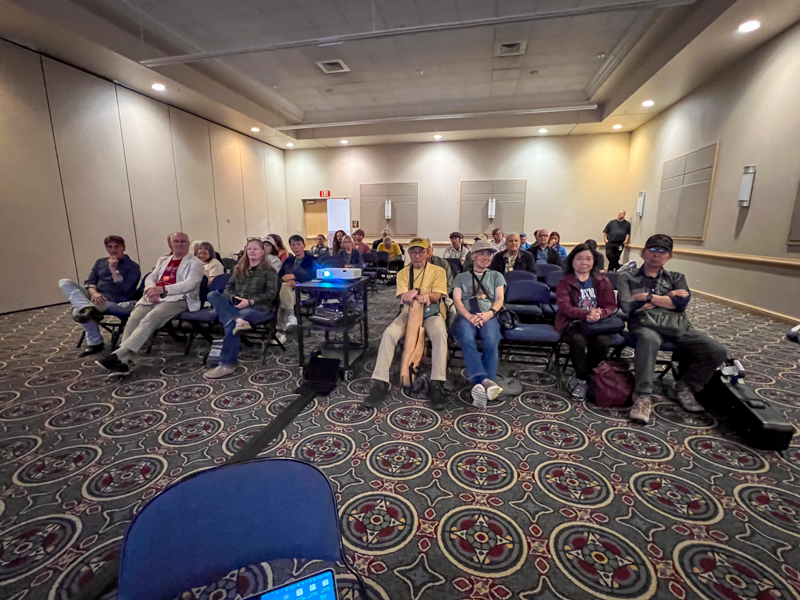
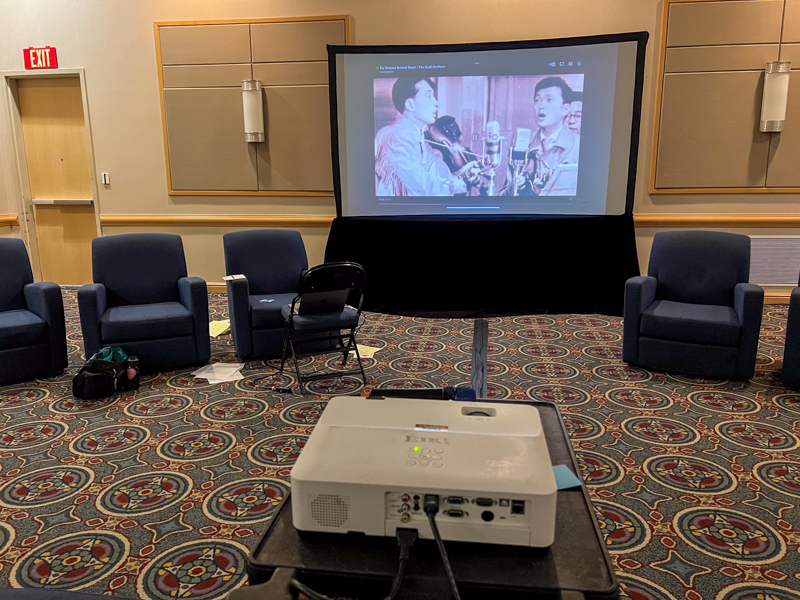
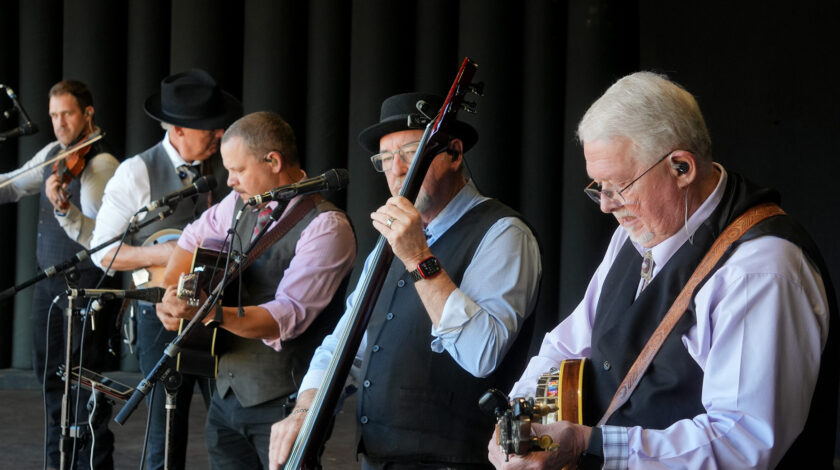
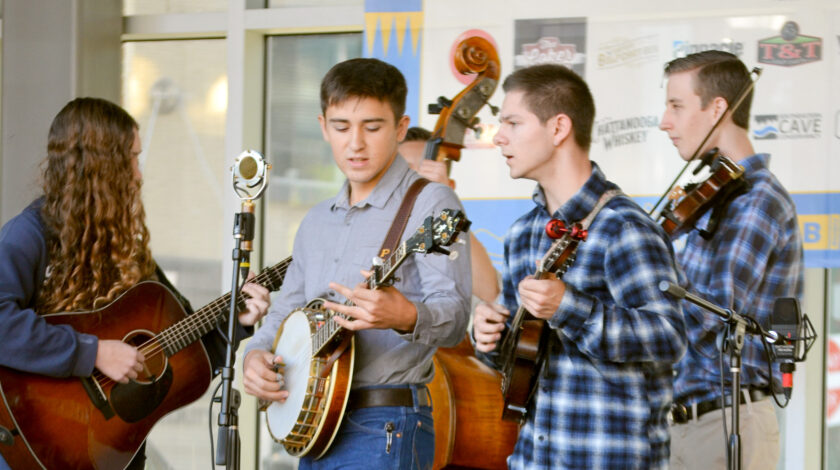
To set the mood and stimulate interest, as attendees entered the room before the panel discussion started, a series of photos of Japanese bluegrass performers and events was shown.
Tim started the panel with a visual journey of the bluegrass scene both present and past, beginning by honoring Denis Gainty’s work documenting the deep cultural connections between Japan and America. In a deleted scene from the documentary Far Western, the late historian Denis Gainty emphasized that bluegrass wasn’t simply exported to Japan and copied there.
He talked about the record released by the Ozaki Brothers (The East Mountain Boys) in 1958, which was around the same time that Folkways released the first bluegrass LP in the US. For generations, musicians, fans, and organizers in Japan have played, studied, recorded, and celebrated bluegrass. Together, they built a scene that has sustained the music, made lasting contributions to its history, and carried bluegrass far beyond its original geographic boundaries. The video that was shown was not included in the Far Western documentary, but can be viewed here.
The bluegrass scene in Japan has helped transform bluegrass from music associated with a particular American region into something that feels genuinely global.
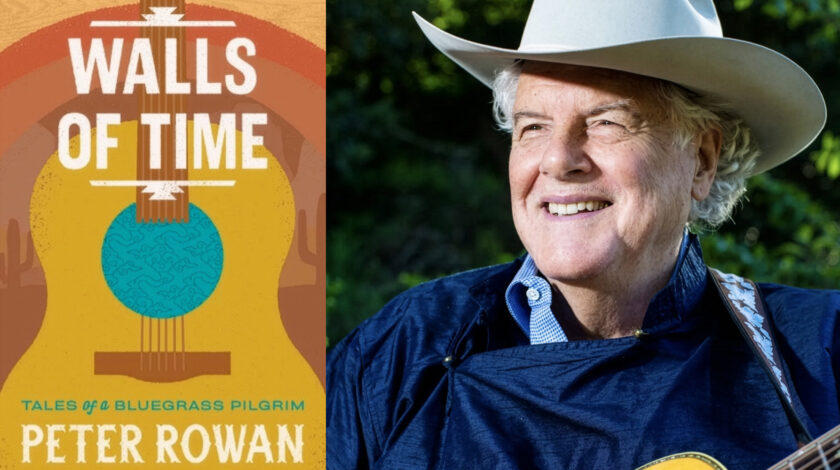
Tim presented a carousel of images from many venues across Japan, highlighting their long history and strong community. He showed photos and videos of Japanese musicians performing and jamming as well as recent tours by American bands, emphasizing the growing interest in touring Japan by established artists like Peter Rowan, David Grier, and Mike Compton, as well as younger artists like the Asheville Mountain Boys, Crying Uncle, Martha Spencer, Trey Wellington, The Bluegrass Journeymen, and others. The excitement these tours create helps to propel bluegrass forward for the next generation.
Anya’s part of the panel traced her own experience touring in Japan for over a decade. She focused on a project she did with Sab Inoue and broadcaster Peter Barakan in 2016 called Appalachian Voice. Appalachian Voice was a live program in which Sab Inoue told the story of how Appalachian music developed from European and African roots, later reached Japan, and took root there.
Commodore Perry’s arrival in Japan included music performed by minstrel bands, followed in later years by the music of composers and artists such as Stephen Foster, the Carter Family, and Earl Scruggs, creating a long legacy of musical exchange between the two countries. As Sab told the stories, Anya was the “voice,” performing songs that marked the different stages of that history.
Nearly a decade after Appalachian Voice, Anya and her collaborators in Japan and the US have created a new initiative called Country Soup to continue the work of Sab and Appalachian Voice, scheduled for March 2027. Country Soup has been endorsed by the US Embassy and is supported by a growing list of partners including the Japan American Society of North Carolina, the Paul Rusch Center and Kiyosato KEEP Seisen Ryo, BluegrassInJapan.com, and the Earl Scruggs Center.
Country Soup continues Sab’s concept while asking what the next chapter might look like. With young bands such as The HillAndon, Thompson the Fox, Takumi Kodera, and Ren Nozaki; Anya’s worldgrass trio TANASI, with Billy Cardine and Mary Lucey; and special guests from across Japan including Peter Barakan, Takada Ren, Inaba Kazuhiro, Bosco, Ken Inoue, Nacomi Tanaka, and others TBA, Country Soup wants to address one challenge facing bluegrass globally—how to pass the music on and keep it meaningful to a new generation.
This new partnership between Country Soup and the Earl Scruggs Center gave the Center’s curator Zach Dressel an opportunity to look deeper into the Museum’s archive for information about Earl Scruggs’ place in Japan’s bluegrass history. Zach compiled information about Scruggs’ landmark 1958 tour of Japan. His presentation included rare photographs of Flatt & Scruggs’ tour in Japan. He played an audio clip from a show during the tour in which the crowd requested and sang along with the band to the Martha White theme song.
Zach also played an audio clip of Earl Scruggs speaking about their first performance in a large venue that Earl described as “equivalent to Carnegie Hall. It was a real elite auditorium.” A manager asked if they would be willing to sign some autographs. While the signing was underway, it became apparent to the long line of autograph-seekers that there would not be sufficient time to allow everyone in line to get to the table. The crowd surged and pushed, and a pane of glass was shattered. The promoters rushed Flatt and Scruggs into a nearby room and turned off all the lights. Some hours later they were escorted out the exit using the light provided by cigarette lighters. In the clip, Earl Scruggs is chuckling with amusement as he tells this story. Each night Earl would say, “Can we autograph tonight?” The promoter replied, “No, no, no, no. No autographs.”
Zach stated that tickets on that tour cost about twice as much as the cost for tickets in the US at that time. He also described the theaters in Japan where they performed, some seating as many as 2,500 people. At home, they were often playing venues like school cafeterias, churches, and small community events. The warm welcome Earl Scruggs received in Japan was certainly part of their global rise to stardom.
Tim and Zach also presented photos of Toshio Watanabe at Earl Scruggs’ home, more evidence of the deep personal connections between Earl Scruggs and musicians in Japan.
The question—what happens next?—came up again later through Leona Tokutake, known as Fiddling Leona. She pointed out that even with Japan’s long history with bluegrass, the community is still quite small, and history alone doesn’t secure the music’s future.
Leona grew up in Tokyo, the daughter of guitarist Hirofumi “Dr. K” Tokutake, and started on classical violin before coming to Tennessee to study fiddle. She became the first international student to be credentialed by ETSU’s Bluegrass and Country Music program (East Tennessee State University), and has built a career as a fiddler, vocalist, songwriter, and teacher in East Tennessee.
She spoke about her father’s long career performing and recording in Japan and the US, and about her own goal of giving young people, in rural Tennessee and in Japan, access to the kind of fiddle teaching she didn’t have as a child. Her story brings us back to the heart of the panel: how to honor the history while creating real paths for the next generation. She described her work performing and teaching in both countries to help inspire the next generation.
Another perspective came from Chad Andrew Harris, who had just returned from his first tour of Japan with the Bluegrass Journeymen. He described visiting long-established bluegrass venues, and meeting musicians such as Kazuhiro Inaba. Chad’s comments as an American musician visiting Japan for the first time illustrated how surprising it can be to meet people who have studied bluegrass for decades and may know as much—or more—about its musicians, recordings, and history than most Americans do. Although the venues are often small, they have decades of bluegrass history behind them. That supports the wider point that Japan hasn’t simply been an audience for bluegrass. Musicians and fans there have studied it, performed it, preserved its history, and built their own bluegrass community over many decades.
The panel also benefited from the presence and contributions of Hideaki Mizuno, who is currently Chairman of the Board of the Bluegrass Association of Maine. He makes frequent trips back to Japan and is an essential and excellent ambassador of bluegrass, connecting many people between the bluegrass communities in the US and Japan. He is friends with a very large number of people in bluegrass. Each year at IBMA he introduces and connects many people, building bridges and strengthening ties. Just standing near him in the hallways at IBMA inevitably leads to many introductions to new bluegrass friends and contacts. At the panel discussion, Hideaki spoke about the options and visa requirements for professional musicians coming to Japan to perform.
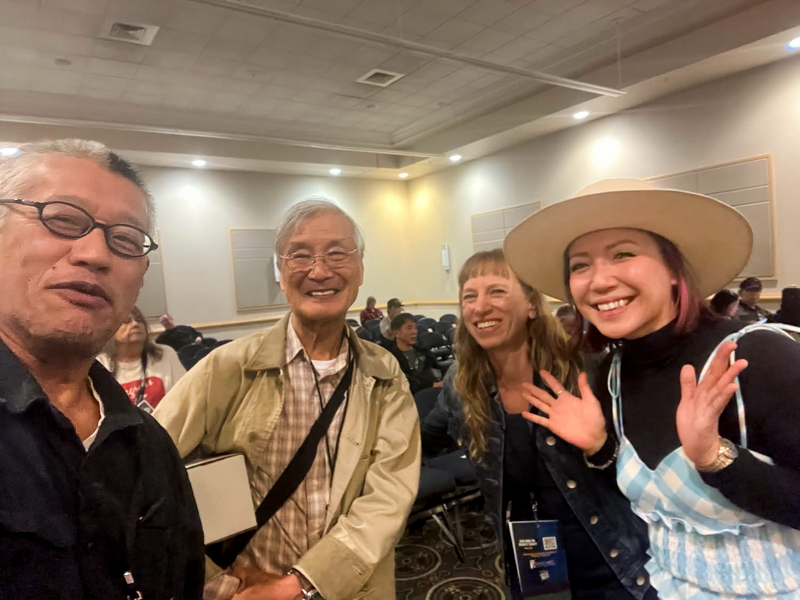
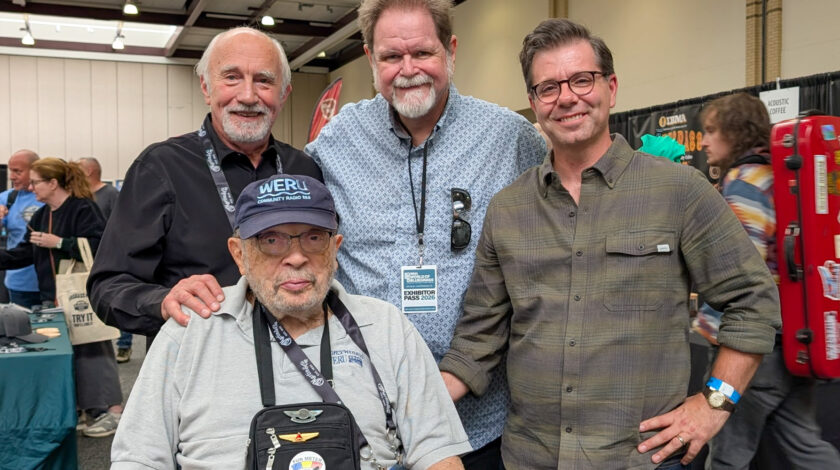
During the panel, we were also fortunate that Toshio Watanabe joined the conversation from the audience. He is a legendary figure in the bluegrass community in Japan, and the Japanese musicians and fans who travel to IBMA with him each year make that international connection visible. The panel gave some additional context to the audience about who they are, where they come from, and the bluegrass community they represent in Japan.
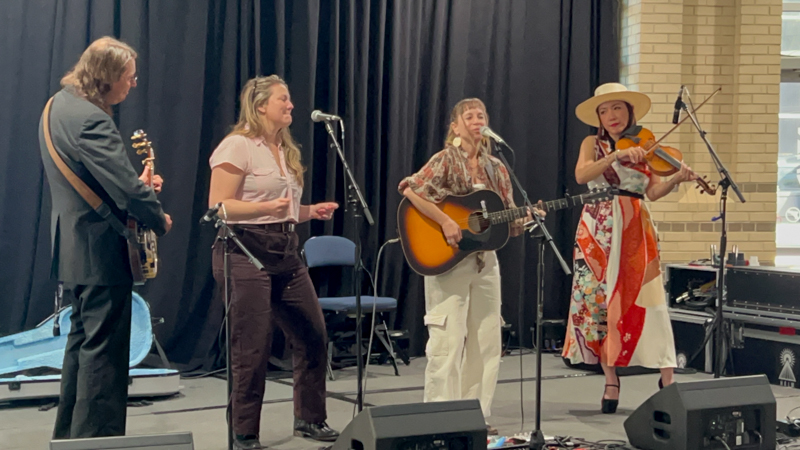
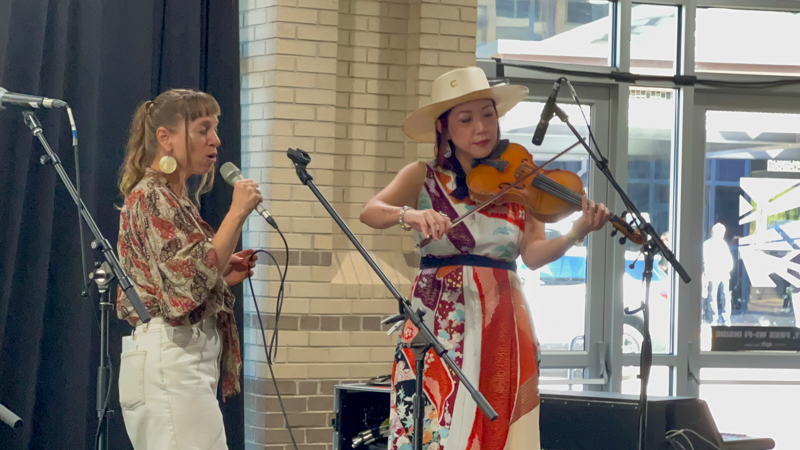
The conversation did not end with the panel. It was followed by two showcases on the International Stage, sponsored by the La Roche Bluegrass Festival in France, featuring musicians whose lives and work connect Japan and the United States in different ways.
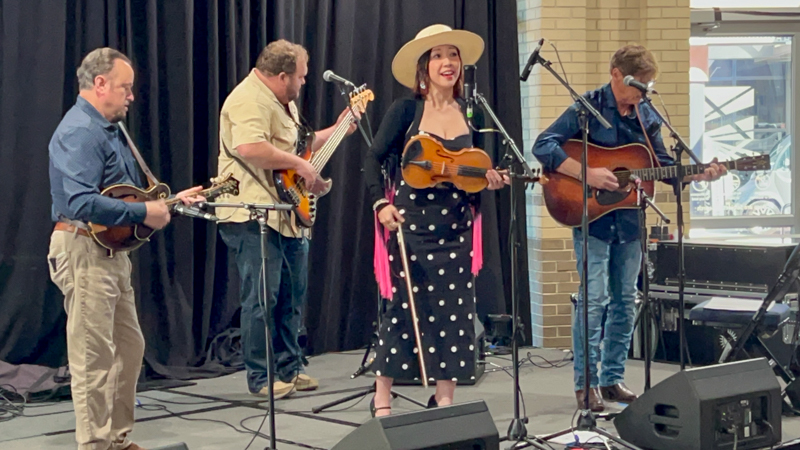
Fiddling Leona performed with her band (Richard Bennett, Jesse Brock, and Jerry Cole), bringing her personal story to the stage, and some of the songs that have been significant in her journey—a song her father loved by Gordon Lightfoot, various fiddle tunes, and the first song she performed in English after moving to the US, Roly Poly.
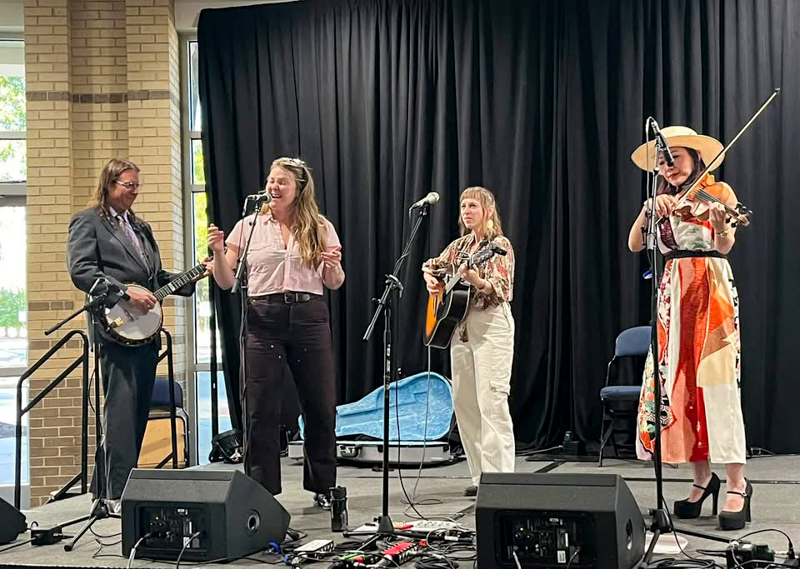
Anya also presented music and ideas from Appalachian Voice. She was joined by Leona on songs like Akatonbo, Grandfather’s Clock, and My Blue Heaven, along with Ben Wright of the Henhouse Prowlers on banjo and Celia Woodsmith of Della Mae, who is preparing to move to Japan in 2027.
Both the panel and the showcases were well attended and well received, and there was a noticeable interest in the Japanese bluegrass scene throughout the conference. For many conference attendees, it was an opportunity to learn more about a community they may have known existed but didn’t know much about.
The response by IBMA attendees to the panel also suggested something larger. Japan is just one part of bluegrass’s international history, and other countries, like the Czech Republic, have their own long relationships with the music. The panel and showcases inspired the international committee to discuss what might be possible if IBMA continues to tell the stories of bluegrass communities around the world.
One takeaway was that the Japanese bluegrass scene is not separate from the story of bluegrass. The history between Japan and the United States shows that when music moves between countries, it builds new communities and, in turn, influences the place where it began. This also points to the future, and to how IBMA can keep strengthening global connections, making sure people understand the importance of the “I” in “IBMA.”
Perhaps the most important takeaway was that bluegrass can remain deeply connected to its roots without standing still. A musical tradition can begin to atrophy if it only looks backward. Bluegrass stays relevant through exchange—between generations, between countries, and between cultures. Those exchanges bring new people into the music, introduce new ideas, and give each generation a reason to make the music its own.
The band Della Mae was pictured on the April 2026 cover of Moonshiner. Celia Woodsmith, their lead singer and guitar player, performed with Della Mae for the last time during IBMA’s weekend festival. The founder of Della Mae, fiddler Kimber Ludiker, announced from the stage on Saturday, October 24, that we were seeing Celia Woodsmith’s last performance with Della Mae. There was a lot of emotion on stage, with hugs and a few tears during and after their powerful set, which was well received by the huge crowd. Members of the Japanese bluegrass community are very excited about Celia’s move to Japan and look forward to welcoming her.