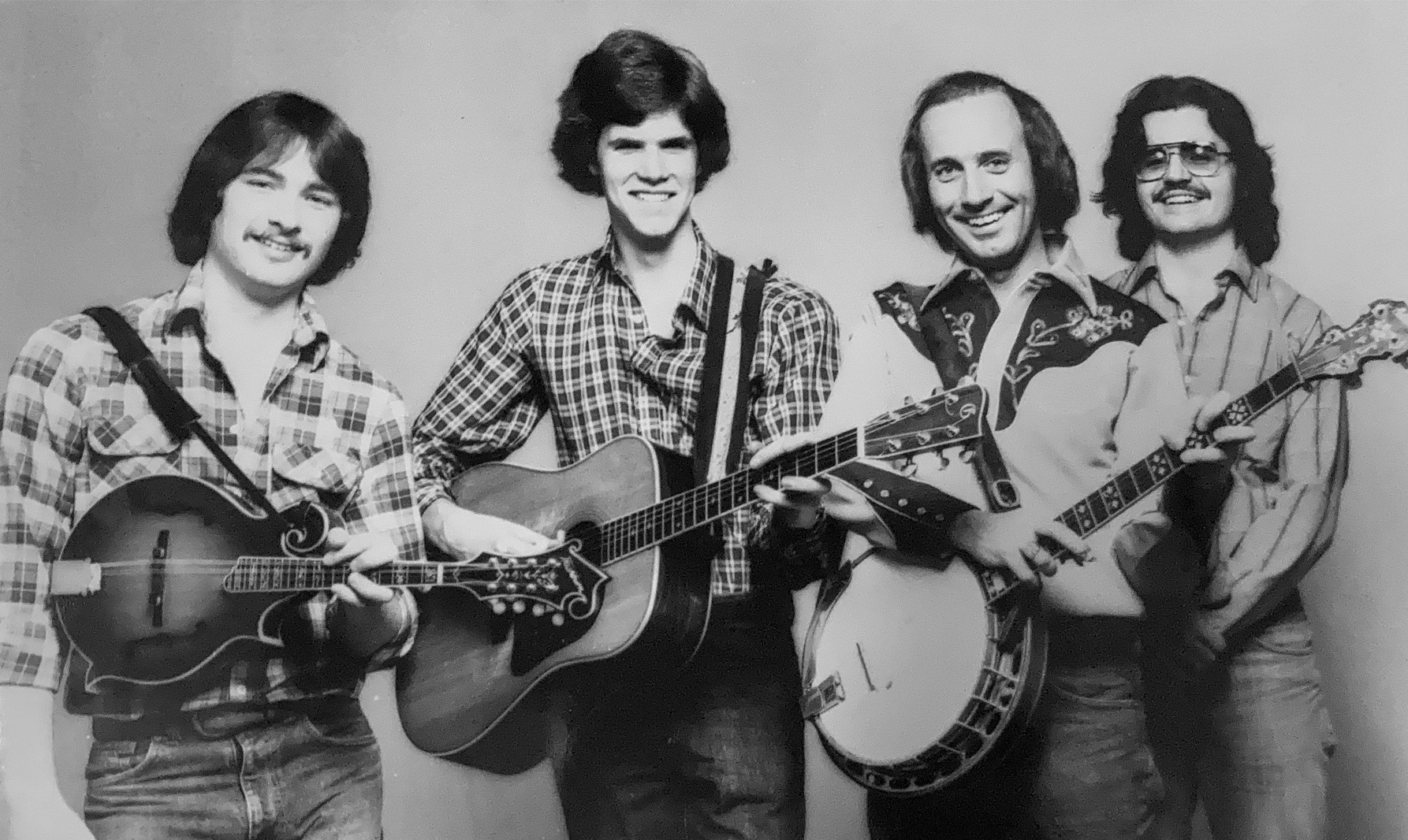
Special Consensus @ 1982: Paul Kramer, Chris Jones, Greg Cahill, John Rice – photo © Jim Polanski
This is normally a humor column, or is meant to be anyway, but there have been rare exceptions. One was the week that Miss Dixie Hall died. And last week, another close friend of mine, Chicago musician John Rice, passed away. Both losses left me feeling much more mournful than funny; however, both had unique and powerful senses of humor too, so that part is compatible with the usual theme here.
Simply stated, John was one of the most brilliant musicians—and people for that matter—I’ve ever encountered. There are countless musicians, producers, and friends in Chicago and across the country who would say the same thing.
For bluegrass lovers, he was an early member of Special Consensus, replacing the band’s original bass player Marc Edelstein in the early 1980s, which is how I got to know him, as I was the guitar player at the time. He played bass and sang baritone in the band, throwing in some fiddle as well. The fact is, he could have played any instrument; he played electric bass because that’s what was needed at the time. He was, of course, great at it. Bandleader Greg Cahill had this to say:
“John was one of the most accomplished musicians I have ever known. He knew what to play, and when, on any instrument in any of the genres he knew. He heard all the vocal and instrumental harmonies, and he knew how to include both musical and lyrical tongue-in-cheek ‘quotes’ in his playing without cracking a smile. He was the same great guy to all—most respectful of all people he met and knew and was just a mighty fine human being. Those of us fortunate enough to know him will sorely miss him forever.”
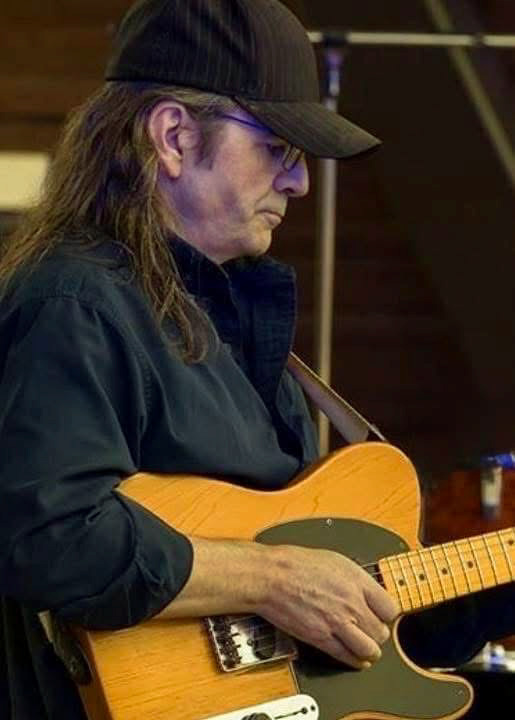
After his time in Special Consensus, John’s career took different turns, from country house band lead guitarist, to sideman to major and minor artists in various genres—including fellow former Special Consensus member Robbie Fulks, Mavis Staples, Faron Young, and Otis Clay—to producer of important recordings and live shows, but the Chicago studio scene became his bread and butter, and he had the musical skill and versatility to succeed there.
In the end, John was both heavily recorded and under-recorded. That’s because in addition to playing sessions for a range of artists, mostly on lead guitar or fiddle, he became an indispensable player in the highly competitive Chicago jingle scene, known for playing whatever acoustic instrument was called for, from mandolin to sitar, in addition to his truly stellar lead guitar work. This made him an anonymous musical presence on countless recordings. It’s one of the reasons Chicago-area musicians and others around the country knew him well, but the general public didn’t.
Getting back to the humor side of this story, John had a dry and finely-tuned wit, the kind that comes from a razor-sharp mind, with an advanced sense of satire. He was a deeply kind and loyal person but also one who had little tolerance for self-importance or pretension. His ability to subtly skewer showbiz name-droppers was legendary among his friends. I recall standing with him at a club where he was on break, while a long-winded gentlemen was telling him a story which eventually culminated in the guy having had his picture taken with Elvis Presley, to which John replied,
“That’s interesting. You know, I was just over at Anwar Sadat’s house, and he told me . . .”
Our longtime mutual friend, Dallas Wayne from SiriusXM (and also a Special Consensus alum) said of John…
“He loved putting people together. Like any great musician, collaboration made him happy. As a person, those traits shone through as well. With his unassuming nature, you could easily forget he was probably the most talented and smartest person in the room. He was kind, funny, talented, and someone you could depend on, everything you could hope for in a friend. I will miss him.”
Like his friends Don Stiernberg, Paul Kramer, and other Chicago mandolin players, John knew and was inspired by the jazz-influenced playing of Jethro Burns, one half of the Homer & Jethro team that had made Chicago their home. Because of John’s comedic interest and skill, he was also interested in the comic side of Jethro’s work, and just for himself and friends, he compiled a collection of Jethro’s hilarious stage patter, minus the music, and called it “Jethro Speaks.”
That project was a prime example of John’s dedication to archiving, purely for the love of music and musical history, especially local history. His work in archiving the career of Chicago’s legendary traditional country band, the Sundowners, was vital in preserving their legacy. Even the collecting of hilariously bad music made in studios and on Chicago stages was important to him, like the drunk guy sitting in and singing Randy Travis’s 1982, which became “1892” by the last wobbly chorus.
Mark Guarino, journalist and author of the important Country & Midwestern history of country and folk music in Chicago, said that his book “would not be what it became without John, who served as a kind of quasi-consultant for many years.” Mark added, “his dry wit and encyclopedic mind and passion for preserving Chicago music history was inspirational.”
John’s former partner and mother of their son Christopher, Nicole Udzenija, had this to say about (and to) him: “Your talent was legendary—a musician’s musician, widely respected—but you respected anyone who truly loved music regardless of their level of talent . . . an incredibly loyal friend to so many . . . A stubborn, proud and private man about your own struggles, but a generous listener and supporter to your friends and family . . . We will miss you forever.”
John was immensely proud of Christopher, who carries so much of his father’s musical talent with him. He is in his third year of a music degree in Toronto and is already playing numerous jazz gigs there on bass and piano. While it’s terribly sad that their relationship has been cut short, it’s also inspiring to see John’s musical and personal legacy being carried on. In a social media post after his dad’s passing, Christopher referred to him as his musical hero.
For those of us who knew John Rice, he was ours too.