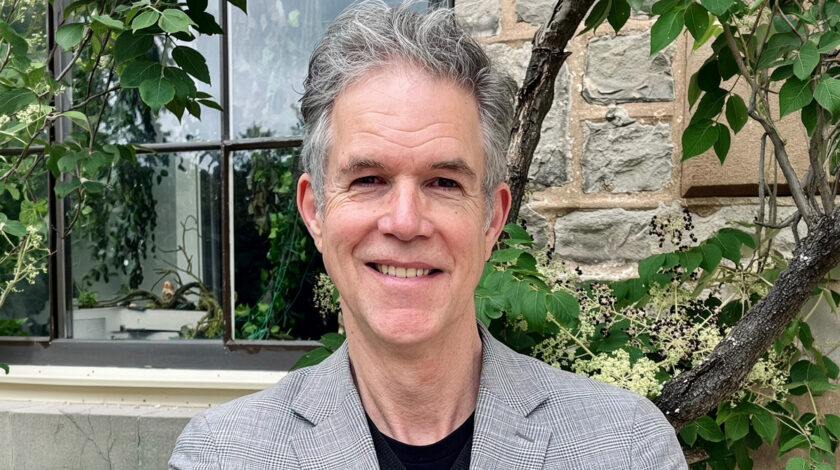

David Harvey – photo © Dan Boner
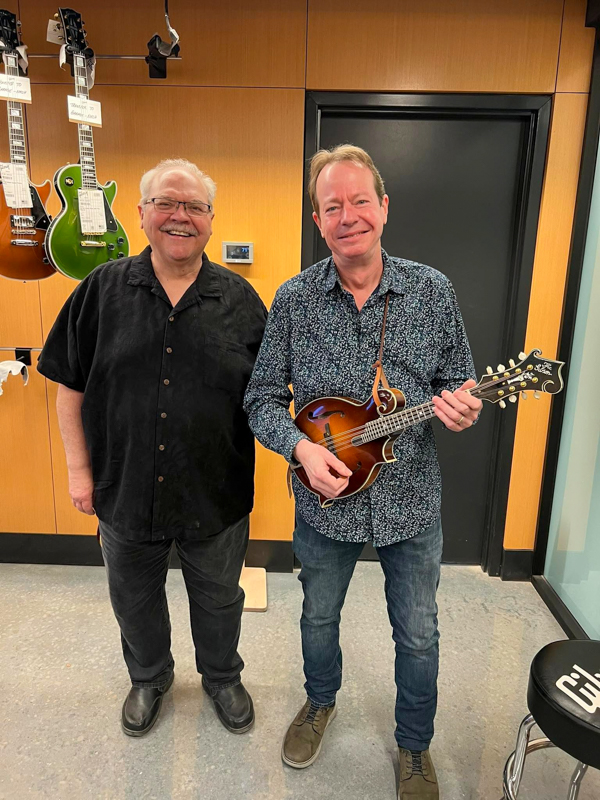
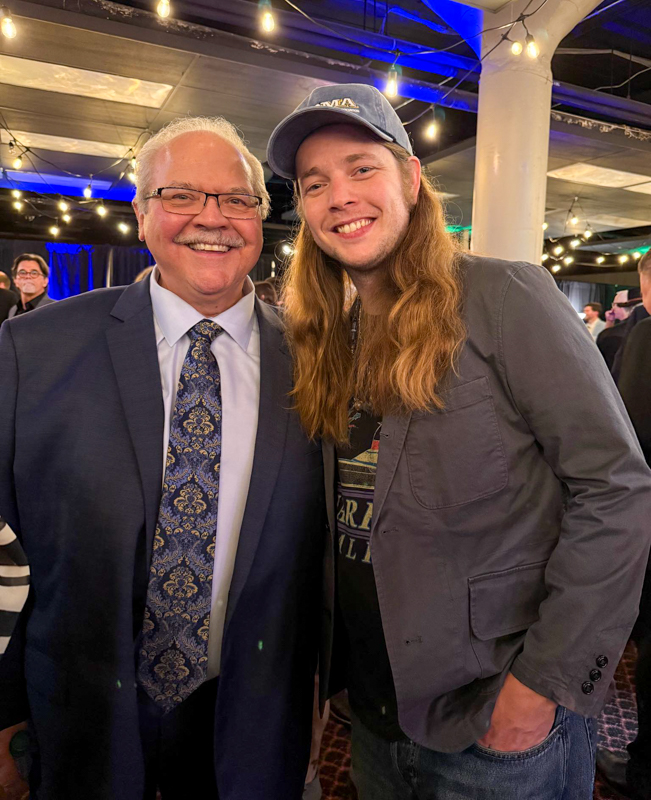
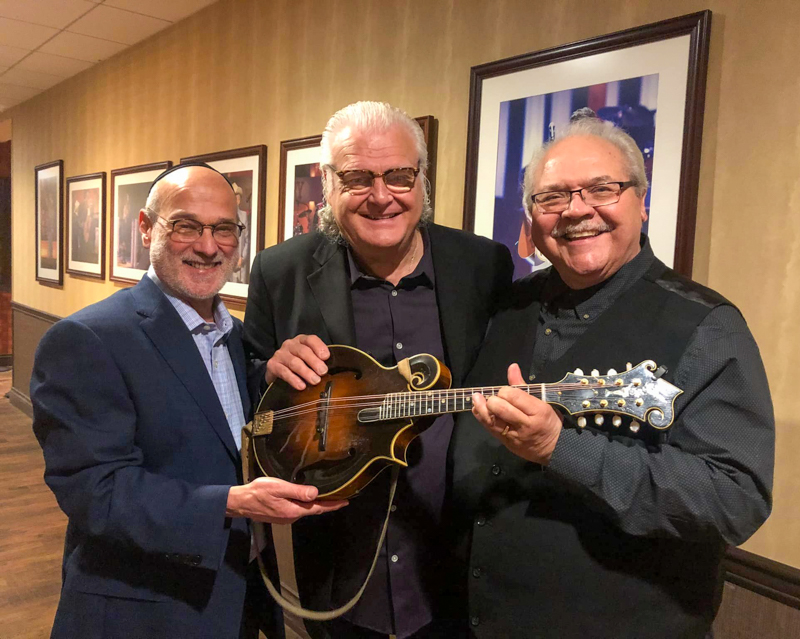
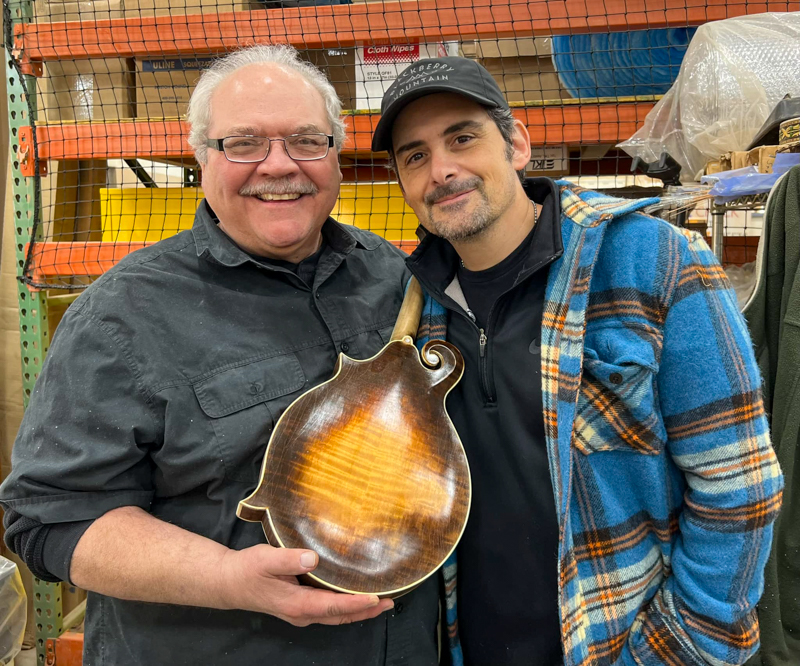
Gibson Master Luthier, and Head of the Mandolin Department, David Harvey, has retired after more than 22 years of service. Far from finished in the music industry, he sat down recently with us and shared these reflections on his career, both as a player and an instrument builder.
“I had been doing lutherie work along with playing professionally as a dual career choice. It was an amateur status as a luthier, working on my own. Then I took a paid apprenticeship with About Music in Indianapolis. I ended up taking over that facility and ran it for quite a number of years. I pretty quickly was awarded my warranty repair status with all the major companies: Gibson, Martin, Fender, and Guild. That led to a working relationship with Gibson. That’s how all that started around 1988-89.
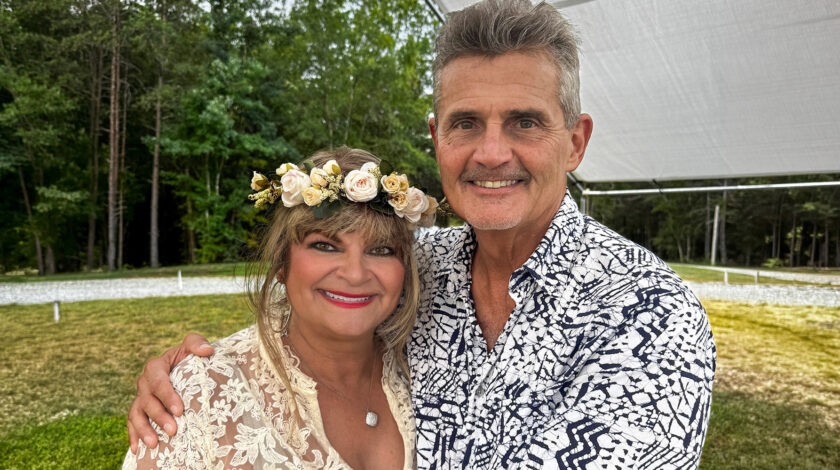
I was still working with Larry Sparks at the time. I maintained a touring schedule and had a viable career as a luthier. Then I started a band with my wife, Jan, and her sister, Jill, called Wild & Blue, and we toured for about a dozen years. We recorded four or five projects that did very well. We had several chart-topping singles. Our biggest success was a cover of a Patsy Cline song, Come on In and Make Yourself at Home, that my wife, Jan, sang.
When we moved to Nashville, I started working with Charlie Derrington at National Guitar repair, especially with warranty mandolin work for Gibson. Eventually, that began a career with Gibson. After working with National Guitar, I worked with Fred Carpenter at the Violin Shop to develop their repair and restoration side. They were a retail shop, but they had a pretty big backlog of repair for a number of high profile clients including Bobby Hicks and Alison Krauss. I was still touring and both interesected very well. I was very proud of that. It helped me with my relationship with the musical community in town.
As a professional musician, I also understood the playability aspect of the instruments. The demands of the tools, mandolins, fiddles, or whatever. I understood the rigors of how important the set-ups and repairs are for musical instruments. It was a God thing. God put me in the right place at the right time to learn things I needed to go forward with my career as a luthier and as a musician.
I was very blessed with the relationship I had with our clients: Stuart Duncan, Sam Bush, and Bobby Hicks, and so many others. I was doing a lot of bass fiddle work at the Violin Shop and got to meet people like Bob Moore, one of the most recorded bass players in country music history, and restored his ‘King of the Road’ bass that he cut with Roger Miller. It was a treat for me to restore a bass that was so historically important. I think it’s in the Country Music Hall of Fame now.
Those opportunities led to my career and path to eventually to go to Gibson. I saw a really good opportunity in repair and restoration there. I made that decision mainly because I was very passionate about Gibson from my early years of childhood. I felt like they needed somebody that had my expertise, and my relationships in the musical community. In no small way was the benefits of working for Gibson, with the insurance and paid holidays that you don’t see as a working musician. I was very excited about those opportunities and benefits. I knew that relationship with Gibson would be a real plus in my career.
I first worked for Gibson in 2004 at a repair facility, doing warranty work downtown at 12th and Church in Nashville. That building is no longer there. I was eventually asked to move over to head the Mandolin Department, and Gibson Original Acoustic Instruments department, which included banjos and Dobros, in 2007. We had a three-pronged leadership with my good friend, Tom Montgomery, who is actually working with Waverly Tuners now. And then, Doug Mann, who was in procurement. We did really wonderful things for the mandolin department and the banjo and Dobro departments. Very innovative. We came up with lots of new products because we had a lot of free rein back in those days.
The first mandolin I was asked to design was something different for the mandolin department, what is known as the Victorian F-5. It was very popular. We did a very limited number of those: 15 for the public and three for artists. One of them was destroyed in the flood at the mall in 2010. We were actually looking at moving into the custom shop family and the flood just kind of expedited that.

The Victorian F-5 is a combination of the F-4 of the teens and F-5 appointments: the inlay pattern, the double flower pot, the black top with the red burst backside and neck, and bound F holes because the F-4s always had the bound oval hole. I wanted to incorporate all the beautiful aspects of the Victorian F-4 into an F-5 frame with a retail price of $15,000. Doyle Lawson played a Victorian F-5 for a lot of years. It was one I personally picked out for him. It was very successful to the point that the Chinese have recently copied that instrument under the Victorian name that I developed. The originals are increasing in value. Mark Comer has one. Alex Hibbits has one, and so do Paul Kramer, Donny Anderson, and Glen Alford. They are all personal friends.
I don’t have one. I should have held on to one. I had one for a while, but I let it go. You can’t play them all. I figured that out. If a friend really wants one that much, I’d always take that in consideration.
I’m so proud to be able to design instruments like the Victorian. We followed that up with aged varnish. Then an A-35 which has A-3 appointments with a white face on an A-5 frame. It was basically the same treatment as the Victorian F-4s. That was interrupted by the flood. We only did three or four before the flood.
The application method that I came up with was to make the aged varnish look like the old 19 teens finishes. It’s the same finish that I used on Sierra Hull’s master model that we built in 2008. They look like they’re 100 years old.
From there, we moved into the custom shop on Elm Hill Pike in Nashville after the flood in 2010. We moved into that facility after a big reclamation of all the damaged inventory, which unfortunately was a complete loss at the mall. There was mold all over everything after a very short period of time, and we weren’t able to salvage anything. It was a very difficult period, but we got through it and got set up in the custom shop.
We went about developing the F-5G to reintroduce ourself back into the marketplace. From there, we went into a color series of mandolins implementing all the custom electric guitar colors, starting with gold top. They were and still are very popular. Now they’re doing the sparkle mandolin. People love all the different offerings. Then we got our Master Model back up and going. In recent days, the master model Loar reissue mandolins and the dark burst F-5G with the more modern appointments and wider neck and wider nut.

It was a great ride. I was able to develop about 50 different model mandolins over the years, put the first mandocellos in 85 years back into production, and the first octave mandolins ever into production. Those were very low numbers. The mandocellos, we did about half a dozen, and about three or four of the octave mandolins. Those were very highly regarded.
It’s been great for my career. I just love the legacy, and not only focusing on Loar F-5s. Everybody focuses on that, but I always wanted to be a little bit more imaginative and artistic about it, and implementing some of that rich history before 1922 when the Loar mandolins first started coming out. A lot of people appreciated what I had to offer in that realm. I know we set an industry standard with the great team we had. Most of those guys and gals are still working there and still building mandolins.
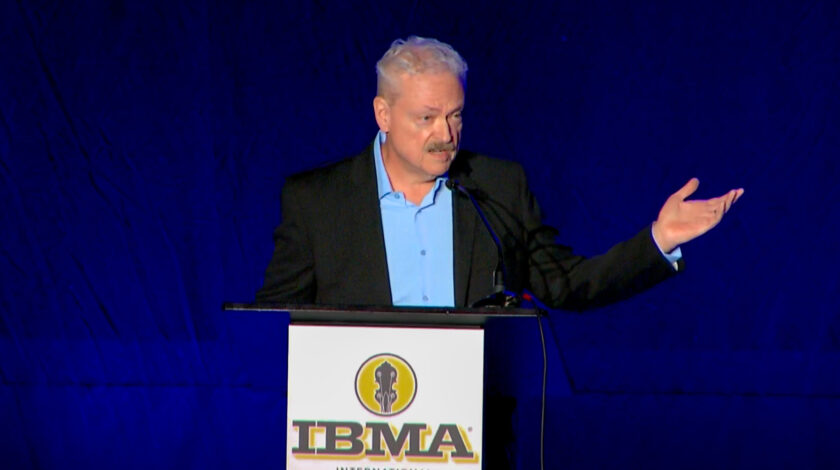
At my retirement party, I wanted to remind everybody that it’s a very special thing that we get to show up at work every day and literally build something that makes somebody’s dreams come true. That’s what it’s all about at the end of the day when you’re a luthier. It’s not just copying something, implementing something that’s been done before, but being creative and putting your passion and your heart and soul in it. That’s what you do when you show up every day.
It was such an honor for me to work at Gibson for 22 years, and four months to the day. I got a chance to be both creative and innovative. We set a world standard and set the marketplace standard. If we impress one another, the buying public is going to be completely blown away by what we create. That’s what I try to instill in everybody is that pride and craftsmanship, and to take it to the next level. You put passion in those instruments and I think you feel it. A lot of the instruments I pick up and play, I don’t feel any of the passion. It’s just another thing that’s being produced. In the instruments that we build for Gibson, I can feel the passion that everybody put in to it. I basically encouraged everybody to keep showing up, keep pouring your passion into what you do because people feel it.
Retirement is bittersweet. I was rear-ended in 2023. It messed up my joints and my knees. I had a knee replacement on January 8. I got to the place where I was dreading the commute, and I was getting a lot of prompts from the Holy Spirit to not make that drive anymore. I’m definitely missing my friends that are at work. I know things are in good hands there, but I am available and a phone call away.
I’ve got a lot of friends that have asked me to do some restoration work here and there. I’m happy to keep doing that. I’ve got a nice little setup here at the house that affords me that. My commute is to walk out my back door and across my back yard.
The big thing that I’m really excited about is playing more music and playing more dates. I’ve added some music dates to my calendar, not only with my band, RADIOLA, with my wife, Jan, and my daughter, Emma Hailey, Mike Bub, and Cole Ritter. We are at the Station Inn on August 10.
I am very excited about a call I got from Sharon White and then Cheryl. I had mentioned to Sharon and Cheryl that if they ever needed help with The Whites that I’d love to come out anyway I could. They invited my to play the Ralph Stanley’s home place festival in McClure, VA. We headlined the festival and closed it out on Saturday night. It was part of the 25th year of the Oh, Brother, Where Art Thou celebration. I tried to fill those massive shoes of Buck White.
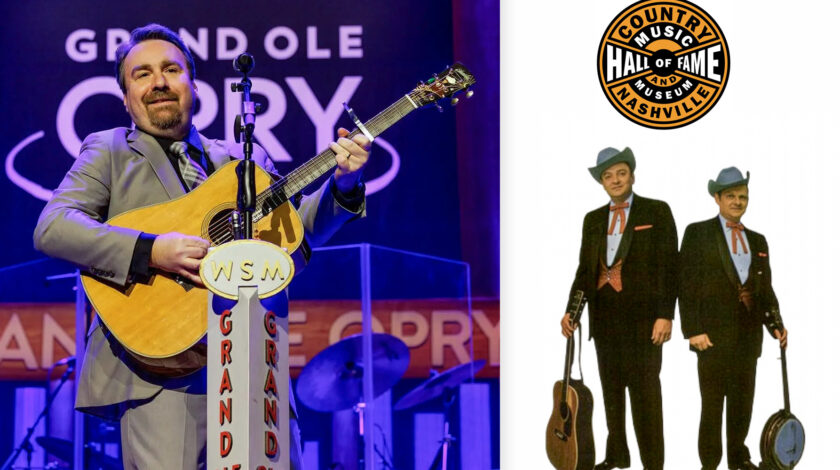
Then my wife and I will be playing the Opry with Melanie Walker on June 7. I’m just excited to be playing more music.”