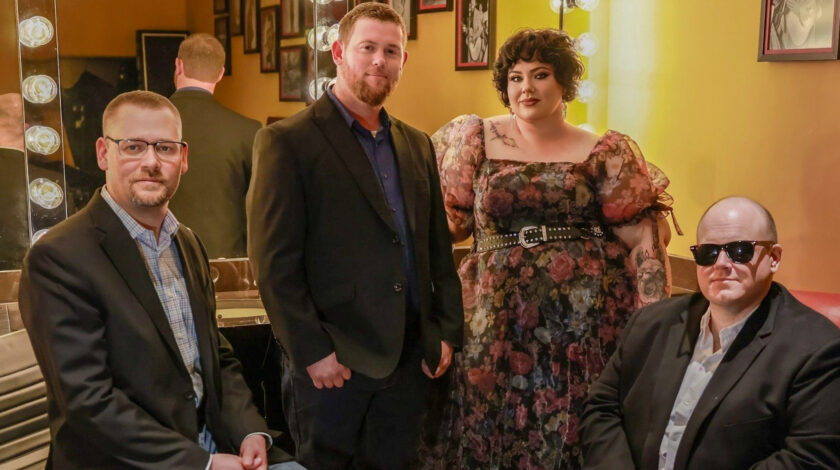

We had the opportunity recently to spend some time with banjo man Chris Coole, he of the innovative old time group, Lonesome Ace Stringband, and its associated duo, Showman & Coole. We discussed a number of topics, including the latest Lonesome Ace album, Big Wing, the group’s background and foundation, and how a city boy in Toronto decided to become a banjo player.
I first became well familiar with Lonesome Ace in 2020, when they were an invited showcase act for IBMA’s Bluegrass Ramble. That was the year of the COVID shutdowns, and the entire World of Bluegrass convention had to be staged virtually. Most of the showcase acts submitted videos of themselves playing in an informal setting, often in one of their homes, or outdoors where congregating was still allowed. But Chris and his duo partner John Showman, and bassist Max Heineman, had a very polished and professional video presentation that set them apart from most of the others.
Plus they were very good! That helped as well
Here’s a video from their showcase presentation.
When we started our chat, I first asked Chris how his last name was pronounced, just to be sure. He replied, “It’s a hard one to live up to, and it’s hit or miss much of the time. Like the weather, with an ‘e’, as my father used to say.”
Oddly enough, Coole has spent his entire adult life in music, making it his career from his late teens.
“I’ve been a full time musician since I was 19. Ten years of busking, another ten in bars, but the last ten more to listening audiences, and at concerts and festivals. Some overlap around the edges, and I’ve been teaching through all of this.”
That means he was a skilled musician at a young age, at least skilled enough for the street. So was his early start a family influence?
“My father went to his grave calling my banjo a guitar. I’ve lived in downtown Toronto all my life, and no one in my family played. But my parents supported everything I had done, even though they didn’t follow country or traditional music at all. I got some lessons in my late teens, and I didn’t meet another banjo player for a couple of years.
I was going to used record stores all over Toronto to find stuff, and I was sort of at the mercy of whatever I found. I’m sort of glad that I came at it this way, randomly, instead of someone telling me what albums to get. I feel grateful that I was on my own for a while, giving me a freedom to develop my style early on. And I started writing tunes and songs early on as well.
Why banjo?
“I have a hard time answering that – I’m not really sure. I always loved music as a kid, and my high school had a guitar program. I started getting into acoustic music, and started hearing banjo on some tracks. I really loved the Andy Griffith Show, had every episode on VHS tape, and was super into it. I was charmed by the southern lore, plus the Dillards and Colonels. Then I got the Old & In The Way album, and realized that I had always loved this music, but I didn’t know what it was, or where to find it.
I got into bluegrass and old time around the same time, though I played more clawhammer.”
Chris started meeting other pickers at jams around Toronto, and pretty soon he was joining up with or forming various groups to play on the street.
“John Showman moved to Toronto in ’99 or 2000, and we formed a band, the Foggy Hogtown Boys, a five piece bluegrass group, with me on guitar. He and I have been playing together full-time-ish ever since. The original three members of Lonesome Ace were Foggys, me, Max Malone, and John.
Toronto had a great music scene at that time, and we seemed to always have a residency for the trio, as a duo, or for solo shows.
Bar shows teach you a lot – you have to earn their attention. If it doesn’t beat you down, it makes you good in front of an audience. It can be soul destroying, but if you can get it, it can make a band.”
The change to Lonesome Ace Stringband brought Chris back to the banjo, and a format where he felt a good bit of freedom with the instrument. Working as a banjo, fiddle, and bass trio, the percussive and rhythmic role of clawhammer banjo was especially crucial to the band sound.
Their formation in 2007 was accidental, as Coole tells it.
“We started playing The Dakota Tavern in Toronto, and we decided to try there as a trio because they couldn’t afford a full band.”
It worked, and the trio format was locked in. Early on the Aces mostly worked up their own, often quirky, arrangements of the familiar old time repertoire. But over time, both John and Chris wrote material for the group, from which they now draw most of their material.
As the COVID shutdowns began, they found the same immediate struggle that professional entertainers worldwide suffered. How can you make a living with no live music?
Their answer turned into a new performance vehicle, Showman & Coole.
“When COVID started and we were not able to be around each other, we started doing these weekly banjo and fiddle videos for social media. We had to be outside to do it, but we had good quality audio and video gear so they looked and sounded good. After a couple years, we put out an album made up of our favorites, called Afield.
We’re still doing the live videos; everywhere we go we record tunes. Always outside, so there is some real urgency to the playing that is sort of intense.
Volume two of Afield is coming out soon. In May.”
And so we come to Big Wing, released in October of last year, with ten tracks, six of them originals.
“An interesting thing about this album is that we got into a pattern during the pandemic of building up our home studios and recording ourselves. The record label said that we needed to be putting out singles, and we got into this always recording and always putting out music mindset. We’ve been doing that for about three years now, and that’s been sort of liberating since we didn’t have to worry about whether the tracks would fit together on an album.
And it’s helped our streaming numbers, always releasing new tracks. Plus we’re getting better in the studio.
At some point I saw that we had seven singles that we had released, and figured, this is almost an album. So we were able to look at those tracks, and look for what needed to be added.
Since we recorded over a fairly long period, we ended up with five different bass players on the album.”
Through our discussion, I learned that Chris Coole is a very interesting musician – an urban banjoist from Canada playing Appalachian music – and a deeply engaging and thoughtful person.
Make an effort to catch either Showman & Coole or Lonesome Ace Stringband if you can. They have a unique and compelling approach to a very traditional musical form. And they are highly entertaining.