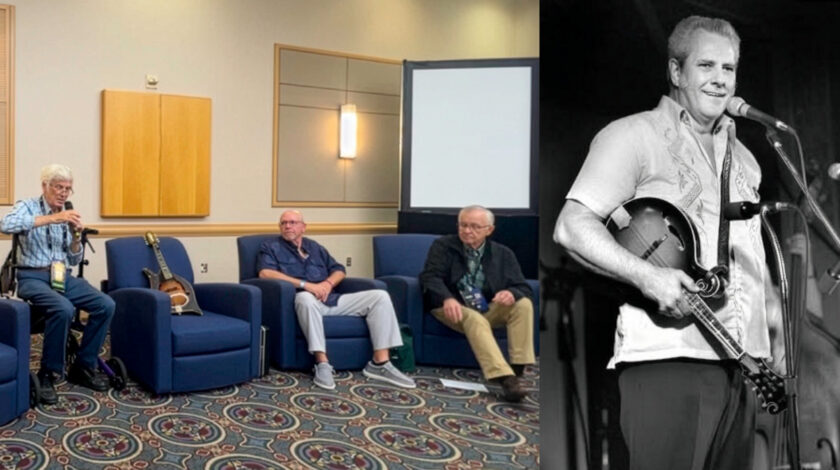
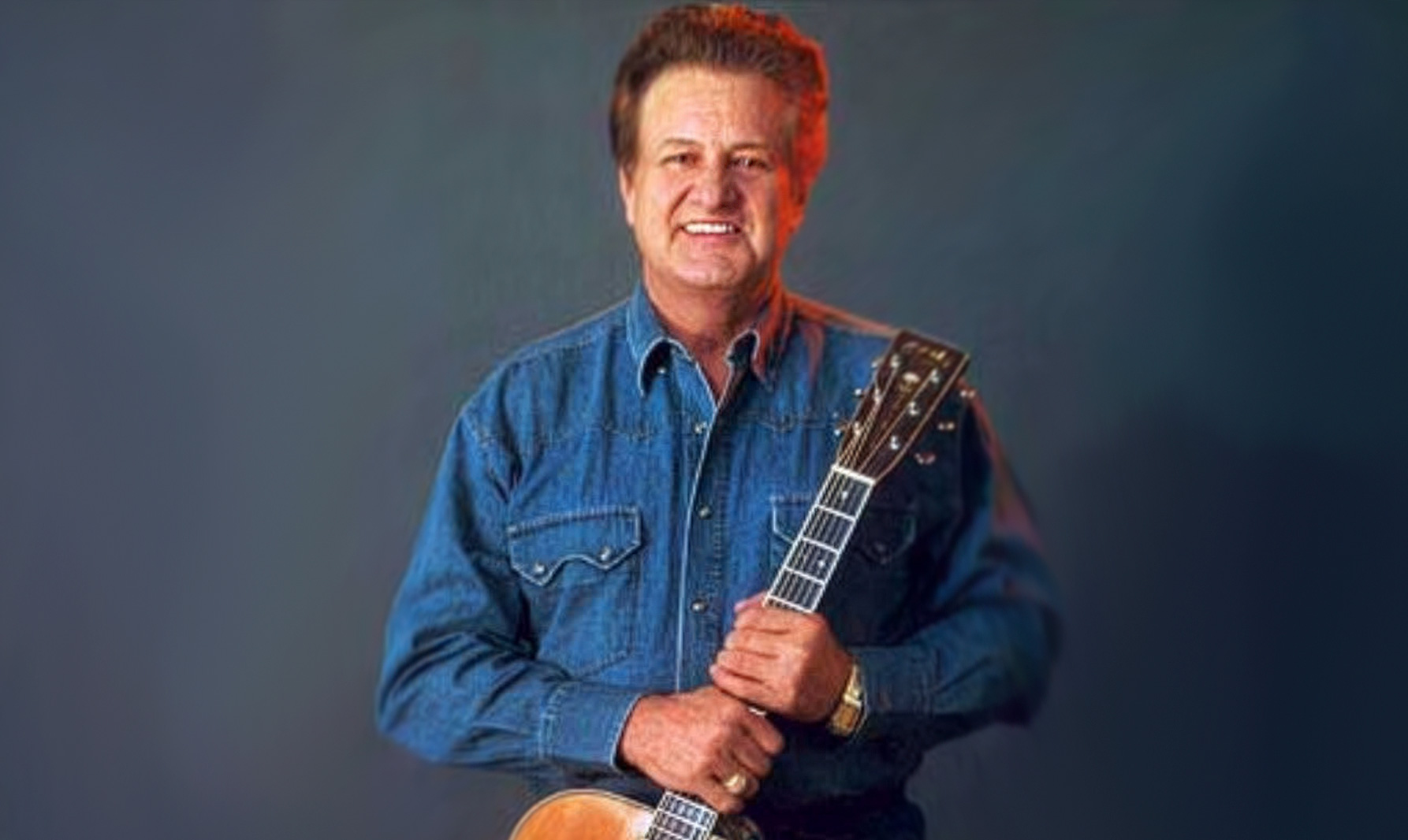
James Monroe, only son of the Father of Bluegrass, Bill Monroe, died on June 24 following a period of declining health at the age of 85.
He first appeared in bluegrass music playing bass with his father, starting in 1964, switching to guitar in 1969. As the guitar spot with the Blue Grass Boys was typically reserved for a vocalist, James begun to sing lead on a number of songs on the show, especially duets with Bill.
His most visible release with his dad was a co-bill on the album, Father & Son on Columbia Records in 1973. James left his father’s group not long after and started his own, The Midnight Ramblers. With this band he recorded three albums for the Atteiram label in Georgia.
James used to say that he never had wanted to be a performer like his dad, hoping instead to play baseball professionally. He had been a star prospect, pitching in high school, but was drafted into the Blue Grass Boys instead on a trip with his dad one summer, and sent out to play with no experience whatsoever.
Sandy Rothman shared this story about James being brought into the band.
“I first met James in June of 1964, when Bill asked me to fill in with the Blue Grass Boys on lead vocals and guitar, and banjo on some shows (sometimes both, as Bill didn’t have a steady banjo picker after Bill Keith’s departure). I was 18 and James was 23.
Although he’d been raised around the music all his life—after all, the 1946-7 band would practice in his living room when he was 5-6, as he describes in an interview with Ronnie Reno—he hadn’t learned to play anything until after Bessie Lee Mauldin left the band and he began learning the bass. He said I showed him his first guitar chords as we traveled around the South that summer. His older sister Melissa was with us on some of the tours.
James worked hard at it and developed into a fine bass and guitar player, and of course he had his natural Monroe singing voice. Many of his excellent recordings—I Haven’t Seen Mary in Years, Tall Pines, Sweet Mary and the Miles in Between, and many others—are bluegrass classics.
I’ve stayed in touch with James all these years, exchanging Christmas cards and visiting in person and by phone. His loss is a shock, as I spoke with him relatively recently during his recovery from hip replacement surgery. Unfortunately he wasn’t able to enjoy the benefits of the operation for very long. A sad farewell to an old friend.”
At some point, he began to focus more on the business side of bluegrass, being actively involved in the Bill Monroe Bluegrass Festival in Bean Blossom, IN, and is said to have launched a bluegrass magazine, Bluegrass Star, eventually purchased by Bluegrass Unlimited.
There was also a restaurant outside of Nashville called the Monroe Manor and Steakhouse Lounge, established in 1981 as a performance venue for his dad’s band. Located in a restored manor house, it served food and featured live music, primarily country and bluegrass, with seating both inside and in an adjacent orchard for larger shows.
When his father died in 1996, James took over the running of Bill’s estate, and the administration of his large musical catalog. He sold the Bill Monroe Music Park in Bean Blossom to fellow former Blue Grass Boy Dwight Dillman in 1998, who managed it until it was sold to the Voils family in 2018, who run it to this day.
We have no information about arrangements at this time, but will share should they become available publicly.
R.I.P., James Monroe.